
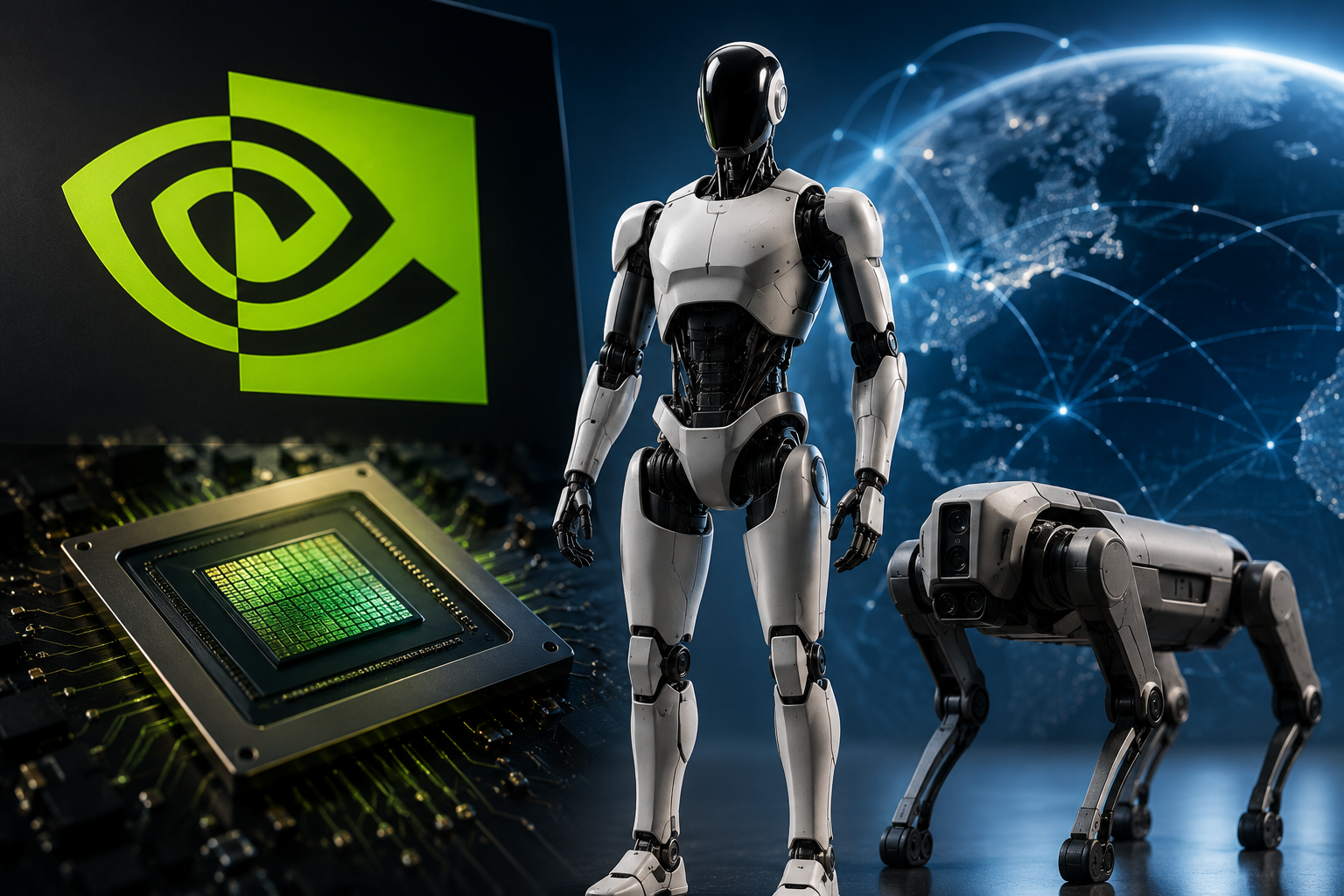
Nvidia has taken a big step into the humanoid robot market. The American chip giant has chosen Chinese robotics company Unitree Robotics for its first humanoid robot platform made for research and development. The move shows that Nvidia now sees robots as one of the next major parts of artificial intelligence.
The project brings together hardware and software from several companies. Nvidia wants to build a complete system that researchers and developers can use to test and train humanoid robots. The company hopes this platform will help speed up robot research around the world.
This decision also gives Unitree a major boost at a very important time. The Chinese startup now moves closer to a possible public stock listing, also known as an IPO.
What Nvidia Plans to Build
The new humanoid robot platform combines several advanced technologies into one system. Nvidia will provide its Jetson Thor computer system, which runs on powerful Blackwell chips. These chips help robots process information quickly and react to the world around them.
Unitree will supply its H2 humanoid robot body. The H2 robot looks more like a human than Unitree’s earlier machines. It can walk, move its arms, and perform physical tasks in different environments.
The platform also includes robotic hands from Singapore-based company Sharpa. These hands help the robot hold and use objects with greater control.
Nvidia will add its Isaac GR00T software models and simulation tools. These tools help robots learn tasks inside virtual worlds before they work in real places. This process saves time and lowers risk during robot training.
The complete system will go to universities and research centers. Stanford University and the University of California San Diego are among the first groups expected to use it.
Why This Partnership Matters
This partnership carries major importance for both companies. Nvidia already dominates the artificial intelligence chip market. Many AI systems around the world depend on Nvidia hardware. Now the company wants similar success in robotics.
Humanoid robots need strong computing power. They must understand speech, movement, balance, and surroundings at the same time. Nvidia believes its chips and AI software can become the standard foundation for future robots.
For Unitree, the deal brings international attention and trust. Many people already know the company because of its robotic dogs and newer humanoid machines. The firm has grown very fast in the last few years.
Unitree robots even appeared during China’s famous Spring Festival Gala show. Millions of viewers watched the robots perform in front of a national audience. The event helped the company become one of the most recognized robotics brands in China.
Now Nvidia’s support may help Unitree gain stronger influence outside China as well.
Unitree Moves Toward an IPO
The Nvidia partnership comes at an important financial moment for Unitree. Reports show that the company has started the process for an initial public offering in China.
An IPO allows a private company to sell shares to public investors. This step can bring large amounts of money into the business. Investors often look closely at partnerships before deciding whether to support a company.
Nvidia’s decision to work with Unitree may increase investor confidence. Many people in the technology industry see Nvidia as one of the strongest AI companies in the world. A partnership with Nvidia often signals strong technical ability and future growth.
This could help Unitree attract more investors during its public listing process.
Nvidia Wants a Bigger Robot Ecosystem
Nvidia does not plan to stop with Unitree. The company has already said it wants similar partnerships with robot makers in the United States, Europe, and South Korea.
The goal appears clear. Nvidia wants to create a full robotics ecosystem built around its chips, software, and AI models. This strategy looks very similar to what happened in the artificial intelligence market.
Today, many AI companies rely on Nvidia chips to train and run advanced models. Nvidia hopes robotics companies may follow the same path in the future.
If developers use Nvidia systems from the start, they may continue to build future robots with Nvidia technology. This approach could give Nvidia a powerful position in the global robotics market.
The Rise of Humanoid Robots
Interest in humanoid robots has grown rapidly during the last few years. Technology companies believe these machines may one day help in factories, warehouses, hospitals, homes, and public services.
Unlike traditional factory robots, humanoid robots can work in spaces designed for humans. They can walk through doors, climb stairs, pick up objects, and use tools.
Many firms now compete in this market. Companies in the United States, China, Japan, and Europe all race to build practical humanoid robots.
Experts believe artificial intelligence has pushed this industry forward. Better AI systems now allow robots to understand commands, react to changing situations, and improve their actions over time.
This progress has made investors and major tech firms pay close attention to humanoid robotics.
Political Concerns Around the Deal
The Nvidia and Unitree partnership has also raised political concerns in the United States. Some American lawmakers worry about security risks linked to Chinese technology firms.
Reports say some lawmakers have questioned whether Unitree has connections with Chinese government or military organizations. Because of these concerns, some officials want restrictions on the use of Unitree robots in research projects funded by the US government.
Nvidia has responded by saying the platform includes security protections. The company mentioned secure boot systems and confidential computing features as part of the design.
These protections aim to keep data safe and reduce cybersecurity risks. Still, political tensions between the United States and China continue to affect technology partnerships across many industries.
A New Phase for Robotics
The robotics industry now appears to enter a new stage. Earlier robot projects often focused on exciting demonstrations and videos. Many companies showed robots dancing, jumping, or performing simple tasks.
Now the focus has started to shift toward practical systems and standard platforms. Researchers want tools that many developers can use easily. Companies also want robots that can learn faster and perform useful work.
Nvidia’s platform may help push the industry in this direction. By combining hardware, AI models, and simulation software into one package, the company hopes to make robot development simpler and faster.
This strategy looks similar to the early growth of personal computers and modern AI systems. Standard platforms often help industries grow more quickly because developers can build on shared technology.
What Comes Next
The partnership between Nvidia and Unitree could shape the future of humanoid robotics. Nvidia brings world-class AI chips and software tools. Unitree brings fast-growing robot technology and manufacturing experience.
Together, the companies hope to create a platform that helps researchers train smarter and more capable robots.
At the same time, Unitree continues its path toward a public stock market listing. Nvidia’s support may strengthen the company’s position during that process.
The race for humanoid robots has only just begun. Technology firms around the world now compete to build machines that may one day work beside humans in everyday life.
This Nvidia and Unitree partnership shows that the competition has become more serious, more global, and far more important for the future of artificial intelligence.
Also Read – What Is Burn Rate and Why It Kills Startups