
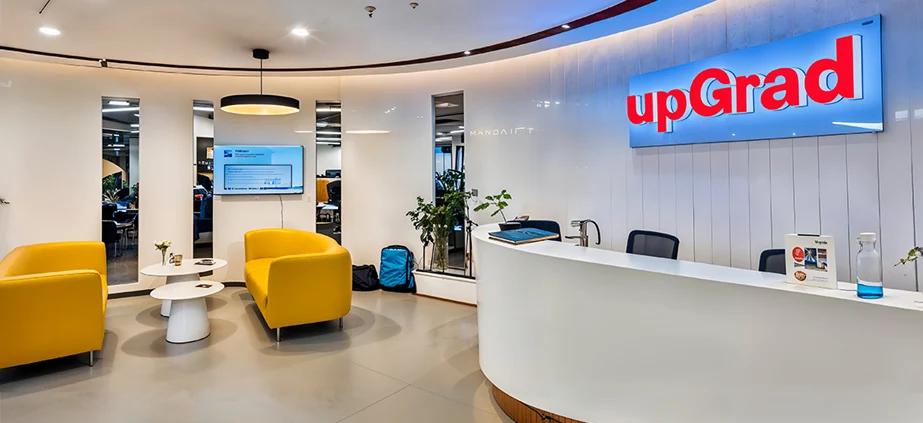
upGrad has reached a very different position in India’s education market. The company started with a clear focus on professional education and career skills. Over time, it moved into university degrees, study abroad, corporate training, offline education, internships, jobs and test preparation. The latest step came on September 1, 2026, when upGrad completed its acquisition of Unacademy for just over $200 million.
The deal changes the size and shape of the company. Unacademy adds online test preparation to upGrad’s existing business. Its core areas include UPSC, JEE, NEET and GATE. upGrad already had higher education, professional courses, certifications, study abroad and enterprise training. The combination gives the company a presence across a much larger part of the education journey.
This move also shows how much India’s EdTech market has changed since the pandemic. A few years ago, companies chased users, raised large amounts of money and pushed for fast expansion. The market now gives more value to revenue quality, cost control, profitability and strong business models. upGrad has spent the last few years moving in that direction.
A Major Financial Turnaround
The strongest proof of upGrad’s progress comes from its FY26 numbers. The company reported gross revenue of ₹2,070 crore, up 7% from the previous year. Its post-Ind-AS total income stood at ₹1,732 crore. The difference between the two numbers comes from the way revenue gets recognised under accounting rules.
upGrad also had ₹530 crore of collected revenue that had not yet entered its recognised revenue figure. This amount will count as revenue in future years as the related education programmes take place.
The EBITDA number shows an even bigger change. upGrad reported Ind-AS EBITDA of ₹123 crore in FY26, compared with ₹15 crore in FY25. That marks growth of more than eight times in one year.
The net loss also fell sharply. The company reported a net loss of ₹130 crore in FY26, down 52% from the previous year. This marked the third straight year in which losses fell by more than half. The loss had reached a huge ₹1,142 crore in FY23. The fall from ₹1,142 crore to ₹130 crore shows the scale of the financial turnaround.
The company has not reached full net profitability yet. Still, the change in EBITDA gives the business a much stronger base. Revenue has crossed ₹2,000 crore on a gross basis, while operating efficiency has improved at the same time.
The Business Has Become Much Wider
The biggest strength of upGrad does not come from one course or one product. It comes from the range of education services under one company.
The company now has more than 100,000 concurrent learners across online skilling and degree programmes, study abroad and offline skilling. In FY26, more than 700 enterprises chose upGrad Enterprise for employee skilling, recruitment and workforce development.
Its education portfolio covers university-led undergraduate and postgraduate degrees, MBAs, doctorates, bootcamps, diplomas and professional certificates. The subjects cover technology, data, artificial intelligence, management, finance and law.
This wide product mix gives upGrad several sources of revenue. A student can enter through a professional course, a degree programme or study abroad service. A corporate customer can enter through employee training. A young student can now enter through Unacademy’s test-preparation business.
That structure gives upGrad a much broader market than a company that sells only online courses.
Internshala Added the Missing Link
The acquisition of Internshala added another important part of the education cycle.
upGrad acquired a 90% stake in Internshala through a stock deal. The transaction valued Internshala at around ₹100 crore, according to reports. Internshala had a revenue base of about ₹45 crore, and upGrad set a target to take that figure above ₹100 crore within 18 to 24 months.
Internshala brings a large student and employer network. The platform has more than 34 million registered users and 450,000 employers. It also has around 3 million active applicants each year. More than 40% of its traffic comes from Tier 2 and Tier 3 markets.
The strategic value goes beyond the acquisition price. upGrad can connect education with internships and jobs. A learner can gain a skill, find an internship, build work experience and then search for a full-time role within a wider upGrad ecosystem.
That creates a direct link between education and employment.
Unacademy Changes the Game
The Unacademy acquisition is the biggest move in this strategy.
Unacademy became a unicorn six years ago and reached a peak valuation of about $3.44 billion in 2021. The company later cut costs and reduced its operations as the EdTech market moved away from the pandemic boom. On September 1, 2026, upGrad completed the acquisition for just over $200 million. The final transaction value stood at ₹1,955 crore, according to The Economic Times.
That price represents a decline of more than 90% from Unacademy’s peak valuation.
The fall in value tells an important story about the Indian EdTech market. High growth alone no longer guarantees a high valuation. Companies now need stronger economics and a clear path to sustainable profits.
Unacademy had already improved its own financial position before the deal. Its co-founder and CEO Gaurav Munjal said the company had a topline of around ₹400 crore, most of its businesses were profitable or close to profitability, and it had around ₹900 crore in the bank.
The decision to join upGrad therefore did not come from an urgent need for cash. The deal offered a larger strategic platform for both businesses.
A New Entry Point Through Test Preparation
The Unacademy deal gives upGrad something it did not have before: a major online test-preparation business.
Unacademy covers exams such as UPSC, JEE, NEET and GATE. These categories reach students at an earlier stage of their education and career journey.
That matters for upGrad’s larger strategy. The company already had strong exposure to higher education and professional learning. Unacademy adds a younger learner base.
The combined path can now start much earlier.
A student can enter through test preparation, move into higher education, take a professional course, search for internships and jobs, and later return for further education or corporate training.
The model creates a much wider customer relationship than a single course purchase.
AI Has Become a Core Part of the Strategy
Artificial intelligence has also become a major part of upGrad’s business.
The company says AI now appears in more than 80% of its programmes across price points. AI does not only form part of the curriculum. upGrad also uses AI across its own operations. The company reported lower marketing and technology costs in FY26 while revenue increased.
The company also joined OpenAI’s education partnerships in 2026. OpenAI announced partnerships with several Indian universities and three EdTech companies, including upGrad. The broader programme included nearly 100,000 ChatGPT Edu seats across partner campuses.
AI can change the economics of online education. A traditional course depends heavily on recorded content, human support and manual processes. AI can support personalised learning, faster content creation, student support and internal operations.
For upGrad, the larger goal is not simply to add AI lessons to courses. The company wants AI to become part of how education gets delivered and how the business operates.
Enterprise Education Gives the Company Another Strong Base
Corporate education is another important part of upGrad’s rise.
Consumer education can change quickly. Corporate contracts can offer a different type of revenue source. Companies need workers with skills in AI, data, technology, management and digital transformation.
In FY26, more than 700 enterprises chose upGrad Enterprise for employee skilling, recruitment and workforce development.
This creates a second engine beside the consumer business.
A student pays for education as an individual. A company can pay for the training of hundreds or thousands of employees. A corporate relationship can also create recruitment opportunities.
That makes enterprise education more than a separate division. It can connect directly with the rest of the upGrad ecosystem.
The Business Has Started to Look Like a Human Capital Platform
The biggest change at upGrad is not one acquisition or one financial result. It is the structure of the overall business.
Internshala adds internships and jobs. Unacademy adds test preparation. Study abroad adds international education. upGrad’s core business provides degrees and professional education. Enterprise adds workforce development. AI connects many of these services through technology.
The company can now address several stages of a person’s career.
Test preparation can come first. Higher education can follow. Professional skills can come next. An internship can provide early work experience. A full-time job can follow. Later, corporate training can support career growth.
This model gives upGrad a much larger addressable market than a standard online learning company.
The Valuation Story Has Also Changed
The financial turnaround has changed how investors can look at upGrad.
A valuation report prepared in 2026 placed upGrad’s value at around ₹16,500 crore, or about $1.73 billion, as of February 2026. The valuation came from a discounted cash flow method. At that stage, upGrad had projected FY26 revenue of around ₹1,972 crore.
The final FY26 gross revenue came in higher at ₹2,070 crore.
The company also raised ₹360 crore through an internal funding round in 2026. Ronnie Screwvala invested ₹300 crore. Temasek, IFC and 360 ONE also took part in the round, according to reports.
The fresh capital gave upGrad more room to support acquisitions and invest in AI, test preparation, study abroad and enterprise skilling.
The Real Test Starts After the Acquisitions
The Unacademy deal gives upGrad a much larger platform, but size alone will not decide the outcome.
The company now has to bring different businesses together without damaging their individual strengths. Unacademy has a strong test-preparation identity. Internshala has a strong position in internships and early careers. upGrad has a different brand position around higher education and professional skills.
The challenge is to create useful connections without making the products feel confused.
Profitability will also remain a major test. The ₹123 crore EBITDA result is a major improvement, but the company still had a ₹130 crore net loss in FY26. The next stage will require stronger profits while the company continues to invest in growth and acquisitions.
Why upGrad Stands Apart
upGrad’s biggest advantage is the breadth of its education ecosystem.
The company did not stay inside one narrow EdTech category. It built a business across degrees, professional skills, enterprise education, study abroad, internships, jobs and now test preparation.
Its FY26 results show that this larger model can produce better financial performance. Gross revenue crossed ₹2,000 crore. EBITDA rose more than eight times. Net loss fell 52%. The company has more than 100,000 concurrent learners and more than 700 enterprise customers.
The Internshala deal adds the employment layer. The Unacademy acquisition adds test preparation. AI adds another layer of technology and efficiency.
Together, these moves give upGrad a rare position in Indian education.
The Next Chapter
The story of upGrad is no longer only about online learning. It is about control of the full education and career journey.
The company has moved from a professional education platform into a much wider education business. The numbers now support that expansion. FY26 brought ₹2,070 crore in gross revenue, ₹123 crore in EBITDA and a ₹130 crore net loss. The company cut its loss from the FY23 peak of ₹1,142 crore by about 89%.
The completion of the Unacademy acquisition on September 1, 2026, marks the start of a new phase. The deal adds a business with around ₹400 crore of topline and around ₹900 crore in cash, while giving upGrad access to online test preparation.
The larger question now concerns execution. If upGrad can connect Unacademy, Internshala, study abroad, enterprise education and its core degree and skilling businesses while protecting margins, the company could become much more than an EdTech player.
It could become one of India’s largest private education and workforce platforms, with a business model that covers the journey from examination and education to skills, employment and long-term career growth.
Also Read – Why Great Companies Can Be Bad Investments