
Singapore-based deep-tech startup Bioactivx has raised $3 million in a pre-Series A round to advance its synthetic biomaterial technology for wound care. The new capital marks an important step for the young company as it moves from research and clinical work toward wider commercial use.
Bioactivx was founded in 2023 as a spin-off from A*STAR’s Institute of Materials Research and Engineering (IMRE). The company focuses on regenerative tissue technology and aims to create medical materials that can help the body repair damaged tissue.
The latest round was co-led by Martin Krupp, Managing Director of Swiss family office ContInvest, and Cocoon Capital, with support from new and existing investors. The new round brings Bioactivx’s total funds raised to $4.9 million.
A New Approach to Wound Care
Wound care can be difficult, especially when a person has a serious burn, a deep wound, or damage that affects a large part of the skin. Doctors may use skin grafts, collagen-based products, or other materials to protect the wound and support repair.
Many of these options have limits. Some use materials from animals. Others may need cold storage or a highly controlled hospital setting. These needs can make treatment harder in places where medical resources are limited.
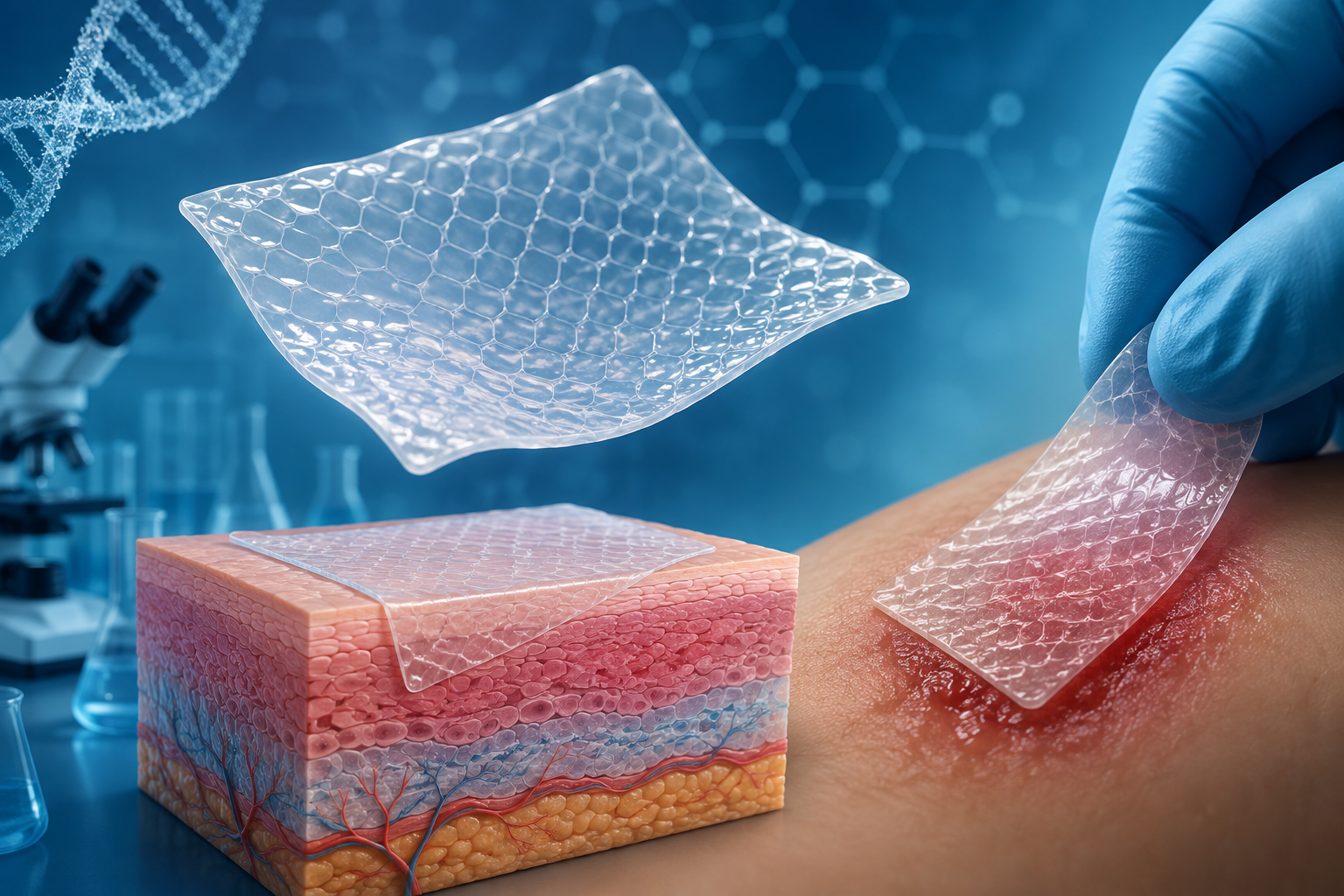
Bioactivx wants to address some of these problems with a fully synthetic material. Its main product, called Bioactiv® Matrix, is a synthetic, bio-inspired skin substitute designed to support tissue regeneration and wound repair.
The material does not rely on animal-derived components. It also does not need cold-chain storage. This could make storage, transport, and use easier than with some traditional advanced wound-care products.
What Is Synthetic Skin?
The term synthetic skin can sound like Bioactivx is trying to create a complete replacement for human skin. That is not the idea behind its current product.
Bioactiv® Matrix is a medical material that acts as a support structure for the body. Its purpose is to create an environment that helps damaged tissue repair itself.
The company says its technology can support faster tissue regeneration, reduce excessive inflammation, and help wounds close with less scarring. It is designed for acute wounds such as burns, traumatic cuts, and skin-graft donor sites.
The larger goal is to create a new class of regenerative medical materials. Instead of only covering a wound, the material aims to help the body follow its natural repair process.
Why the Technology Matters
A major part of Bioactivx’s approach is its synthetic design. Traditional biological materials can have concerns linked to animal sources, storage, transport, and clinical use.
A fully synthetic option could reduce some of these barriers. It may also offer more control over the material itself because its chemical structure can be made with a defined process.
Another important feature is the lack of a cold-chain requirement. Cold-chain systems need controlled temperatures during storage and transport. They can add cost and create logistical problems, especially in remote areas.
Bioactivx says its product can also be used outside a sterile operating room. If the product gains regulatory approval for such use, this could make advanced wound care more practical in emergency response, military settings, remote medical centres, and other areas where access to major hospitals is limited.
From Research to Real Medical Use
Bioactivx is now at a key point in its journey. The company has moved beyond early laboratory research and has already completed first-in-human studies with encouraging clinical results, according to the company.
Bioactiv® Matrix has also been submitted to Singapore’s Health Sciences Authority (HSA) for regulatory review. This step is important because medical products must meet strict safety and performance standards before they can reach patients on a wider scale.
The company expects its first product to move toward regulatory approval and commercial launch. It plans to launch Bioactiv® Matrix in Singapore by the fourth quarter of 2026, followed by expansion into other regional markets in 2027, subject to the required approvals.
How Bioactivx Plans to Use the Money
The new $3 million will support several parts of Bioactivx’s next phase.
A key focus will be manufacturing in Singapore. A medical device company needs more than a strong scientific idea. It also needs a reliable process that can produce the same product at the required quality and scale.
The company also plans to expand its commercial and regulatory teams. These teams will help prepare the product for market access and support the steps required for approval in Singapore and other markets.
The funds will also support future clinical work after the product reaches the market. At the same time, Bioactivx plans to continue work on new wound-care products.
A Wider Product Pipeline
Bioactivx is not focused only on burns.
The company says the same synthetic biomaterial platform could support products for chronic wounds, diabetic ulcers, and inflammatory skin conditions. Its wider platform also has potential for soft and hard tissue repair, including areas linked to orthopaedics.
This broader platform gives the company a chance to build more than one product around its core material science.
Still, each new medical use will require its own evidence, testing, and regulatory work. Success with one product does not automatically mean success across every medical condition.
The Road Ahead
The $3 million round gives Bioactivx more room to move its technology toward real-world use. The company now has to prove that it can make its product at scale, secure regulatory approval, enter the market, and earn the trust of doctors and patients.
That path can take time. Medical devices face strict safety requirements, and wound care is a field where clinical results matter greatly.
Yet Bioactivx has already reached several important milestones. It has its roots in A*STAR research, has developed a synthetic skin substitute, has completed early human studies, and has moved toward regulatory review.
The company’s approach also addresses a practical problem. Advanced wound care is not useful only when the science works. It must also be easy to store, move, and use.
Why This Startup Is Worth Watching
Bioactivx sits at the intersection of deep tech, medical devices, biomaterials, and regenerative medicine. Its work shows how research from Singapore’s science ecosystem can move toward a commercial healthcare product.
The company’s next major test will be its transition from clinical validation to commercial use. If Bioactiv® Matrix receives the required approvals and performs well in real medical settings, its synthetic design could offer a useful alternative to some traditional wound-care materials.
For now, the $3 million pre-Series A round gives Bioactivx the resources to take that next step. Its success could also show how synthetic biomaterials can play a larger role in the future of wound care, first in Singapore and later across other markets.
ALSO READ: eComID Raises €14.58M to Shape the Future of AI Commerce