
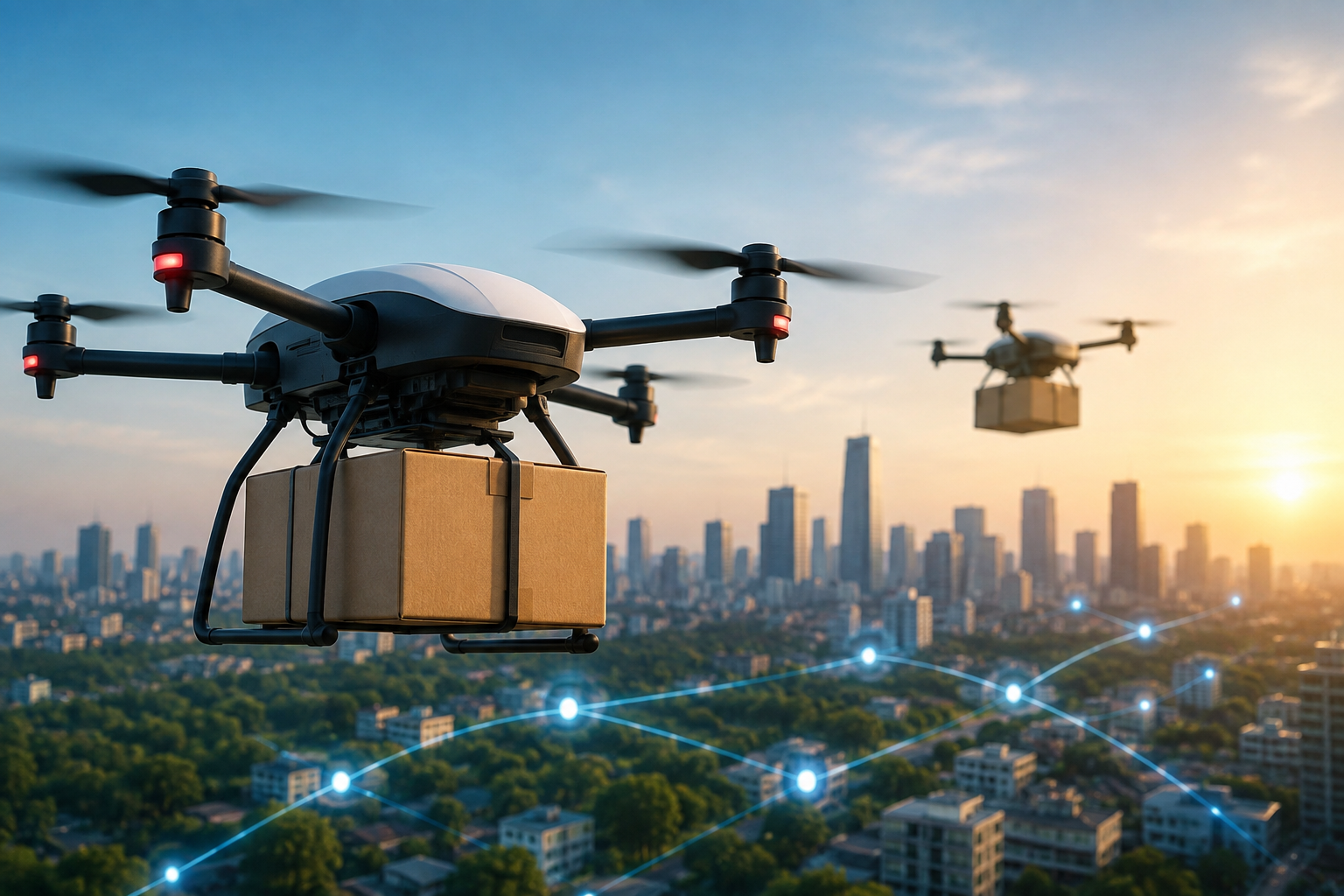
Bengaluru-based drone startup Airbound has raised $37 million in a Series A funding round. The company plans to use the new capital to expand its aerial delivery network and move closer to commercial-scale operations in India.
The deal marks an important step for Airbound as it works to build a large drone logistics business. The company wants drones to become a useful part of the delivery system rather than remain limited to small tests or special projects.
The new funding gives Airbound more financial support as it works on its technology, delivery network, and business plans. It also comes at a time when interest in drone-based logistics is growing across the world.
A New Phase for Airbound
A $37 million Series A round is a major milestone for a young technology company. Series A funding often helps a startup move from an early product stage toward a larger business. For Airbound, this means a stronger focus on scale and real-world use.
The company is based in Bengaluru, one of India’s major technology centers. From there, Airbound aims to build a drone logistics network that can support commercial deliveries.
The goal is not simply to make drones fly. A large delivery service needs much more than an aircraft. It needs reliable routes, safe flight systems, trained teams, strong software, and a clear process for each package. Airbound now has more capital to work on these areas.
Why Drone Delivery Matters
Traditional delivery systems depend on roads, drivers, fuel, and large networks of warehouses and vehicles. These systems work well for many types of orders, but they can face limits when a package needs to reach a remote place or arrive very fast.
Drones can offer another option. They can travel through the air instead of using roads. This can help reduce the effect of traffic and may allow certain goods to reach their destination faster.
Drone logistics can also have value in places where road access is difficult. A drone does not need a normal road between two points. This gives the technology a possible role in areas where regular delivery can take more time.
For businesses, speed can matter a lot. Medical goods, urgent parts, food, and other time-sensitive products may benefit from a faster route. Airbound’s focus on aerial delivery puts it in this larger market.
From Tests to Commercial Scale
One of the most important parts of Airbound’s next phase is the move toward commercial-scale operations.
A drone can complete a small number of test deliveries under controlled conditions. A commercial network is much harder. It must handle many flights, different routes, changing weather, customer needs, safety rules, and other daily challenges.
This is where Airbound’s new capital can make a difference. The $37 million can help the company expand its network and build the systems needed for a larger operation.
Commercial scale also means that the service must make business sense. A delivery company needs to show that drones can carry goods in a safe, reliable, and cost-effective way. The technology must work not only in a demonstration but also as part of a real supply chain.
India’s Opportunity
India could offer a large market for drone logistics. The country has a huge population, many cities, and a wide range of locations with different transport needs.
Some areas have strong road networks, while others can face long travel times or difficult access. A drone network could add another layer to the existing transport system.
India also has a growing technology sector and a large digital commerce market. As more goods move through online and modern retail channels, companies need faster and more flexible delivery choices.
Airbound’s expansion comes against this wider backdrop. Its success will depend on how well it can connect its drone technology with the needs of actual businesses and customers.
What the $37M Can Help Build
The new Series A capital can support several parts of Airbound’s growth. The company can put more resources into its drone technology and improve the systems that support safe and dependable flights.
It can also expand its delivery network. A wider network can help the company serve more locations and work with more business customers.
Another key area is operations. Large-scale drone delivery requires teams that can manage flights, routes, maintenance, package handling, and customer needs. Better software can also help coordinate the movement of drones and goods.
These areas may not always be visible to customers, but they are central to a working logistics service. The aircraft is only one part of the full system.
The Road Ahead
Airbound now enters a new stage after its $37 million Series A round. The company has a larger financial base and a clear goal: expand its aerial delivery network and move toward commercial-scale operations in India.
The next phase will show whether Airbound can turn its technology into a dependable business. The company will need to prove that its drones can operate safely, serve real delivery needs, and work at a scale that makes economic sense.
That process can take time. Building a logistics network is more complex than building a single drone or completing a few test flights. It requires careful work across technology, operations, safety, regulation, and business partnerships.
Still, the new funding gives Airbound a strong platform for its next step.
A Bigger Bet on Drone Logistics
Airbound’s $37 million raise is also a sign of wider interest in drone logistics. Investors and technology companies see the possibility of a delivery system that can work alongside roads rather than depend on them for every trip.
Drones are unlikely to replace traditional delivery vehicles for every type of shipment. Trucks, vans, bikes, and other vehicles will remain important. Instead, drones may become another tool in the logistics network.
Their strongest use could come in cases where speed, distance, access, or route efficiency matters most. If companies can use drones in a practical way, the technology could change how some goods move from one place to another.
For Airbound, the task now is to turn that possibility into a real service.
With $37 million in Series A capital, the Bengaluru startup has the resources to expand its aerial delivery network and take a bigger step toward commercial operations. The coming phase will be important as Airbound works to show how drone logistics can operate at a much larger scale in India.
The company’s progress could also offer a useful view of the future of delivery in the country. If Airbound can build a safe, reliable, and commercially viable network, drones may take a more meaningful place in India’s logistics system.
For now, the $37 million raise gives Airbound a strong new base for that journey.
ALSO READ: Bioactivx Raises $3M for Synthetic Skin and Wound Care