
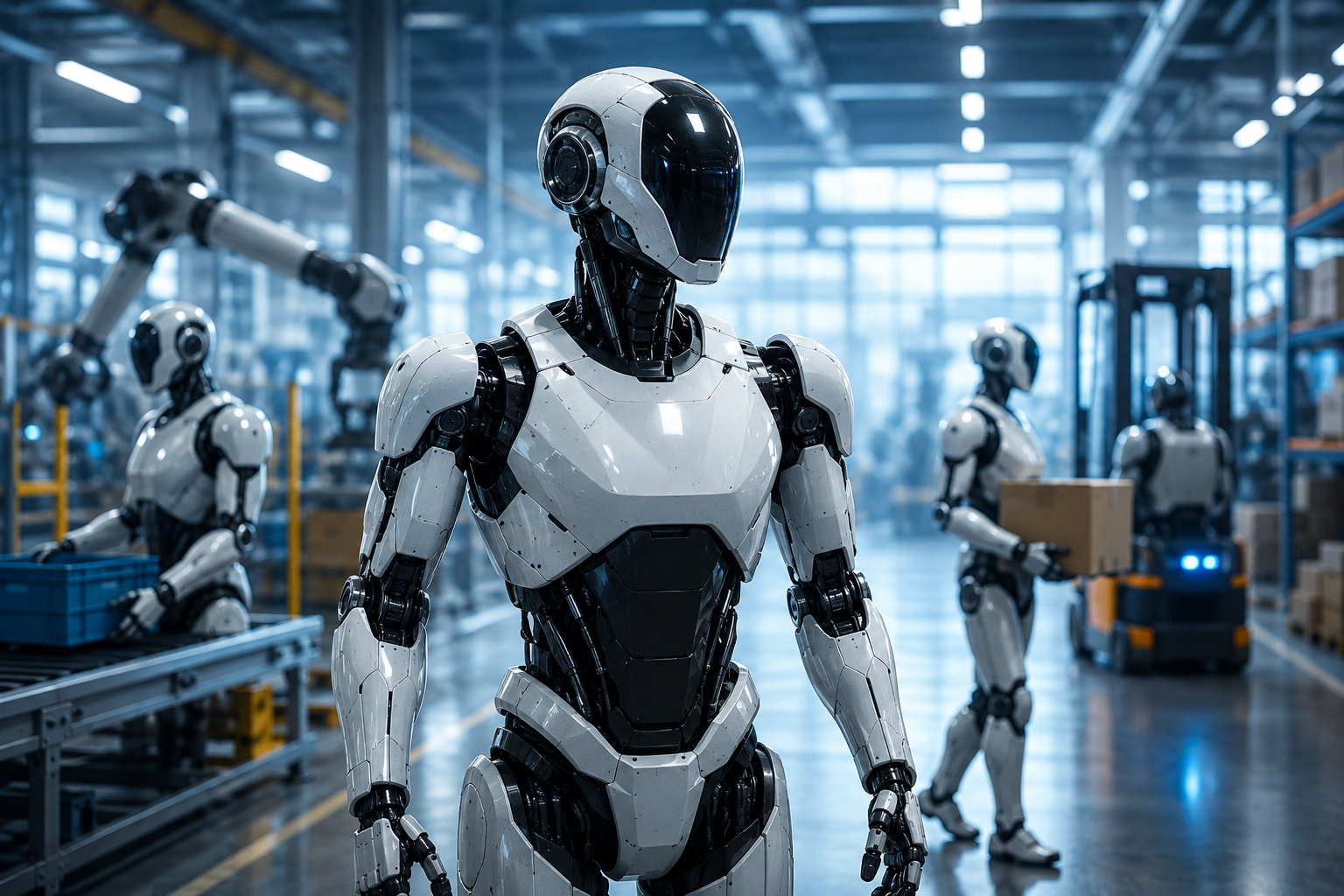
For many years, humanoid robots felt like technology from the distant future. People often saw machines that looked like humans, walked like humans, and copied simple movements. But in reality, most of these robots stayed inside laboratories where engineers tested them under controlled conditions. Companies often showed exciting demonstrations, but very few machines actually performed useful work in everyday business operations.
That picture has now changed in 2026. Several robotics companies have finally pushed humanoid robots beyond research labs and into workplaces where real tasks need completion every day. These machines no longer exist only as experiments. They now work inside factories, warehouses, construction zones, and dangerous industrial environments. This shift marks one of the biggest moments in robotics history because humanoid robots have started doing jobs that humans normally handle.
Figure AI Has Become the Biggest Early Leader
Among all companies in this space, Figure AI has quickly become one of the strongest names. The company has moved faster than most competitors and already placed robots inside actual factory environments. Figure AI has raised more than 1 billion dollars in funding, while reports suggest the company now holds a valuation close to 39 billion dollars. This shows how strongly investors believe in the future of humanoid robotics.
Its main machine, called Figure 02, has already entered BMW production facilities. Inside these factories, the robot performs assembly work that human workers traditionally manage during production processes. The company has also built a large manufacturing system known as BotQ. This production system aims to build nearly 12,000 robots every year. Figure AI proves that humanoid robots can now complete real industrial work instead of simply acting as demonstration machines.
Agility Robotics Has Entered Warehouse Operations
Agility Robotics has taken a very practical route compared with many other robotics startups. Instead of focusing on futuristic demonstrations, the company has focused directly on warehouse operations where businesses need help with physical labor. Its humanoid robot, Digit, now works in logistics environments where products constantly move from one location to another.
One of the company’s biggest achievements came through its partnership with Amazon. The company now tests Digit robots inside warehouse facilities where the machine helps transport packages and move storage containers across operational areas. These tasks may look simple, but they often require workers to repeat the same physical activity for long periods. Agility Robotics also uses a Robot-as-a-Service model, where companies pay to use robots instead of buying them completely. This makes adoption easier because businesses avoid huge upfront costs. The company shows that the first successful humanoid robots may begin with warehouse labor instead of household use.
Apptronik Focuses Directly on Industrial Jobs
Another important company in this growing industry is Apptronik, a startup based in Austin, Texas. The company has built a humanoid robot known as Apollo. Unlike some companies that focus on future consumer products, Apptronik has built Apollo specifically for industrial workplaces where companies constantly need support with repetitive physical work.
Apollo works inside factories and warehouses where workers often spend long hours lifting, carrying, and moving materials from one place to another. The company has already started commercial pilot programs with industrial partners so businesses can test how robots fit into daily operations. One major advantage of Apollo comes from its design. Engineers created the robot specifically for safe interaction with human workers. This allows people and machines to work side by side without creating unnecessary safety concerns. Apptronik follows a smart strategy by solving simple workplace problems first instead of chasing highly advanced artificial intelligence systems.
Unitree Robotics Shows the Power of Mass Production
Chinese robotics company Unitree Robotics has followed a completely different strategy from many Western competitors. While other startups focus heavily on software development and advanced artificial intelligence, Unitree has concentrated strongly on mass production and affordable manufacturing. Its humanoid robots, called G1 and H1, have already entered the market and attracted major attention.
Reports suggest Unitree sold around 5,500 humanoid robots during 2025, which places the company ahead of most competitors in total units sold. The company has also started preparation for a public stock market listing in China. One of its biggest strengths comes from pricing. Its G1 humanoid robot costs around 16,000 dollars, making it one of the cheapest humanoid robots currently available. These machines already serve universities, research centers, educational institutions, and industrial pilot programs. Although these robots still face limitations in fully autonomous work, Unitree has proven that humanoid robots can now move toward large-scale production at lower cost.
Persona AI Focuses on Dangerous Industrial Work
One of the newest but most interesting companies in this sector is Persona AI. Although much younger than some competitors, the company has gained attention very quickly because of its unique focus. Instead of general workplace automation, Persona AI wants humanoid robots to replace workers in dangerous environments where safety risks remain extremely high.
The startup recently raised 27 million dollars in oversubscribed pre-seed funding, which shows strong confidence from investors. The company has already formed partnerships with industrial organizations involved in shipyard operations. Persona AI mainly focuses on what experts call 4D jobs. These jobs are dull, dirty, dangerous, and connected to industries where fewer workers now want employment. The company plans to place robots inside shipyards, construction zones, and energy infrastructure projects. These environments often expose workers to serious physical danger. By placing humanoid robots in these roles, companies can improve safety while solving labor shortages at the same time.
Major Technology Changes Made This Possible
The sudden rise of humanoid robots did not happen by accident. Several major technology improvements have pushed these machines beyond laboratory testing and into real commercial use. One of the biggest reasons comes from rapid improvement in artificial intelligence systems. Modern vision-language-action models now allow robots to understand instructions far better than older systems ever could.
Hardware costs have also dropped sharply during recent years. Chinese manufacturers especially helped reduce production costs for robotic motors, sensors, and movement systems. At the same time, labor shortages have become a major challenge across factories, warehouses, and industrial businesses around the world. Companies now actively search for automation solutions because they struggle to find workers for repetitive physical jobs. Because of these changes, investment in robotics has increased dramatically. Global investment in robotics rose from 4 billion dollars in 2019 to nearly 26 billion dollars by 2025.
The Future of Work Has Already Started
Although humanoid robots have made huge progress, the world has not yet reached the stage where robots replace all workers. Office jobs remain largely untouched, and most humanoid robots still perform narrow tasks inside controlled work environments. But the most important change has already happened. Robots now work full shifts inside warehouses. They perform repetitive factory assembly work. They handle dangerous industrial tasks that humans often avoid. They help companies facing labor shortages in critical sectors.
This moment marks the beginning of a completely new era in technology. The next three years, from 2026 to 2029, may decide whether humanoid robots become one of the world’s biggest industries. For the first time in history, humanoid robots no longer stay trapped inside laboratories. They have entered the real world, and now they have officially started work.
Also Read – How Bengaluru Became India’s Silicon Valley of Technology