
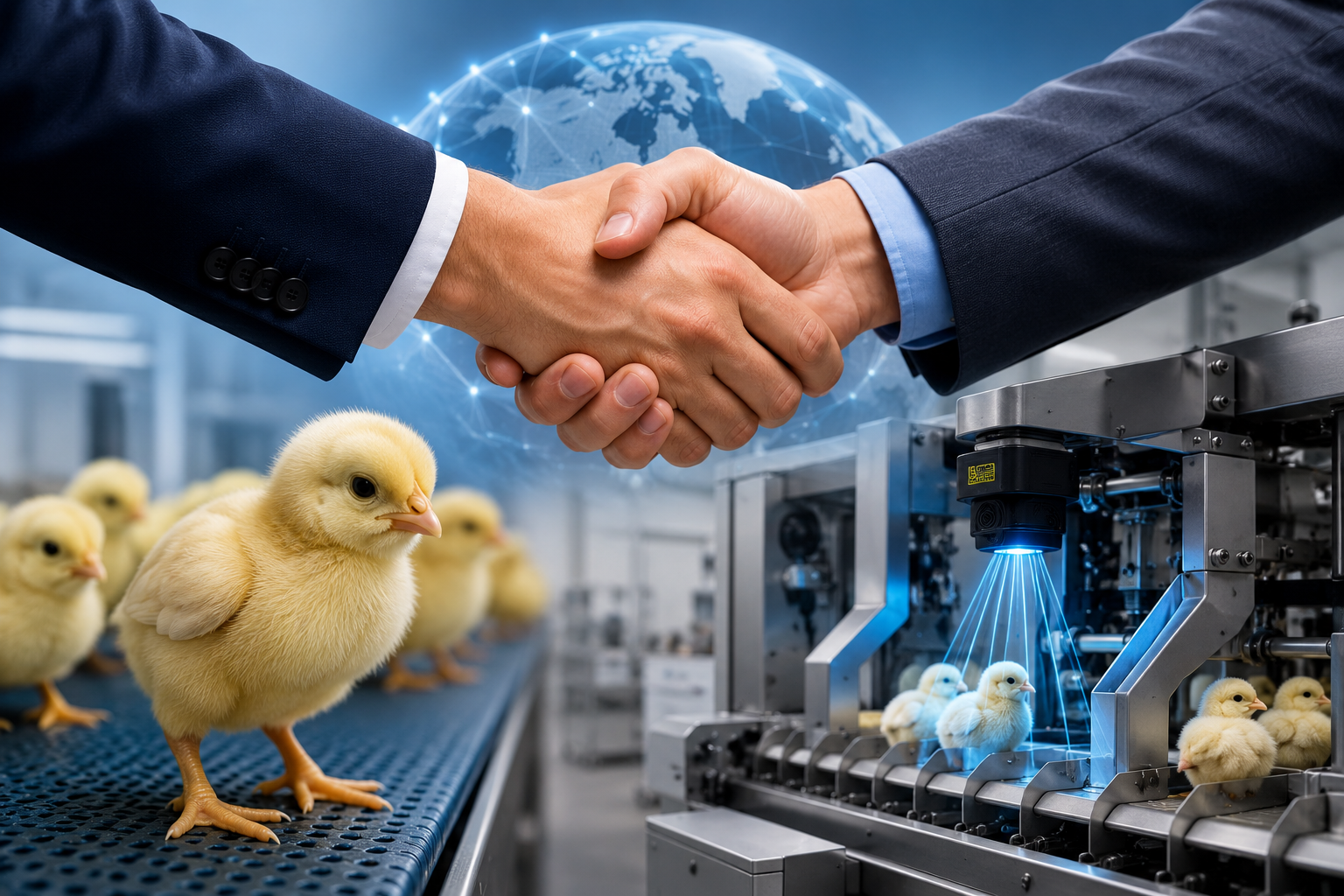
Merck Animal Health has announced a deal to acquire TARGAN, a private agricultural technology company that focuses on advanced solutions for the poultry sector. The agreement marks an important move for Merck Animal Health as it seeks to strengthen its position in modern poultry production.
The company revealed the news on June 11, 2026. While both sides agreed on the transaction, they did not share the financial details. The acquisition is expected to close during the third quarter of 2026. However, the process still requires regulatory approval and the completion of other standard requirements before the deal becomes final.
This acquisition highlights the growing importance of technology in animal agriculture. Farmers and poultry producers now rely on advanced systems that improve efficiency, accuracy, and animal welfare. Through this deal, Merck Animal Health plans to add new capabilities that support these goals.
Who Is TARGAN?
TARGAN is an agricultural technology company founded in 2015. The business is based in Raleigh, North Carolina, and has built its reputation through the development of automated systems for poultry production.
The company focuses on technology that helps hatcheries handle large numbers of chicks with greater precision. Its solutions use automation, machine vision, and advanced software to perform tasks that once required a significant amount of manual labor.
Over the years, TARGAN has worked to create systems that help poultry producers save time, improve accuracy, and support better animal care. These innovations have attracted attention from major companies across the animal health industry.
Merck and TARGAN Already Shared a Relationship
The acquisition did not come out of nowhere. Merck Animal Health has maintained a connection with TARGAN for several years. In fact, Merck first invested in the company in 2017.
Since then, Merck became one of TARGAN’s largest shareholders. This long-term relationship gave Merck a close view of TARGAN’s technology, business strategy, and future potential.
Because of this history, the acquisition represents the next stage of a partnership that has already existed for nearly a decade. The move allows Merck to fully bring TARGAN’s expertise and products into its own business operations.
The Importance of WingScan Technology
One of TARGAN’s best-known innovations is a system called WingScan. This technology uses machine vision and advanced algorithms to identify and sort chicks by gender.
In commercial poultry production, hatcheries process huge numbers of chicks every day. Accurate sorting plays an important role in daily operations. Traditional methods often depend on manual work, which can take time and require specialized skills.
WingScan helps solve this challenge through automation. The system can identify and sort up to 160,000 chicks every hour. This level of speed allows hatcheries to manage large volumes while maintaining consistency and precision.
The technology also helps improve operational efficiency. Producers can complete tasks faster and with fewer errors. As poultry operations continue to grow, solutions like WingScan become more valuable across the industry.
A Focus on Better Animal Welfare
Beyond speed and efficiency, TARGAN’s technology also supports animal welfare goals.
Many poultry companies now place greater emphasis on responsible animal care. Consumers, regulators, and industry groups all pay close attention to welfare standards. As a result, producers seek solutions that help improve treatment and reduce stress during production processes.
Automated systems can support these efforts by delivering more consistent results and reducing the need for certain manual procedures. Through its technology, TARGAN aims to create processes that balance productivity with animal care.
This focus aligns well with Merck Animal Health’s broader mission. The company has often emphasized the importance of animal well-being alongside business performance. The acquisition therefore brings together two organizations with similar priorities.
Advanced Vaccination Solutions Join Merck’s Portfolio
Another major reason behind the acquisition is TARGAN’s vaccination technology.
The company has developed a high-speed precision ocular spray system designed for day-old chicks. This technology delivers vaccines through a carefully controlled process.
The system supports the administration of respiratory vaccines as well as coccidiosis vaccines. These vaccines play an important role in poultry health and disease prevention.
By adding this technology to its portfolio, Merck Animal Health gains access to advanced tools that complement its existing vaccine business. The combination creates new opportunities to provide integrated health solutions for poultry producers around the world.
The addition may also help farmers improve vaccination accuracy and consistency. Better vaccine delivery can contribute to stronger flock health and improved production outcomes.
Why Merck Wants This Deal
Merck Animal Health sees significant value in TARGAN’s expertise and technology.
The company already holds a strong position in animal health through its vaccines, medicines, and health management solutions. However, the industry continues to evolve. Customers now seek products that combine health care with automation and digital technology.
Through the acquisition, Merck gains access to advanced engineering capabilities and specialized device development knowledge. These strengths can support future innovation across multiple areas of animal agriculture.
The deal also expands Merck’s reach within commercial poultry operations. As poultry demand grows across many regions, companies that provide efficient production solutions may benefit from new opportunities.
For Merck, the acquisition is not just about current products. It is also about future innovation and long-term growth.
Technology Becomes More Important in Agriculture
The announcement reflects a wider trend across the agriculture sector.
Modern farms increasingly use automation, sensors, machine vision, artificial intelligence, and data analysis tools. These technologies help producers make better decisions and manage operations more efficiently.
In poultry production, automation can improve hatchery performance, vaccination processes, flock management, and overall productivity. Companies that develop these tools have become attractive acquisition targets for larger organizations.
The purchase of TARGAN shows how animal health companies now view technology as an important part of their future. Success no longer depends only on medicines and vaccines. Advanced equipment and digital systems also play a major role.
As this trend continues, more partnerships and acquisitions may emerge across the industry.
What Happens Next?
The transaction is expected to close in the third quarter of 2026, assuming all required approvals move forward as planned.
After completion, TARGAN’s technology, products, and expertise will become part of Merck Animal Health. The company will then work to integrate these capabilities into its existing business structure.
Industry observers will closely watch how Merck uses TARGAN’s innovations in the years ahead. Many believe the combination could strengthen poultry production through better automation, improved vaccination methods, and more efficient hatchery operations.
Conclusion
Merck Animal Health’s decision to acquire TARGAN represents a significant development in the poultry and animal health sectors. The deal brings together a global animal health leader and a technology company known for innovative poultry solutions.
TARGAN’s WingScan system, advanced vaccination technology, and expertise in automation provide valuable assets for Merck. At the same time, the acquisition supports Merck’s goal of expanding beyond traditional animal health products into advanced agricultural technology.
As poultry producers face growing demands for efficiency, accuracy, and animal welfare, technologies such as those developed by TARGAN may become even more important. If the transaction closes as expected, Merck Animal Health will be well positioned to play a larger role in the future of modern poultry production.
Also Read – Exponent Energy Gets ₹200 Crore to Grow EV Charging Network