
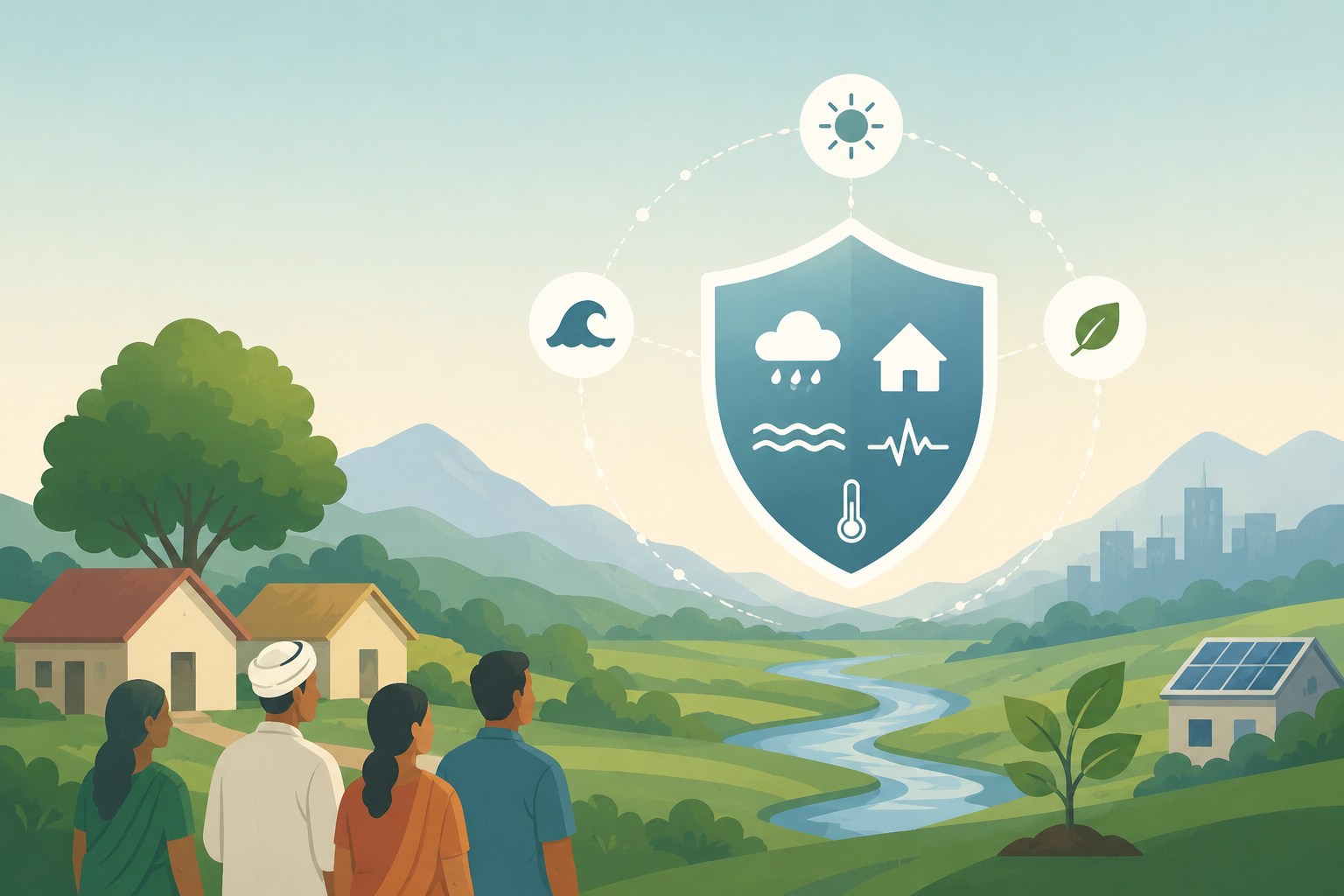
Climate change has become one of the biggest challenges for communities across India. Floods, heat waves, earthquakes, and other natural hazards affect millions of people every year. These events not only damage homes and infrastructure but also disrupt livelihoods, education, healthcare, and local development. As climate risks continue to rise, local governments need better tools to understand threats and prepare for them.
In a major step toward stronger climate resilience, enterprise-tech and climate resilience startup Resilience AI, along with UNICEF and RedR India, has completed the deployment of an AI-supported disaster management programme across 75 Gram Panchayats in Uttar Pradesh, Bihar, and Tamil Nadu. The initiative took place under the UN 75 Village Development Project and aimed to strengthen local disaster preparedness through the use of Artificial Intelligence (AI) and Machine Learning (ML).
The programme explored how advanced technologies can support climate adaptation and disaster management while also helping local authorities create more effective development plans. By combining scientific data with local knowledge, the project helped communities better understand risks and take informed decisions for the future.
Bringing Technology to the Local Level
Climate hazards affect people at the local level. However, access to detailed scientific information often remains limited in villages and rural areas. This gap makes it difficult for local administrations to prepare for disasters and reduce risks before emergencies occur.
To address this challenge, Resilience AI introduced Resilience360™, a digital web-based platform designed to provide detailed risk information for specific locations. The platform combines climatic, geological, ecological, and built-environment data to create hyperlocal risk profiles.
These profiles help local authorities understand the exact risks faced by their communities. Instead of relying only on broad regional assessments, village administrations can now access location-specific information that reflects the conditions in their own areas.
Focus on Three Climate-Vulnerable States
The programme covered 75 Gram Panchayats across three districts in India. These included Bahraich district in Uttar Pradesh, Begusarai district in Bihar, and Virudhunagar district in Tamil Nadu.
Each of these regions faces different climate-related challenges. Some areas experience severe flooding, while others struggle with heat stress or earthquake risks. By selecting districts with varied hazard profiles, the programme demonstrated how AI and ML can support disaster planning in different environmental conditions.
The initiative focused on helping communities understand these threats and prepare practical strategies that match local realities.
Digital Disaster Management Plans for Villages
One of the most important outcomes of the programme was the development of digital Gram Panchayat Disaster Management Plans (GPDMPs). These plans were created in line with guidelines issued by the National Disaster Management Authority (NDMA).
The digital plans included detailed Hazard, Risk, and Vulnerability Assessments (HRVA). These assessments examined the dangers faced by communities and identified populations, infrastructure, and resources that could face the highest levels of risk during disasters.
The plans also included risk reduction measures, preparedness actions, response strategies, and recovery frameworks. Each plan connected disaster management with Gram Panchayat Development Plans (GPDPs), which ensured that resilience became part of regular local development activities.
This connection between disaster planning and development planning is important because it allows communities to address risks before disasters occur rather than reacting only after damage takes place.
AI and ML Support Better Decision-Making
Artificial Intelligence and Machine Learning played a central role in the programme. These technologies helped analyse large volumes of environmental and geographic data much faster than traditional methods.
The system processed information from multiple sources and transformed it into practical insights that local authorities could understand and use. This approach helped decision-makers view risks within a broader context and understand how different factors interact with one another.
The project showed that AI can become a useful support tool for local governance when scientific information is presented in a simple and understandable format.
UNICEF Highlights the Importance of Risk Awareness
Commenting on the initiative, Sarbjit Singh Sahota, Chief DRR a.i., UNICEF, highlighted the complex nature of modern challenges.
According to Sahota, today’s world faces a “polycrisis,” where multiple risks interact and create wider impacts. He noted that many of these challenges result from a failure to recognise and address systemic risks.
He expressed confidence that AI and ML can help decision-makers understand problems within a wider framework. He also praised Resilience AI for its willingness to support the journey toward stronger resilience.
Sahota emphasized that resilience is not a final destination. Instead, it requires continuous effort, learning, and adaptation as risks evolve over time.
Resilience AI Focuses on Practical Solutions
Samhita R, Founding CEO of Resilience AI, explained the purpose behind the initiative.
She stated that climate hazards are experienced locally, but tools that explain these risks often remain unavailable at the community level. Through the programme, the company worked closely with Gram Panchayats across Uttar Pradesh, Bihar, and Tamil Nadu to convert scientific information into practical planning tools.
According to her, the goal extended beyond technology deployment. The focus remained on ensuring that climate risk and disaster management information could become part of everyday local decision-making processes.
This approach helped bridge the gap between advanced scientific analysis and real-world governance needs.
Community Validation Strengthened the Results
A key feature of the programme was the active participation of local communities. During training and orientation sessions, findings generated by the platform were reviewed and validated with local stakeholders.
This step ensured that the technology reflected actual conditions on the ground.
In Tamil Nadu, the platform identified a girls’ school as vulnerable to heat stress. Community representatives later confirmed this assessment, which strengthened confidence in the system’s accuracy.
Similar results emerged in Bihar and Uttar Pradesh. The platform identified households that faced flood risks, and local residents verified these findings through direct feedback.
Such validation demonstrated the value of combining advanced technology with community knowledge. While AI can process large amounts of data, local residents provide practical insights that help confirm and improve assessments.
Science, Speed, and Scale for Climate Resilience
Climate resilience requires accurate information, timely action, and broad implementation. The digital disaster management plans developed under this programme brought these elements together.
The plans included hyperlocal risk assessments, preparedness measures, mitigation strategies, response actions, and recovery frameworks. They also featured digitally mapped action plans connected to local governance systems.
This structure allows village administrations to access information quickly and take informed decisions during emergencies. It also helps local leaders prioritise investments and development activities that reduce future risks.
By making scientific evidence easier to understand, the programme supports faster and more effective decision-making.
A New Direction for Local Governance
The successful completion of the programme across 75 Gram Panchayats marks an important milestone in the use of technology for disaster management and climate adaptation.
The initiative demonstrated how AI and ML can support local governments by transforming complex scientific data into practical tools. It also showed the importance of community participation in ensuring that technological solutions remain relevant and effective.
As climate risks continue to increase, local administrations will need stronger systems to protect communities and support sustainable development. Programmes such as this provide a model for how technology, scientific evidence, and community engagement can work together to strengthen resilience.
The collaboration between Resilience AI, UNICEF, and RedR India offers valuable lessons for future climate adaptation efforts. By linking disaster management with development planning, the initiative has helped create a stronger foundation for safer and more resilient communities across Uttar Pradesh, Bihar, and Tamil Nadu.
Also Read – Best Zero Setup Fee Payment Gateways for Indian Startups