
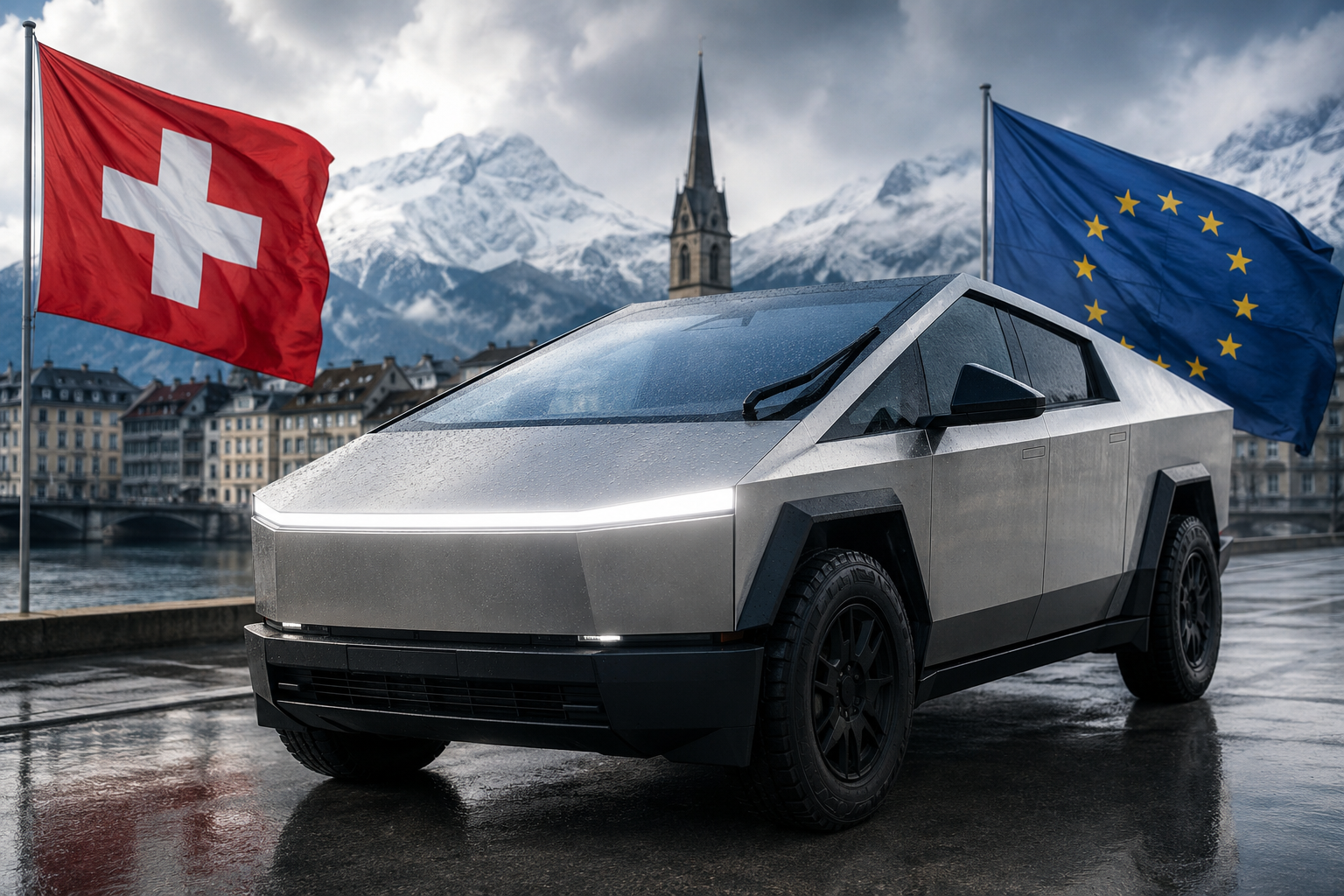
The Tesla Cybertruck stands as one of the most unusual vehicles in the world. Its sharp body, huge size, and stainless steel design make it very different from normal pickup trucks. Many people love its bold look, while others feel shocked by its strange shape. In the United States, the Cybertruck already drives on roads. In Europe, however, the story looks very different.
Now, a small Swiss startup wants to change that situation. The company works hard to make the Cybertruck legal for roads in Switzerland and possibly other parts of Europe. This project has created huge interest among car fans, Tesla supporters, and auto experts across the continent.
A Small Swiss Company Starts a Big Mission
The startup behind this project is called Teslab. The company comes from Switzerland and focuses on Tesla vehicles and special electric car projects. Teslab now tries to solve one of the biggest problems around the Cybertruck in Europe.
Tesla itself has not launched the Cybertruck in Europe. The company never confirmed a full European release because the truck does not meet many local safety rules. This gave Teslab an opportunity to step in with its own plan.
The startup believes the Cybertruck can become road legal with proper changes and careful testing. Company founder Raven Seeholzer leads the project and pushes the vehicle through the Swiss approval process.
Why Europe Does Not Accept the Cybertruck Easily
Europe has strict vehicle safety laws. These rules protect drivers, passengers, cyclists, and pedestrians. The Cybertruck creates problems because its design breaks several of those rules.
One major issue comes from the truck’s sharp body edges. European safety standards require softer shapes that reduce harm during accidents. The Cybertruck uses flat stainless steel panels with hard corners. Experts say these edges may cause serious injuries during crashes.
Another issue comes from the vehicle’s rigid structure. Many European cars use body designs that absorb crash energy. The Cybertruck uses a very strong exoskeleton instead. This structure may not behave the same way during collisions.
The truck’s large size also creates concerns. European roads and parking spaces often look much smaller than roads in the United States. The Cybertruck’s width and weight make city travel difficult in many places.
Even the lighting and electrical systems need changes before the vehicle can meet local laws.
Teslab Begins Major Modifications
To solve these problems, Teslab started deep modifications on imported Cybertrucks. The company did not simply add small updates. Engineers opened and rebuilt large parts of the truck.
Reports say the startup added protective rubber materials around the body edges. These soft sections help lower danger during impacts.
The company also created a different front bumper. This new design aims to improve pedestrian safety and meet European standards.
Teslab engineers reportedly changed parts of the truck’s electrical system as well. European laws require different settings for lights and road equipment. Because of this, the startup needed extra technical work.
The company also carried out several road and safety tests. Workers spent many hours checking how the vehicle performs under Swiss regulations.
Switzerland as the First Step
Teslab does not plan to jump directly into all European markets at once. Instead, the company first focuses on Switzerland.
This strategy makes sense because Swiss approval rules differ slightly from European Union regulations. Experts believe Switzerland offers a more realistic first target for the Cybertruck.
If the startup receives approval there, the company could later attempt wider European certification.
Still, Swiss approval does not automatically open every European road. The European Union follows broader UNECE vehicle regulations. Those rules remain difficult for the Cybertruck.
Even with Swiss success, the truck may still face limits in several countries.
Strong Public Interest Around the Truck
Despite all these legal problems, many Europeans still want the Cybertruck. Interest around the vehicle remains surprisingly high.
Reports from late 2025 said Teslab already sold several Cybertrucks before full approval arrived. The company also collected hundreds of preorders from buyers across Europe.
This demand shows the strong attraction of Tesla’s unusual pickup truck. Some people love the futuristic style. Others enjoy the truck’s powerful electric performance and huge road presence.
A few unofficial imports already appeared in different European countries. These vehicles often carry very high prices because of import costs and legal complications.
Many owners use them for private events, displays, or limited driving situations.
Tesla Remains Silent About Europe
Tesla itself still has no official European launch plan for the Cybertruck. The company mainly focuses on the North American market.
Many experts believe Tesla understands how difficult European approval could become. The company would likely need expensive redesign work to fully satisfy local laws.
Because of this, Teslab’s effort has become even more important. The startup now acts almost like an independent bridge between the Cybertruck and Europe.
If Teslab succeeds, it could prove that private companies can adapt difficult vehicles for strict foreign markets.
Challenges Still Remain
Even with progress, many challenges remain ahead. Approval processes often take a long time. Safety authorities carefully inspect every detail before they allow vehicles on public roads.
The Cybertruck’s design still creates debate among regulators and experts. Some specialists believe the truck may continue to face restrictions because of its weight and body structure.
Insurance costs may also rise because the vehicle remains rare and unusual in Europe.
Repair work could create another problem. Special stainless steel body panels may require expert technicians and expensive replacement parts.
Charging infrastructure in some regions could also affect owners who plan long trips.
Still, supporters believe these problems can be solved over time.
What This Means for Europe’s Car Market
The Cybertruck project may influence more than Tesla fans alone. It could also affect the future of imported electric vehicles in Europe.
If Teslab successfully homologates the truck, other companies may follow the same path with special American vehicles.
This could open new opportunities for startups that focus on custom vehicle adaptation and certification.
The project also highlights the growing power of electric vehicles across global markets. Even difficult regulations have not stopped public interest in bold new designs.
The Cybertruck continues to attract attention because it looks unlike anything else on the road.
Final Thoughts
The Swiss startup Teslab now stands at the center of one of the auto industry’s most unusual projects. The company wants to make the Tesla Cybertruck legal for Swiss roads and possibly wider European use.
To achieve this goal, engineers changed major parts of the truck, added safety improvements, and completed detailed testing work.
Europe’s strict safety laws still create major barriers. Sharp edges, vehicle size, and body structure remain difficult challenges for approval authorities.
Even so, strong customer demand keeps the project alive. Hundreds of people already show interest in owning a Cybertruck in Europe.
Tesla itself has not confirmed any official European release. Because of that, Teslab’s work may become the first real path for the Cybertruck to enter European roads legally.
The final outcome remains uncertain. But one thing is clear. A small Swiss startup has already pushed the Cybertruck much closer to Europe than many experts expected.
Also Read – How to Get a Job at OpenAI in 2026: Complete Guide