
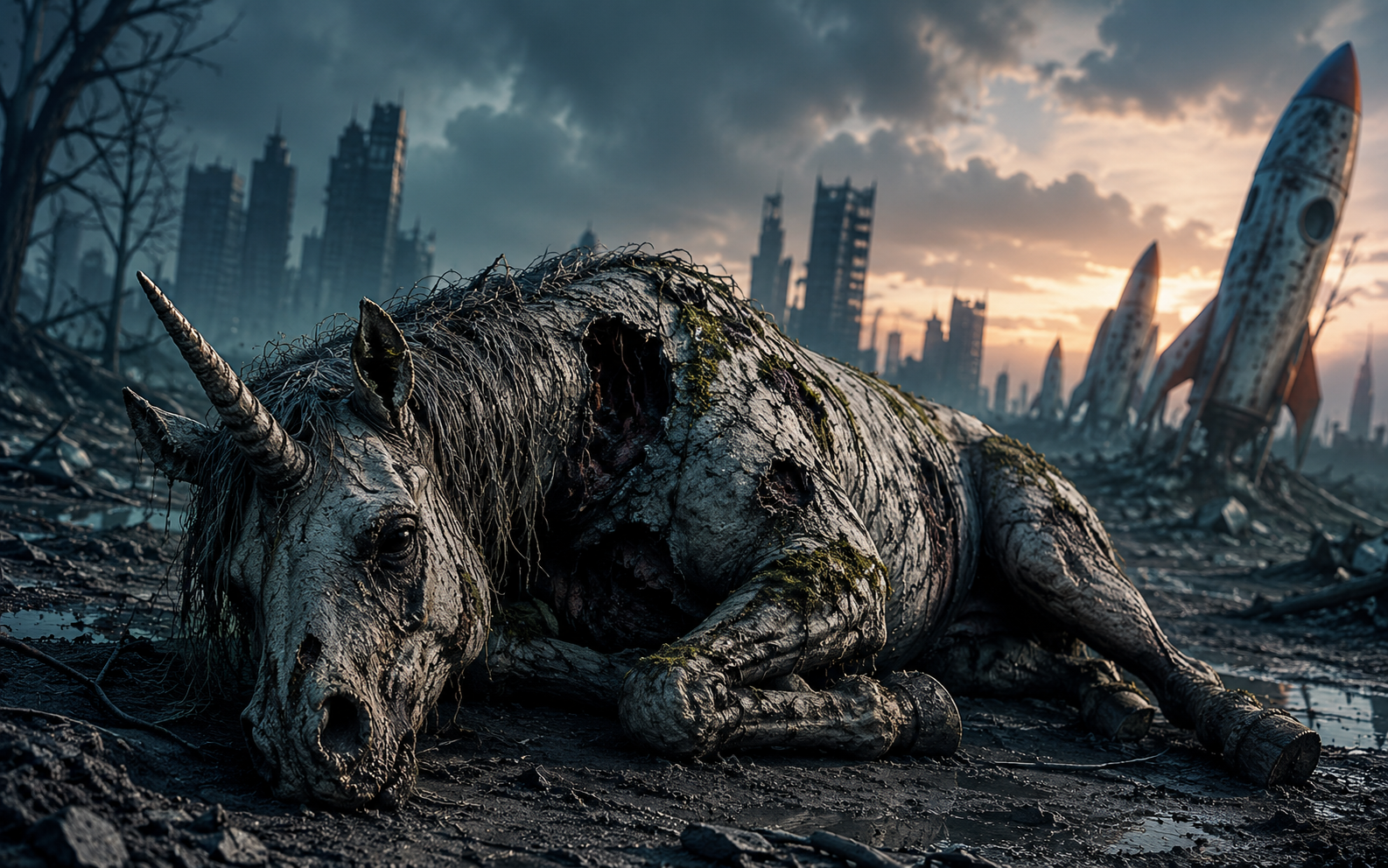
In 2026, the global startup ecosystem is undergoing a profound recalibration. The exuberance that once defined the venture capital landscape—characterized by rapid funding rounds, soaring valuations, and aggressive expansion—has given way to a more restrained, disciplined environment. Out of this shift has emerged a growing class of companies now widely referred to as “zombie startups.”
These startups are not failures in the traditional sense. They continue to operate, employ people, and generate revenue. However, they lack the growth trajectory, investor interest, and strategic momentum required to scale or exit successfully. In essence, they exist in a state of suspended animation—alive, but not progressing.
The rise of zombie startups in 2026 reflects deeper structural changes in global finance, technology, and entrepreneurship. Understanding this phenomenon requires examining not only the startups themselves but also the economic forces shaping their existence.
Defining the Zombie Startup
A zombie startup typically occupies a grey area between success and failure. It has not shut down, yet it is far from thriving. Several defining characteristics set these companies apart:
They generate enough revenue to sustain operations but not enough to scale meaningfully. Their growth has plateaued, often after an initial period of expansion. They struggle to raise new funding, particularly at valuations comparable to previous rounds. Most importantly, they lack a clear pathway to profitability, acquisition, or public listing.
Recent industry estimates suggest that roughly 15% to 20% of startups fall into this category. This is a significant proportion, indicating that the issue is not isolated but systemic.
The Data Behind the Trend
The emergence of zombie startups is supported by several key data points that illustrate the changing dynamics of the startup ecosystem.
Globally, approximately 90% of startups fail over time. However, failure is not always immediate. Many companies linger for years in a state of minimal viability. At the same time, only a very small fraction—less than 1%—achieve the kind of scale associated with venture-backed success stories.
Funding cycles have also slowed considerably. The median time between funding rounds has stretched to nearly two years in many markets. This delay creates financial strain for startups that rely on continuous capital infusion.
Another important indicator is the sharp decline in unicorn creation. Compared to the peak years of 2020 and 2021, the number of new billion-dollar startups has dropped by more than 70%. This suggests that the pipeline for high-growth outcomes has narrowed significantly.
Even venture capital firms are not immune. Hundreds of funds are now considered “zombie funds,” meaning they are still active but have not produced meaningful returns or raised new capital. This reflects a broader stagnation across the investment landscape.
The Legacy of Easy Money
To understand why zombie startups are proliferating, it is essential to revisit the economic conditions of the previous decade.
Between roughly 2015 and 2021, the global economy experienced an era of historically low interest rates. Capital was abundant and inexpensive, encouraging investors to deploy large amounts of money into high-risk, high-growth ventures. Startups benefited enormously from this environment.
During this period, the prevailing philosophy was “growth at all costs.” Companies were incentivized to prioritize user acquisition, market share, and expansion over profitability. Losses were tolerated—even expected—as long as growth metrics remained strong.
This led to inflated valuations and an oversupply of capital chasing a limited number of opportunities. Many startups raised funds at valuations that assumed future growth far beyond what was realistically achievable.
When macroeconomic conditions shifted—driven by inflation, rising interest rates, and geopolitical uncertainty—the foundation of this model began to crack. Investors became more cautious, capital became more expensive, and expectations changed rapidly.
Startups that had been built for a world of abundant funding suddenly found themselves in an environment where survival required efficiency and discipline.
Why Startups Become Zombies
Not all struggling startups become zombies. Some fail quickly, while others successfully adapt. Zombie startups emerge under specific conditions.
One major factor is overvaluation. Companies that raised capital at excessively high valuations face significant challenges when attempting to raise follow-on funding. Down rounds—where valuations decrease—can dilute existing investors and demoralize teams, making them less attractive.
Another factor is partial product-market fit. These startups have a product that works for a niche audience but lacks the scalability required for broader success. They generate revenue but cannot expand significantly beyond their initial market.
Operational inertia also plays a role. Founders and teams may continue running the business because it still functions, even if growth has stalled. Shutting down is often emotionally difficult and professionally risky.
Investor behavior further contributes to the problem. Venture capitalists may prefer to keep a struggling startup alive rather than write off their investment. This delays the inevitable and prolongs the company’s existence.
The Role of Artificial Intelligence
Artificial intelligence has added a new layer of complexity to the startup ecosystem in 2026.
On one hand, AI has dramatically lowered the barriers to entry. Entrepreneurs can build products faster and with fewer resources than ever before. This has led to an explosion of new startups, particularly in software and digital services.
On the other hand, AI has intensified competition. Many startups are building similar products, often with only incremental differences. This makes it harder for any single company to stand out.
Investors, in response, are becoming more selective. Funding is increasingly concentrated in a smaller number of high-performing companies with clear differentiation and strong technical capabilities.
As a result, many AI startups find themselves in a precarious position. They are viable enough to continue operating but not strong enough to dominate their market or attract significant investment. This makes them prime candidates for becoming zombie startups.
Economic and Market Implications
The rise of zombie startups has several important consequences for the broader economy.
One major issue is capital inefficiency. Resources that could be allocated to more promising ventures are instead tied up in companies with limited growth potential. This reduces the overall productivity of the startup ecosystem.
Talent allocation is another concern. Skilled workers employed by zombie startups may have fewer opportunities to contribute to high-impact innovation. This can slow technological progress at a macro level.
Zombie startups can also distort markets. In an effort to survive, they may adopt unsustainable pricing strategies, undercutting competitors and disrupting healthy market dynamics.
From a macroeconomic perspective, the persistence of zombie companies can delay what economists refer to as “creative destruction.” This is the process by which inefficient firms exit the market, allowing more efficient ones to take their place. When this process is delayed, economic dynamism suffers.
2026 as a Tipping Point
Many analysts view 2026 as a potential turning point for zombie startups.
Rising interest rates and tighter financial conditions are increasing pressure on unprofitable companies. At the same time, investors are demanding clearer paths to profitability and stronger financial discipline.
This combination is likely to lead to a wave of closures or consolidations. Some zombie startups will shut down entirely, while others may be acquired at reduced valuations.
Although this process may be painful in the short term—resulting in job losses and financial write-downs—it could ultimately strengthen the startup ecosystem. By removing weaker players, resources can be reallocated to more innovative and efficient companies.
Strategies to Avoid Becoming a Zombie
For founders, avoiding the zombie trap requires a fundamental shift in mindset.
Profitability must become a central focus. While growth remains important, it must be sustainable and supported by solid unit economics. Startups can no longer rely on continuous funding to offset losses.
Cost management is equally critical. Reducing burn rate and extending runway can provide the time needed to adapt and find a viable path forward.
Differentiation is another key factor. Startups must offer unique value propositions that set them apart from competitors. Incremental improvements are unlikely to attract investment in a crowded market.
Finally, founders must be willing to make difficult decisions. This includes pivoting the business model, pursuing strategic partnerships, or even shutting down if necessary. Recognizing when a venture is no longer viable is an essential aspect of entrepreneurship.
A New Era for Venture Capital
The rise of zombie startups is also reshaping the venture capital industry.
Investors are becoming more disciplined and selective. Due diligence processes are more rigorous, and there is greater emphasis on financial fundamentals.
There is also a shift toward supporting existing portfolio companies rather than constantly seeking new investments. This reflects a more cautious approach to capital deployment.
In addition, alternative funding models are gaining traction. These include revenue-based financing and debt instruments that provide capital without requiring high-growth outcomes.
The Future of Innovation
Despite the challenges posed by zombie startups, the long-term outlook for innovation remains positive.
The current environment is forcing startups to become more efficient, resilient, and focused. These qualities are likely to produce stronger companies over time.
Artificial intelligence and other emerging technologies continue to create new opportunities. While many startups may struggle, those that succeed are likely to have a profound impact on industries and societies.
The startup ecosystem is evolving from one driven by abundance to one defined by discipline. This transition may be difficult, but it is ultimately necessary for sustainable growth.
Conclusion
The rise of zombie startups in 2026 is a reflection of a broader transformation in the global economy. After years of rapid expansion fueled by cheap capital, the startup ecosystem is entering a phase of consolidation and recalibration.
Zombie startups represent the in-between stage of this transition. They are neither failures nor successes, but rather companies caught in a state of stagnation.
While their presence poses challenges—such as capital inefficiency and market distortion—it also highlights the need for a more sustainable approach to entrepreneurship.
As weaker companies exit and stronger ones emerge, the ecosystem is likely to become more robust and resilient. In this sense, the age of zombie startups may not be a sign of decline, but rather a necessary step toward a healthier and more balanced future.
ALSO READ: The Founder vs CEO Debate: Vision, Power, and Execution in Modern Startups