
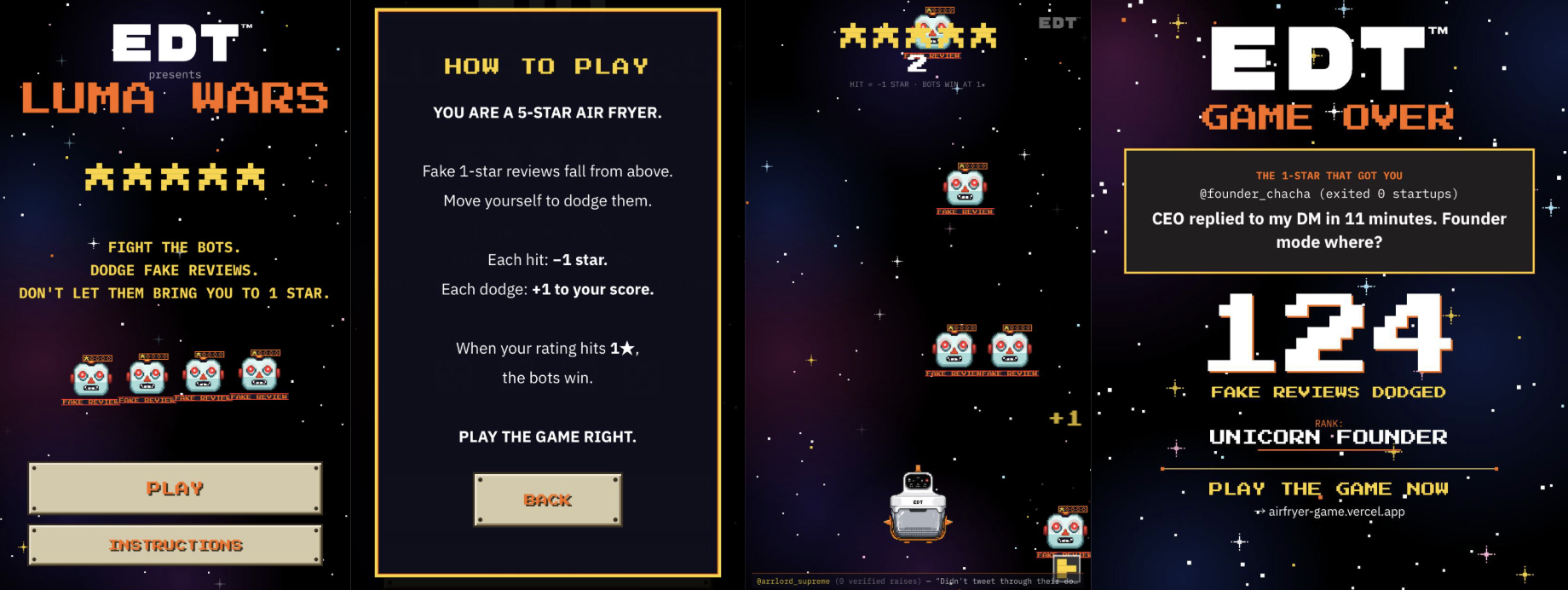
EDT has found a very unusual way to respond to online noise around its popular product LUMA. Instead of anger, public fights, or legal threats, the company and its close community created a browser game called LUMA Wars. The game mixes humor, internet culture, and brand loyalty into one playful experience that people across social media now discuss widely.
LUMA Wars came from conversations inside EDT’s wider community. People close to the brand noticed suspicious review activity and strange online behavior around LUMA, the company’s flagship PureGlass™ Air Fryer Oven. Many members of the community had followed the product journey from the beginning. They strongly believed in the product and the work behind it.
Those discussions slowly grew into something much bigger.
Instead of turning frustration into negativity, the team chose a different path. They transformed the situation into a creative online experience that people could enjoy together. That decision eventually led to the birth of LUMA Wars.
A Game Born From Internet Culture
LUMA Wars is not a traditional marketing campaign. It does not look like a normal advertisement or product launch. The project feels deeply connected to internet culture and online communities.
Players control LUMA inside a browser-based game while reviews, ratings, and digital distractions fall from above. The goal stays very simple. Players must survive, protect the rating, and keep momentum alive.
The gameplay reflects the reality many modern brands face today. Companies now live inside a fast-moving digital world where algorithms, online trends, reviews, and public opinion constantly shape perception.
One viral moment can lift a product very quickly. One wave of online criticism can also create serious damage.
LUMA Wars takes that pressure and turns it into something fun and interactive.
The game does not attack critics directly. It does not encourage outrage. Instead, it allows the community to participate in a light-hearted experience built around support and shared belief.
That choice helped the project stand out online.
The Idea Came From Real Community Conversations
One of the most important parts of the story involves where the idea actually began. EDT did not directly create the concept as a top-down corporate campaign.
The project emerged from conversations between design and tech tastemaker Srijan Mahajan and members of the EDT team. Those talks later evolved into the idea for LUMA Wars.
Srijan Mahajan and Pratyush Singh then developed the game together.
Both creators had followed EDT from the very beginning, long before LUMA became a known product. They watched the company grow from early stages and saw the team build the brand closely over time.
That personal connection gave the project emotional depth.
The creators did not simply build a game for publicity. They built something rooted in genuine support for the people and product behind the brand.
That authenticity now forms a major reason behind the strong community reaction.
EDT Chose Creativity Over Negativity
Modern internet culture often rewards outrage. Many companies respond aggressively when online criticism appears. Brands may publish defensive statements, start legal battles, or attack critics publicly.
EDT chose another direction.
The company turned a tense online moment into a collaborative creative project. That decision changed the tone of the conversation completely.
Instead of focusing attention on suspicious reviews or negativity, LUMA Wars redirected energy toward participation, humor, and community expression.
This strategy helped the brand avoid a hostile public fight.
The game also allowed supporters to express loyalty in a playful way. Users began to share scores, screenshots, and reactions across social media platforms soon after launch.
That activity helped LUMA Wars spread naturally online.
People did not feel forced to support the campaign. The project felt organic because it grew from real conversations inside the community itself.
Naiyya Saggi Explains the Bigger Meaning
Naiyya Saggi, Co-founder and CEO of EDT, shared the deeper meaning behind the project.
She explained that LUMA Wars never aimed to respond directly to online noise. Instead, the project celebrated belief, creativity, and cultural connection inside an ecosystem where many people continue to play fair and support thoughtful products.
According to Saggi, the collaboration between EDT, Srijan Mahajan, and Pratyush Singh transformed community conversations into a larger cultural expression around LUMA.
She also spoke about the modern internet environment.
In her view, noise will always exist online. At the same time, creators, collaborators, and communities also shape culture together in real time. She believes LUMA Wars reflects what can happen when people with shared belief come together naturally.
That message connected strongly with many people online.
The campaign did not focus only on product sales. It focused on trust, participation, and community identity.
The Creators Wanted Something Fun
Srijan Mahajan and Pratyush Singh also explained their perspective on the project.
They said they closely followed LUMA’s journey and noticed many conversations unfolding online. However, they never wanted to create a serious public statement or attack others directly.
Instead, they wanted to transform the moment into something playful that the wider community could enjoy together.
The creators genuinely believed in both the product and the people behind EDT. That belief pushed them toward an internet-native response instead of a traditional corporate reaction.
Their comments highlighted an important shift inside modern branding.
Today, many successful campaigns no longer come only from companies themselves. Communities, creators, designers, and internet culture now play major roles in how brands grow and communicate.
LUMA Wars reflects that new reality very clearly.
Social Media Helped the Game Spread Fast
After launch, LUMA Wars quickly gained traction online.
Founders, creators, and members of the broader internet community started to post scores, screenshots, memes, and reactions across social media.
That activity helped the game move far beyond its original audience.
The project slowly evolved into more than a browser game. It became a symbol of participation and support among people who had followed EDT’s journey closely.
Many internet users viewed the campaign as refreshing because it avoided toxic online behavior.
The game also fit naturally into modern internet habits. Browser games, score sharing, memes, and viral participation work extremely well across digital communities.
People enjoy content that feels interactive and social rather than overly polished or corporate.
LUMA Wars succeeded because it understood that internet behavior very well.
LUMA Already Built Strong Momentum
The game arrived during an important growth phase for EDT and LUMA.
Over recent months, the PureGlass™ Air Fryer Oven gained strong traction online through customer feedback, recipe-led engagement, and repeat purchases.
That level of repeat buying remains uncommon inside the category and suggests strong customer satisfaction.
LUMA also reached the number two position on Amazon’s Hot New Releases list. The product later earned Amazon’s Choice status as well.
Those achievements reflected growing consumer trust and rising popularity among Indian buyers.
The momentum behind the product gave LUMA Wars even more relevance.
Supporters already felt emotionally connected to the brand because they had watched the product succeed steadily through genuine community engagement.
The game strengthened that connection further.
A Different Type of Brand Story
LUMA Wars represents a larger shift in how brands communicate online today.
Modern consumers often distrust overly polished advertising. Many people respond more strongly to authenticity, humor, and community-driven experiences.
EDT understood that emotional connection matters deeply in internet culture.
Instead of fighting negativity directly, the company transformed the situation into creativity and participation. That choice helped the brand appear more human, confident, and culturally aware.
The campaign also showed how smaller moments online can evolve into larger cultural stories when communities rally together naturally.
LUMA Wars may look like a simple browser game on the surface. However, the project reflects much bigger ideas about trust, collaboration, internet culture, and modern brand identity.
More Than Just a Viral Moment
For EDT, LUMA Wars means more than short-term online attention.
The company sees the project as proof that thoughtful products, honest communities, and long-term trust matter more than temporary noise or online disruption.
That belief now sits at the center of the LUMA story.
The campaign succeeded because it felt genuine. Real people who believed in the brand came together to create something playful and memorable during a difficult moment online.
In today’s digital world, that type of authentic support has become very powerful.
LUMA Wars turned online noise into creativity, community energy, and cultural conversation.
Very few brands manage to do that successfully.
Also Read – Why “Best Fund” Lists Can Hurt You