
When people think about the first smartphone, they usually remember the iPhone. Some also think about Android phones or BlackBerry devices. Very few people think about Palm. Yet Palm played one of the biggest roles in the history of mobile technology. Many ideas that people use on smartphones today first appeared on Palm devices.
Palm did not become the biggest phone company in the world. It also did not survive the smartphone revolution. Still, its work changed the future of mobile devices. Without Palm, the smartphone industry could have looked very different.
Today, Palm is mostly forgotten outside the technology community. However, its story deserves much more attention because it helped shape the modern smartphone long before Apple and Google entered the market.
Palm started with a simple goal
Palm began in 1992. The company was founded by Jeff Hawkins, Donna Dubinsky, and Ed Colligan. Their goal was simple. They wanted to build a small handheld device that people could carry every day.
At that time, several companies had already tried to make handheld computers. One of the best-known products was Apple’s Newton. It had many advanced ideas, but it was large, expensive, and often made mistakes while reading handwriting.
Palm believed that a device did not need hundreds of features to become useful. Instead, it had to perform a few important tasks very well. This simple idea became the main reason behind Palm’s early success.
The PalmPilot changed handheld computers
In 1996, Palm launched the PalmPilot 1000. It quickly became one of the most successful handheld computers in the world.
The PalmPilot gave users quick access to contacts, calendars, notes, and tasks. It started almost instantly, which felt very impressive at that time. The battery also lasted much longer than many competing devices.
One feature made the PalmPilot stand out from the competition. It used a handwriting system called Graffiti. Instead of trying to read normal handwriting, users wrote letters in a simple and fixed style. This made text input much more accurate and reliable.
Another major advantage was synchronization with a personal computer. Users could update their information on the PalmPilot and then transfer everything to their desktop computer. This kept calendars, contacts, and notes up to date without much effort.
Because of these features, the PalmPilot became very popular among business users, students, and professionals.
Palm helped create the smartphone
As mobile phones became more common, Palm saw a chance to combine two devices into one. Instead of carrying both a phone and a handheld computer, people could carry only one product.
This idea became reality with the Palm Treo.
The Treo arrived in the early 2000s and brought together phone calls, email, contacts, calendars, web access, and mobile apps. It also included a physical keyboard that made typing much easier than on many other phones of that time.
Years before the iPhone appeared, the Treo already offered many features that people now expect from smartphones. It helped users stay connected while they traveled and gave them access to important information wherever they went.
For business customers, this was a huge step forward. The Treo became one of the first successful devices that truly combined communication and productivity.
Palm OS stayed fast and easy to use
A big reason behind Palm’s success was its operating system, called Palm OS.
Palm OS focused on speed and simplicity. It did not try to impress users with complex graphics or unnecessary features. Instead, it opened apps quickly and made everyday tasks easy.
People could switch between applications without long waiting times. They could install new software, manage appointments, write notes, and organize daily work with very little effort.
Developers also liked Palm OS because it was simple to build apps for the platform. Over time, thousands of applications became available. This gave users many choices and helped Palm build one of the earliest mobile software ecosystems.
Many ideas that later became common on smartphones already existed in Palm OS years earlier.
The arrival of the iPhone changed everything
In 2007, Apple introduced the iPhone. The mobile industry changed almost overnight.
The iPhone offered a large touchscreen, a modern web browser, and a completely new way to interact with a phone. Soon after, Google introduced Android, which spread quickly across many phone brands.
Palm suddenly faced much stronger competition.
Palm OS had served the company well for many years, but it now looked old compared to newer systems. Customers wanted larger touchscreens, better internet access, and modern software.
Palm knew it could not rely on its old operating system forever. The company decided to build a completely new platform from the ground up.
webOS became Palm’s greatest achievement
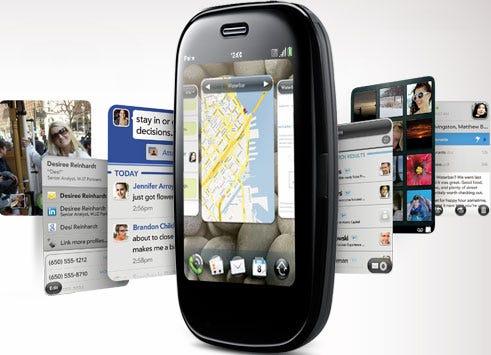
In 2009, Palm introduced webOS along with the Palm Pre smartphone.
Many technology experts believed webOS was one of the best mobile operating systems ever created.
One of its most famous features was card-based multitasking. Every open app appeared as a separate card. Users could move between them with simple gestures and close them with a quick swipe. This made multitasking feel natural and easy.
webOS also included gesture controls that reduced the need for physical buttons. It offered universal search, which allowed users to search across many parts of the phone from one place. Another useful feature brought messages from different services into one conversation, which made communication much simpler.
Several ideas first seen in webOS later became common in both Android and iPhone software. Even today, many people remember webOS as a system that arrived before its time.
Palm could not keep up
Although webOS received excellent reviews, Palm struggled to compete against Apple and Android.
Apple had strong marketing, loyal customers, and a fast-growing App Store. Android expanded quickly because many manufacturers adopted Google’s software.
Palm had fewer financial resources and a much smaller customer base. Its phones also reached fewer mobile carriers, which limited sales.
The company could not attract enough developers or sell enough devices to stay competitive. Even though many people praised webOS, positive reviews alone could not save the business.
HP bought Palm but ended its smartphone journey
In 2010, Hewlett-Packard, better known as HP, bought Palm for about 1.2 billion dollars.
Many people hoped HP would invest heavily in webOS and create new smartphones, tablets, and other smart devices.
Those plans never became reality.
Sales remained lower than expected, and HP soon canceled most Palm hardware. This decision ended Palm’s role in the smartphone market much sooner than many people expected.
The Palm brand slowly disappeared from public attention.
webOS found a second life
Although Palm itself disappeared, webOS did not vanish.
HP later sold webOS to LG. Instead of smartphones, LG used the software in its smart televisions.
Today, millions of LG TVs still run webOS. While most users may not know its history, they continue to use software that first appeared on Palm smartphones.
This unusual journey allowed one part of Palm’s technology to survive even after the company left the mobile phone industry.
Palm’s ideas still live on
Palm may no longer compete in the smartphone market, but its influence remains easy to see.
The company proved that a pocket-sized device could help people manage their daily lives. It showed that mobile apps could become useful for work and personal tasks. Palm also demonstrated the value of smooth touch controls, reliable synchronization, fast software, and true multitasking.
Many of these ideas later became standard features on modern smartphones. Apple and Google improved them, but Palm introduced several of these concepts years earlier.
Palm did not fail because it lacked creativity. It failed because it entered the market before smartphones became mainstream and because it could not compete with much larger companies once the industry changed.
Today, Palm may not receive the recognition it deserves, but its contribution to mobile technology remains one of the most important chapters in the history of smartphones. Anyone who uses a modern smartphone benefits, in one way or another, from ideas that Palm introduced long before the world was ready for them.
Also Read – Assetz Plans ₹1,200 Crore IPO Through Confidential Route