
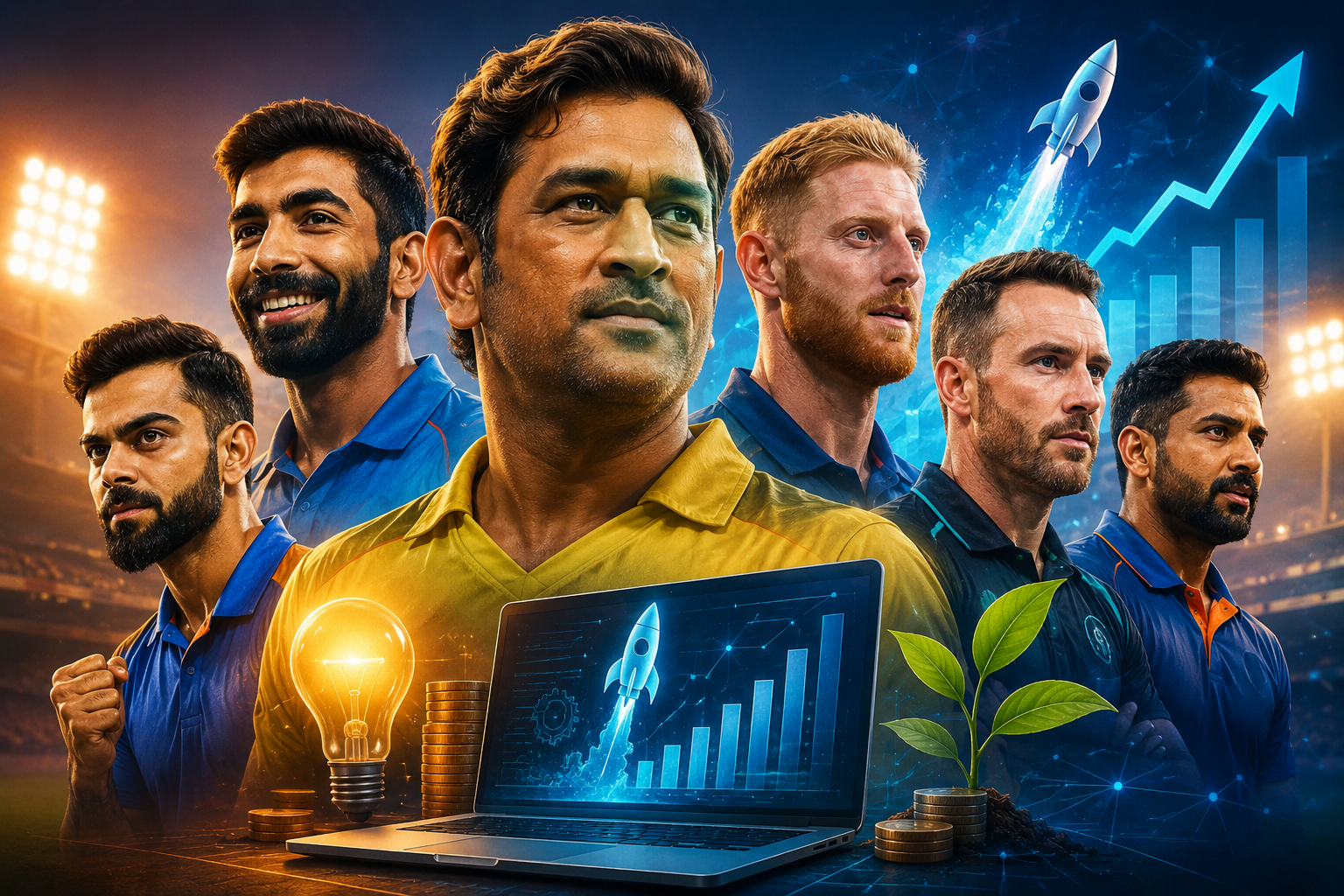
Cricket stars now do much more than play matches and sign ads. Many famous players now put their money into startup companies. They see startups as a smart way to grow wealth and build a strong future after cricket. Some players also want to help young founders create new businesses.
This trend has become very popular in the last few years. Startup founders also like this idea because famous cricketers bring trust, public attention, and strong marketing value. A startup with a cricket star investor often gets fast public support.
Big names such as MS Dhoni, Jasprit Bumrah, Glenn Maxwell, Ben Stokes, KL Rahul, Hardik Pandya, and Sachin Tendulkar now have startup investments in many sectors. These sectors include gaming, fitness, health, drones, electric vehicles, digital media, and fintech.
The relation between cricket and startups now looks stronger than ever before.
MS Dhoni Builds a Huge Startup Portfolio
Former India captain MS Dhoni stands among the biggest cricket investors in the startup world. Over the years, Dhoni has quietly built a large portfolio with companies from many industries.
Dhoni does not only invest money. He also supports brands with his image and public trust. Many startup founders believe his name gives instant credibility to their business.
One of his latest investments came in the digital content space. Dhoni invested in Kuku, a short drama and storytelling platform. He also became the face of the company. The startup wants to attract young mobile users who enjoy quick entertainment content.
Dhoni also joined the investor group in gaming startup LightFury Games. The company raised around 11 million dollars in funding. The gaming industry in India now grows very fast, and many sports stars see huge potential in this market.
Apart from gaming and content, Dhoni has also invested in several popular Indian startups. His portfolio includes Cars24, which works in used car sales. He also backed Garuda Aerospace, a drone technology company. Another important investment came in BluSmart, an electric mobility startup. Dhoni also put money into EMotorad, an electric bicycle company.
He has shown interest in home and lifestyle brands as well. His investments include HomeLane and beverage startup 7InkBrews.
Experts believe Dhoni chooses startups with long-term growth potential instead of quick profits. This careful style matches the calm personality he showed during his cricket career.
Many founders say Dhoni asks detailed questions before he puts money into a company. This serious approach makes him more than just a celebrity investor.
Dhoni’s Startup Investments Show Strong Growth
Some of Dhoni’s startup investments now show strong growth. Kuku FM, one of the companies linked to Dhoni, recently moved closer to a public listing. Reports suggest the company filed confidential papers for a major IPO worth thousands of crores.
This development shows how athlete investments now move beyond simple publicity. Some cricket stars now enter serious business circles where startups grow into large companies.
Dhoni’s business image has also changed in recent years. Earlier, fans mostly saw him as a brand ambassador. Today, many people see him as a businessman with smart investment ideas.
Young athletes now follow this path closely.
Jasprit Bumrah Focuses on Modern Consumer Brands
Indian fast bowler Jasprit Bumrah has also entered the startup ecosystem. Unlike many celebrities who simply promote products, Bumrah now takes equity stakes in companies.
One of his important investments came in Uppercase, a luggage startup that focuses on sustainability. The company creates eco-friendly travel products and wants to attract modern urban buyers.
Bumrah did not stay limited to financial support. Reports suggest he also shared ideas about product design and brand direction. This active role shows how athlete investors now want deeper involvement in startups.
He also became part of the funding round for LightFury Games along with MS Dhoni and Hardik Pandya. This move reflects the growing connection between sports stars and gaming businesses.
Gaming startups now see athletes as ideal partners because sports fans and gamers often belong to the same young audience group.
Bumrah’s investment style appears modern and youth-focused. He prefers brands that connect with fitness, travel, lifestyle, and digital culture.
Industry experts believe more active Indian players may soon follow the same route.
Glenn Maxwell Makes a Startup Move in India
Australian cricket star Glenn Maxwell also joined the startup investment trend. His major move came through Drive FITT, a fitness and wellness startup from India.
The company focuses on sports fitness and healthy living. It also has links with well-known cricket personalities such as Shubman Gill and actress Preity Zinta.
Maxwell’s investment became important because it marked one of his first major startup bets in India. His move also showed how Indian startups now attract international sports stars.
Fitness startups continue to grow fast because more young people now care about health and exercise. Investors believe this sector may become much larger in the future.
Maxwell’s sports background fits naturally with a fitness brand. Fans often trust athletes when they promote healthy lifestyles.
Startup experts say this type of partnership helps both sides. The company gains attention and trust, while the athlete gains a chance to grow wealth outside sports.
Ben Stokes Looks Beyond the Cricket Field
England Test captain Ben Stokes has also stepped into startup investments. He joined other athletes in support of a medical tourism startup created by the founders of restaurant platform Dineout.
The healthcare and medical tourism sector has become a strong business area in recent years. Many patients now travel across countries for affordable and quality treatment. Startups in this sector try to make the process easier and safer.
Stokes invested in the company along with KL Rahul, Jofra Archer, and Stuart Broad. This group investment attracted strong attention because it brought together famous cricket names from different countries.
Ben Stokes also became linked with investment platform 4CAST. The platform supports growth-stage companies and sports businesses.
Through 4CAST, Stokes reportedly backed Sixes Cricket, an entertainment business based around cricket experiences. The company combines cricket games, food, and social entertainment under one roof.
This move shows how sports stars now invest in businesses connected to fan experiences and leisure activities.
KL Rahul Builds a Modern Business Image
KL Rahul has slowly built a strong business image away from cricket. He became one of the athlete investors in the medical tourism startup backed by Ben Stokes and others.
Rahul’s fashion sense and modern public image make him attractive for lifestyle and wellness brands. Experts believe he may continue to explore startup investments in sectors connected with youth culture.
Many younger cricketers now see startup investment as an important career step. Cricket careers often stay short because of fitness demands and competition. Investments give players another source of long-term financial growth.
Rahul belongs to this new generation of athletes who think about business early in their careers.
Hardik Pandya Shows Interest in Gaming Startups
Hardik Pandya also joined the investor list for LightFury Games. The gaming company raised major funding support from several cricket stars.
The gaming market in India now grows at high speed because smartphone use continues to rise across the country. Young users spend more time on online games, esports, and mobile entertainment.
Investors believe gaming startups may become huge businesses in the coming years.
Pandya’s energetic image fits naturally with gaming culture. Young fans often connect with his bold personality and modern style.
This type of celebrity support helps gaming startups attract users and media attention quickly.
Sachin Tendulkar Supports Consumer and Tech Companies
Cricket legend Sachin Tendulkar has also invested in startups and modern businesses. Over the years, he backed companies such as Spinny, Unacademy, and Smaaash Entertainment.
Tendulkar usually supports companies with large-scale growth plans and strong consumer demand.
Spinny works in the used car market, while Unacademy focuses on online education. Smaaash Entertainment combines sports and digital entertainment experiences.
These investments show Tendulkar’s interest in businesses that serve large audiences.
Like Dhoni, Tendulkar’s trusted public image gives extra strength to startup brands.
Why Startups Want Cricketers as Investors
Startup founders now actively approach sports stars for investment partnerships. The reason goes far beyond money.
A cricket star brings media attention, public trust, and massive fan reach. When a famous athlete joins a startup, people notice the company immediately.
This attention often helps startups gain new users and attract future investors.
Cricketers also understand pressure, competition, and discipline. Startup founders often value these qualities.
Many athletes now spend time with founders, share business ideas, and help with marketing plans. Some even take part in company decisions.
This deeper involvement creates stronger partnerships between startups and sports personalities.
Gaming and Fitness Become Popular Sectors
Many cricket stars now prefer gaming and fitness startups. These sectors connect naturally with sports audiences.
Gaming has become one of the fastest-growing industries in India and several other countries. Mobile internet growth and affordable smartphones continue to push the market higher.
Sports celebrities help gaming companies build trust among young users.
Fitness startups also attract athletes because health and exercise remain close to their personal image.
Consumers often believe sports professionals understand fitness better than traditional celebrities.
This trust helps startups build loyal customer bases.
Indian Startups Attract Sports Celebrities
India’s startup ecosystem now ranks among the biggest in the world. Thousands of new companies launch every year across technology, health, finance, and entertainment sectors.
This rapid growth attracts both Indian and foreign athletes.
Many startups now look for celebrity investors during early funding rounds. Famous sports stars help companies stand out in a crowded market.
Cricket remains one of the most powerful sports in India. Because of this, cricketers hold huge influence over public opinion and consumer choices.
This influence creates strong business opportunities for both startups and players.
Athletes Shift From Ads to Ownership
Earlier, athletes mostly earned money through advertisements and sponsorship deals. Today, many players want ownership stakes instead of one-time payments.
Equity investments allow cricketers to benefit if a company grows into a large business.
This shift marks a major change in sports business culture.
Instead of simply promoting products, athletes now become part of company growth stories.
Many experts believe this trend will become much larger in the future.
Young sports stars now learn about finance, technology, and investments much earlier than previous generations.
Some even build personal business teams to study startup opportunities.
The Future Looks Bright for Athlete Investors
The relation between sports and startups will likely grow stronger in the coming years.
More athletes may invest in artificial intelligence, health technology, electric vehicles, sports technology, and digital entertainment.
As startups search for visibility and trust, athlete investors may become even more valuable.
At the same time, cricketers also gain financial security beyond their playing careers.
This partnership creates benefits for both sides.
MS Dhoni, Jasprit Bumrah, Glenn Maxwell, Ben Stokes, and several other players already show how sports stars can become serious business investors.
Their success may inspire the next generation of athletes to think beyond the cricket field and enter the startup world with confidence.
Also Read – How to Get a Job at Replit: Complete Career Guide 2026