
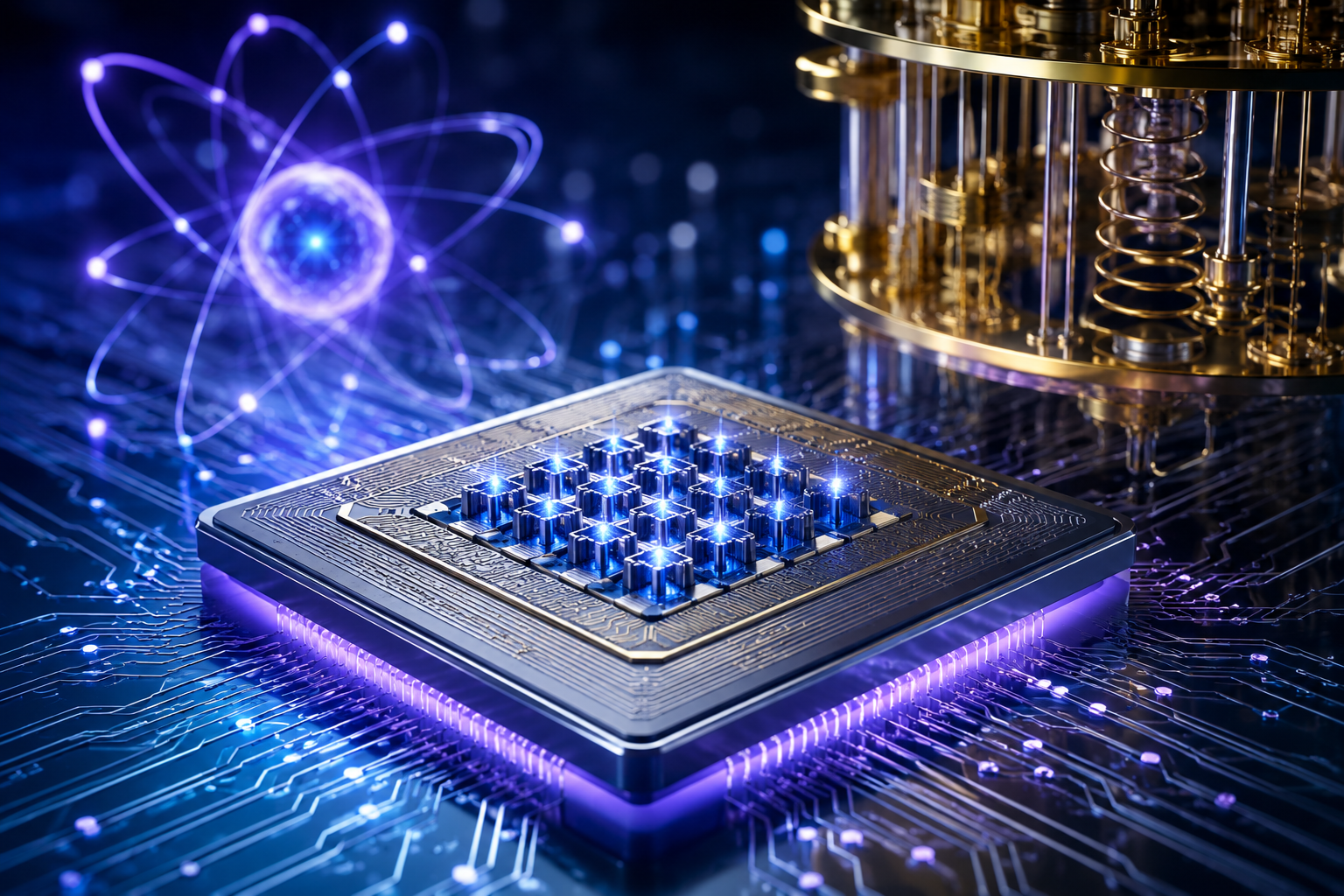
French quantum startup Quobly has raised €115 million in fresh funding. The company wants to build a new type of quantum computer with silicon chips. This news has gained global attention because many experts believe silicon may become a strong base for future quantum systems.
Quobly works in the deep technology sector and focuses on quantum computing. This field may change industries such as healthcare, banking, defense, science, and artificial intelligence in the future. The startup now plans to use the new money to expand research, hire more workers, improve hardware, and launch commercial systems.
This funding round stands among the largest investments in Europe’s quantum sector this year. It also shows that investors still trust long-term technology projects even during uncertain economic times.
What Quantum Computers Actually Do
Traditional computers use bits. A bit stays either at 0 or 1. Quantum computers use qubits instead. A qubit can stay in multiple states at the same time. Because of this, quantum systems may solve some problems much faster than normal computers.
Scientists believe quantum computers may help with difficult research. These machines may support drug discovery, weather forecasting, climate studies, financial analysis, and advanced artificial intelligence.
Many experts also think quantum systems may improve cybersecurity and scientific simulations in the future.
However, the technology still faces many problems. Quantum systems often make mistakes. The hardware costs a lot. Most machines also need extremely cold temperatures to operate correctly. These issues slow down large-scale commercial use.
Because of this, technology firms across the world continue the race to build better and more stable quantum systems.
Why Quobly Chooses Silicon
Many quantum companies use superconductors or trapped ions to build qubits. Quobly has selected silicon spin qubits instead. Silicon already powers the modern semiconductor industry. Chip factories across the world already know how to produce silicon at large scale.
This gives Quobly an important advantage. The startup does not need to create a completely new industrial process. Instead, the company can use methods close to existing semiconductor production systems.
Experts say this may reduce manufacturing costs in the future. It may also help Quobly create millions of qubits one day. Scale remains one of the biggest challenges in quantum computing today.
The company wants to connect quantum technology with the present semiconductor ecosystem. This approach may help faster development and easier adoption.
Quobly believes silicon may become the key to practical quantum computers.
Big Investors Join the Round
Several major investors supported the €115 million funding round. Both public and private groups joined the investment.
Bpifrance participated in the round. The French public investment bank often supports strategic technology companies inside Europe. STMicroelectronics also joined the investment. The company ranks among Europe’s largest semiconductor manufacturers.
SEALSQ became another important investor in the round.
Additional support came from the European Innovation Council, Blast, Air Liquide Venture Capital through ALIAD, and Innovacom.
This strong investor list shows growing confidence in quantum technology. It also highlights Europe’s larger push toward advanced computing and semiconductor independence.
Governments across Europe now want stronger local technology industries. Many leaders worry about heavy dependence on foreign chip companies and cloud service providers. Quantum computing has therefore become a strategic sector for the region.
Europe Wants Stronger Tech Power
The global quantum race has become very intense. Large companies in the United States and China already spend billions on research and development. Europe does not want to lose ground in this important field.
France has strongly supported deep tech startups during recent years. Paris now hosts many artificial intelligence and quantum firms. The country has also launched several national programs to support innovation and advanced research.
Quobly now stands among the important names in this European technology movement.
The company’s growth may help Europe create more jobs, research centers, and manufacturing opportunities. It may also support stronger technology independence in the long term.
Some analysts compare the current situation to the early years of the semiconductor industry. Countries that build strong quantum ecosystems today may gain major economic and technological advantages later.
Commercial Launch Planned for 2026
Quobly says it plans to launch its first commercial systems by the end of 2026. The company also plans to offer cloud access to its machines.
This means businesses and researchers may use Quobly systems online instead of buying expensive hardware directly.
Cloud access has become very important in quantum computing because the systems remain complex and costly. Most users prefer remote access instead of maintaining machines themselves.
Quobly also wants its systems to work with existing high-performance computing infrastructure. This may help companies combine classical computing and quantum tools more easily.
The startup believes this strategy may support faster real-world use.
Challenges Still Remain
Even with strong funding, quantum computing remains a difficult industry. Many firms promise major breakthroughs, but practical large-scale systems still need more time.
Researchers must improve stability, error correction, and qubit quality before quantum computers become common in business and science.
Many experts believe truly powerful commercial quantum systems may still remain years away.
Still, investment in the sector continues to rise because governments and private companies believe the future rewards may become enormous.
The €115 million funding round gives Quobly more resources to continue development. The company can now expand research, hire skilled workers, and improve future products.
Why This Funding Matters
This investment matters for several reasons. First, it shows strong confidence in silicon-based quantum technology. Second, it highlights Europe’s desire to compete with the United States and China in advanced computing.
Third, it proves investors still support deep technology projects even when profits may take years to arrive.
Quantum computing may shape the next era of technology. Companies that solve today’s hardware problems may become major global leaders in the future.
Quobly now hopes to become one of those leaders.
Its silicon approach may help bring quantum computing closer to mass production. If the company succeeds, it may help create cheaper, more scalable, and more practical quantum systems for businesses, scientists, and governments around the world.
The global quantum race still remains at an early stage, but Quobly has now taken a major step forward.
Also Read – Zepto vs Blinkit vs Instamart: Who Rules India’s Quick Commerce Market in 2026?