
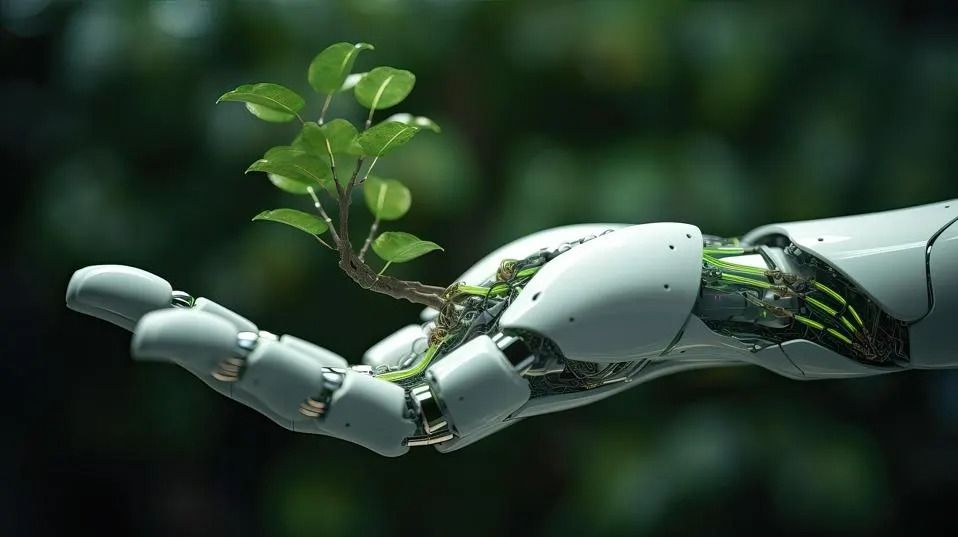
The startup world in 2026 feels almost unrecognizable compared to a decade ago. What once required large teams, heavy funding, and long development cycles can now be accomplished by a handful of people—sometimes even a single founder—working alongside powerful artificial intelligence systems. AI has evolved from a productivity tool into something far more influential: a collaborator, an operator, and in some cases, a decision-making layer within companies.
This transformation has sparked a fundamental question: are founders still running startups, or has AI quietly taken over the operational core?
The reality is nuanced. AI is dramatically reshaping how startups are built and scaled, but human founders still define direction, meaning, and accountability. Rather than replacing founders, AI is changing what it means to be one.
The Emergence of AI-First Startups
By 2026, most startups are no longer just “tech-enabled”—they are AI-native. This means AI is not an add-on feature but the backbone of their operations and products.
A large majority of startups now rely on AI tools from day one. Whether it’s generating code, analyzing markets, designing user interfaces, or automating workflows, AI is deeply embedded in every stage of company building. In SaaS alone, over three-quarters of startups integrate AI into their products, while a similar proportion uses it internally for operations.
This shift has lowered the barrier to entry dramatically. Founders no longer need specialized teams for early-stage development. A single individual with the right AI stack can prototype, test, and launch a product in weeks instead of months.
As a result, the startup ecosystem has become more accessible—but also more competitive.
AI as a Functional Co-Founder
The idea of AI as a “co-founder” is no longer just a catchy phrase. In many startups, AI performs tasks that were traditionally handled by multiple team members.
AI systems now routinely:
- Write and debug code
- Generate marketing campaigns
- Conduct competitor analysis
- Draft legal and financial documents
- Handle customer support through autonomous agents
This means founders are spending less time on execution and more time on coordination. Instead of doing the work themselves, they design systems where AI tools interact with each other to achieve outcomes.
In effect, founders are becoming orchestrators of intelligence rather than operators of tasks.
There are even early experiments with AI-generated “virtual founders”—simulated personas that test business ideas, predict market reactions, and optimize strategies before human involvement. While still experimental, these systems hint at how far automation could go.
The Explosion of AI Investment
Capital markets have responded aggressively to this shift. AI startups now capture a significant share of global venture funding, with tens of billions of dollars flowing into the sector each quarter.
Nearly all newly minted unicorns in recent years are AI-driven. Investors are no longer asking whether a startup uses AI—they assume it does. Instead, they are evaluating how deeply AI is integrated and whether it creates a defensible advantage.
This has created a new kind of pressure on founders. Building without AI is no longer seen as lean or focused—it’s seen as outdated.
However, this surge in funding has also led to inflated expectations. Startups are expected to scale faster, automate more, and achieve profitability with fewer people. The margin for error has narrowed, even as the tools have improved.
Automation and the Collapse of Traditional Roles
One of the most significant changes in 2026 is the extent to which AI has replaced entire job functions within startups.
Tasks that once required dedicated teams—such as customer service, marketing operations, and data analysis—can now be handled by AI agents with minimal supervision. These systems can operate continuously, learn from interactions, and improve over time.
As a result:
- Startup teams are smaller than ever
- Hiring has become more strategic and selective
- Operational costs have decreased significantly
A company that might have required 50 employees in 2020 can now operate with fewer than 10, supported by AI infrastructure.
This doesn’t mean humans are obsolete. Instead, it means their roles have shifted toward higher-level thinking, creativity, and decision-making.
Why Fully Autonomous Startups Haven’t Taken Over
Despite rapid advances, the idea of startups being fully run by AI remains largely theoretical.
There are several reasons for this:
1. Lack of True Creativity
AI can generate ideas, but it struggles to produce genuinely original concepts that redefine markets. It excels at iteration, not invention.
2. Limited Contextual Understanding
Real-world decisions often involve ambiguity, emotion, and incomplete information. AI systems still struggle in these environments.
3. Absence of Accountability
When a company fails or makes a critical mistake, responsibility cannot be assigned to an algorithm. Founders remain accountable to investors, customers, and regulators.
4. Overfitting to Data
AI relies heavily on historical data, which can limit its ability to anticipate disruptive changes.
Because of these limitations, AI remains a powerful tool—but not an independent leader.
The Changing Role of the Founder
If AI is handling execution, what exactly do founders do?
In 2026, the role of a founder has evolved in several key ways:
Problem Selection
Choosing the right problem to solve has become more important than the ability to build the solution. AI makes building easier, but it doesn’t guarantee relevance.
System Design
Founders now design workflows that integrate multiple AI systems. This requires a deep understanding of both technology and business logic.
Distribution and Growth
Acquiring users remains one of the hardest challenges. AI can optimize campaigns, but it cannot replace strategic positioning and storytelling.
Taste and Brand
Human intuition plays a critical role in shaping products that resonate emotionally with users.
Decision-Making Under Uncertainty
Founders are still responsible for making high-stakes decisions without clear answers—something AI cannot reliably do.
In essence, founders have moved from being builders to strategists and visionaries.
The Harsh Reality: Most AI Startups Will Fail
Despite the excitement, the majority of AI startups are unlikely to succeed.
The reasons are familiar, but amplified:
- AI tools are widely accessible, making it easy for competitors to replicate products
- Many startups focus on technology rather than solving meaningful problems
- Differentiation is difficult when everyone uses similar models and infrastructure
A significant portion of AI projects fail to deliver measurable returns. This has led to a growing recognition that AI alone is not a business model.
Success depends on how AI is applied—not just that it is used.
Smaller Teams, Bigger Ambitions
AI has dramatically reduced the resources needed to start a company, but it has also expanded what startups aim to achieve.
Founders are now:
- Launching globally from day one
- Entering complex industries like healthcare, finance, and defense
- Building products that automate entire workflows rather than single tasks
This combination of lower barriers and higher ambition has intensified competition. More startups are being created, but fewer are achieving lasting success.
The ecosystem is becoming both more dynamic and more unforgiving.
The Evolving Workforce
The relationship between humans and AI is also reshaping the workforce within startups.
Most professionals now use AI tools in their daily work. New roles have emerged, such as AI trainers, prompt engineers, and automation specialists. At the same time, some traditional roles are disappearing or being redefined.
Instead of replacing humans entirely, AI is changing how they contribute. The most valuable employees are those who can work effectively alongside AI—leveraging its strengths while compensating for its weaknesses.
This hybrid model is becoming the norm across industries.
Who’s Really in Charge?
So, in 2026, who is actually running startups?
The answer depends on how we define “running.”
AI controls:
- Execution speed
- Data processing
- Operational efficiency
- Scalability
Founders control:
- Vision and direction
- Strategic decisions
- Risk-taking
- Accountability
AI can execute tasks faster and more efficiently than humans, but it does not set goals or define purpose. It operates within the frameworks created by founders.
A useful way to think about it is this:
AI is the engine, but founders are the drivers.
Without AI, startups would be slower and less efficient.
Without founders, they would lack direction and meaning.
The Future: A New Kind of Entrepreneurship
Looking ahead, several trends are likely to shape the next phase of startups:
Micro-Startups
Tiny teams, sometimes just one or two people, running highly profitable businesses with AI support.
AI-Native Organizations
Companies built entirely around automated workflows, with minimal human intervention in day-to-day operations.
Multi-Company Founders
Entrepreneurs managing multiple ventures simultaneously using AI systems.
Increased Competition
Lower barriers will lead to more startups, but also higher failure rates.
Human Differentiation
Creativity, storytelling, and emotional intelligence will become the key differentiators.
Conclusion: Evolution, Not Replacement
The narrative of “AI vs founders” suggests a competition—but that framing misses the point.
AI is not replacing founders. It is transforming them.
In 2026, founders are:
- Less focused on execution
- More focused on strategy
- Empowered by tools that amplify their capabilities
The startups that succeed are not the ones with the most advanced AI, but the ones where founders use AI effectively to solve real problems.
The balance of power has shifted, but it has not flipped.
Ultimately, the future belongs not to AI alone, and not to founders alone—but to those who can combine the strengths of both.
Because in the end, technology can build companies—but only humans can give them purpose.
ALSO READ: The Founder Mindset That Wins in 2026