
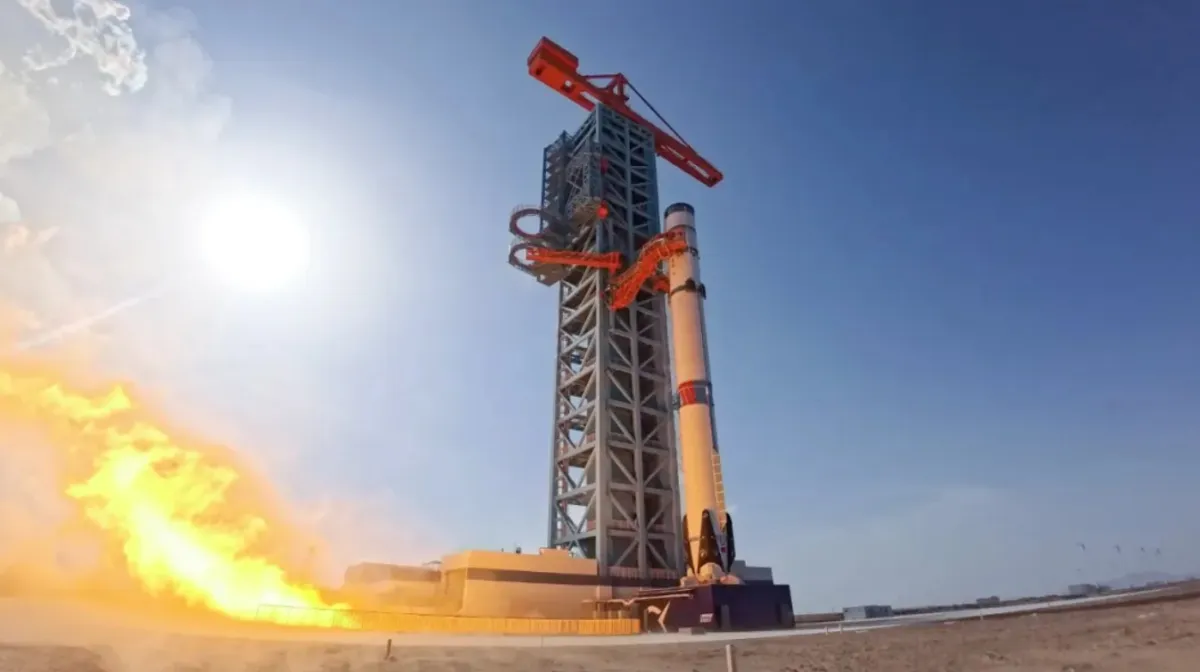
The global space industry is undergoing one of the most dramatic transformations in its history. Once dominated by a handful of powerful governments, space exploration has evolved into a vibrant, competitive ecosystem where private startups, tech giants, and national agencies are racing to secure their place beyond Earth. This shift marks the emergence of a new kind of space race—one driven not only by national pride but by economic opportunity, technological leadership, and long-term strategic advantage.
In 2026, the question is no longer who can reach space, but who can build, control, and profit from the infrastructure that will define the next century.
From Government Monopoly to Commercial Frontier
For decades, space activity was controlled by government agencies such as NASA and Roscosmos. These organizations led missions focused on exploration, scientific discovery, and geopolitical competition. However, the high costs and risks associated with spaceflight limited participation to only a few nations.
The landscape began to change in the early 2000s with the emergence of private companies willing to take risks and innovate faster than traditional institutions. Companies like SpaceX and Blue Origin introduced new business models, focusing on cost reduction, reusability, and scalability.
This transition has turned space into a commercial frontier. Today, private companies are not just supporting government missions—they are leading them.
A Surge in Investment and Market Expansion
One of the clearest indicators of the space startup boom is the surge in global investment. Capital is flowing into the sector at unprecedented levels, driven by optimism about future returns and the expanding range of space-based applications.
In early 2026, space startups attracted tens of billions of dollars in funding within a single quarter, a sharp increase compared to previous years. Even when excluding major outliers, the number of deals and total investment remain significantly higher than historical averages.
The broader space economy is already valued at over half a trillion dollars and is projected to grow rapidly over the next decade. This growth is fueled by several key segments:
- Satellite communications and broadband
- Earth observation and geospatial analytics
- Launch services and logistics
- Defense and security applications
- Emerging sectors like space manufacturing and orbital computing
Investors increasingly view space not as a niche industry, but as a foundational layer of the global economy.
The Power Players: SpaceX and Blue Origin
At the center of the modern space race are two dominant private companies: SpaceX and Blue Origin. Their rivalry reflects broader industry dynamics and has accelerated innovation across the board.
SpaceX has established itself as the industry leader through aggressive execution and technological breakthroughs. Its reusable rocket program has dramatically reduced the cost of launching payloads into orbit. By 2025, the company had conducted more than 160 launches in a single year—an unprecedented figure that accounted for a significant share of global activity.
In addition to launch services, SpaceX operates Starlink, a rapidly growing satellite internet network with thousands of satellites already in orbit. This network is designed to provide global broadband coverage, particularly in underserved regions.
Blue Origin, while slower to reach operational scale, is pursuing a long-term vision focused on infrastructure and sustainability. Its heavy-lift New Glenn rocket represents a major step toward competing in large-scale missions, including lunar exploration.
Both companies are also deeply involved in NASA’s Artemis program, which aims to return humans to the Moon and establish a long-term presence there. Their competing lunar lander designs highlight the intensity of the current race.
The Satellite Internet Battlefield
One of the most commercially significant areas of competition is satellite internet. This sector has the potential to reshape global connectivity by providing high-speed internet access from space.
SpaceX’s Starlink currently dominates this market, with a vast constellation of satellites delivering broadband services across multiple continents. The scale of deployment is unprecedented, with thousands of satellites already operational and more being launched regularly.
Challenging this dominance is Amazon through its Project Kuiper initiative. Amazon’s strategy leverages its expertise in cloud computing and logistics to build an integrated space-based network that complements its existing services.
However, Amazon faces significant challenges, including limited access to launch capacity and the need to deploy a large number of satellites quickly to remain competitive.
The outcome of this battle will have far-reaching implications, potentially determining who controls the future of global internet infrastructure.
Reusable Rockets and the Economics of Space
A major factor driving the space startup race is the dramatic reduction in launch costs, largely due to the development of reusable rockets. This innovation has fundamentally changed the economics of space.
Traditionally, rockets were single-use, making each launch extremely expensive. Companies like SpaceX have pioneered the ability to recover and reuse rocket boosters multiple times, significantly lowering costs and increasing launch frequency.
This shift has enabled:
- More frequent missions
- Lower barriers to entry for startups
- Faster deployment of satellite constellations
As a result, the number of orbital launches has reached record levels, with success rates also improving. The increased reliability and affordability of launches have made space more accessible than ever before.
The Rise of Space Startups
Beyond the major players, a new generation of startups is reshaping the industry. These companies are focusing on specialized niches, driving innovation and expanding the range of space-based services.
Key areas of startup activity include:
1. Small Satellite Launch Providers
Companies are developing rockets tailored for smaller payloads, offering flexible and cost-effective launch options.
2. Earth Observation
Startups are deploying satellites equipped with advanced sensors to monitor climate change, agriculture, and urban development.
3. Space Debris Management
With the growing number of satellites, managing orbital debris has become critical. Startups are working on technologies to track and remove space junk.
4. Orbital Computing
A particularly exciting trend is the development of data centers in space. These systems aim to process data closer to where it is collected, reducing latency and energy consumption.
Some companies in this space have already achieved billion-dollar valuations, reflecting strong investor confidence in the future of orbital infrastructure.
The Moon as the Next Frontier
While commercial applications dominate much of the current activity, deep space exploration remains a central goal. The Moon has emerged as a key strategic target.
NASA’s Artemis program is leading efforts to return humans to the lunar surface. Recent missions have demonstrated the feasibility of long-duration human spaceflight and set the stage for future landings.
Other countries are also accelerating their lunar ambitions. China, for example, is planning a crewed Moon landing by 2030, while India continues to expand its capabilities in space exploration.
The Moon is increasingly viewed as:
- A testing ground for Mars missions
- A potential source of valuable resources
- A strategic location for scientific research
Establishing a permanent presence on the Moon could mark a turning point in human history.
Mars and Beyond
Beyond the Moon, Mars represents the ultimate destination for many space companies. Elon Musk has repeatedly emphasized the goal of making humanity a multi-planetary species.
Achieving this vision will require:
- Advanced propulsion systems
- Sustainable life-support technologies
- Large-scale infrastructure development
While human missions to Mars are still years away, progress is being made in areas such as rocket design and in-orbit refueling.
The race to Mars is not just about exploration—it is about securing humanity’s long-term future.
Challenges and Bottlenecks
Despite rapid progress, the space startup race faces several significant challenges.
Launch Capacity
Demand for launches continues to exceed supply, creating bottlenecks that slow down satellite deployment.
Regulatory Complexity
As more companies enter the space sector, governments must develop new regulations to address issues such as orbital congestion and spectrum allocation.
High Costs
Although costs have decreased, space operations remain expensive, particularly for early-stage startups.
Technical Risks
Many emerging technologies, including orbital manufacturing and lunar infrastructure, are still in experimental stages.
Addressing these challenges will be critical to sustaining growth in the industry.
The Role of Governments
Governments remain essential players in the space ecosystem. They provide funding, set regulations, and act as anchor customers for private companies.
Public-private partnerships have become a cornerstone of the modern space industry. Agencies like NASA collaborate with companies such as SpaceX and Blue Origin to achieve shared goals.
This collaborative approach allows governments to leverage private-sector innovation while maintaining strategic oversight.
Space as the Next Infrastructure Layer
Perhaps the most important shift in the space startup race is the recognition that space is becoming infrastructure.
Just as the internet transformed communication and commerce, space-based systems are poised to transform how we live and work. Future developments may include:
- Global satellite internet networks
- Space-based solar power systems
- Orbital manufacturing facilities
- Permanent human settlements beyond Earth
Companies are increasingly viewing space not as a destination, but as a platform for innovation and economic activity.
Conclusion
The space startup race is heating up at an unprecedented pace. What was once the domain of a few powerful nations has become a dynamic, competitive industry involving hundreds of companies and billions of dollars in investment.
Driven by technological breakthroughs, declining costs, and expanding commercial opportunities, the industry is entering a new phase of growth. The competition between companies like SpaceX and Blue Origin, along with the rise of startups and international players, is accelerating progress across multiple fronts.
In the coming years, the stakes will only increase. The winners of this race will not just shape the future of space exploration—they will define the next era of human civilization.
Space is no longer the final frontier. It is the next marketplace, the next battleground, and the next great leap forward.
ALSO READ: Shionogi Backs Restore Vision to Advance Eye Care Tech