
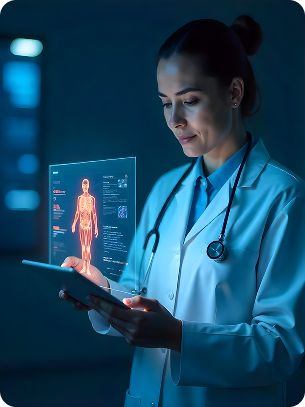
1. The Shift Toward Predictive Healthcare
For decades, healthcare has been reactive—patients seek treatment after symptoms appear, often when diseases are already advanced. But AI is rewriting this script. Instead of waiting for illness to show itself, machine-learning models can now predict disease onset, identify subtle abnormalities, and flag risks long before a clinician typically would.
HealthTech startups are at the center of this transformation. They are blending medical science, massive datasets, and computational intelligence to detect everything from cancer to cardiac disorders at unprecedented speed and accuracy.
Early diagnosis is no longer a luxury of advanced hospital systems. It is becoming a scalable, accessible, tech-enabled service.
2. Why AI Is a Natural Fit for Early Diagnosis
AI thrives in environments with large datasets, pattern recognition tasks, and complex variables—all common in healthcare. Early diagnosis depends on detecting faint signals hidden within medical data such as:
- subtle image distortions,
- small anomalies in bloodwork,
- irregular biometric patterns,
- voice or eye-movement markers,
- genomic variations,
- lifestyle and environmental indicators.
Traditional methods often miss these slight deviations. AI, however, can analyze millions of samples simultaneously, compare them against vast knowledge repositories, and surface early risk indicators.
This capability is driving a surge of startups focusing on early detection across multiple disease areas.
3. Key Areas Where AI Is Transforming Early Diagnosis
A. Oncology: Detecting Cancer at Stage Zero
Cancer detection is one of the biggest focus areas. AI-enabled startups now use:
- Radiology image analysis for mammograms, CT scans, and MRI results.
- Liquid biopsy algorithms that analyze blood samples for cancer markers.
- Pattern recognition tools that detect malignancies invisible to human eyes.
AI helps identify tumors at significantly earlier stages, where treatment success rates are dramatically higher.
B. Cardiovascular Disease: Predicting Events Before They Happen
Cardiac disorders remain a leading cause of global mortality. Startups in this domain use AI for:
- real-time ECG interpretation,
- arrhythmia detection from consumer devices,
- cardiac risk scoring using lifestyle and genetic data,
- early prediction of heart-failure episodes.
AI can detect subtle but dangerous rhythm variations or blood-flow anomalies far earlier than conventional methods.
C. Neurology: Early Detection of Cognitive Decline
Conditions like Alzheimer’s, Parkinson’s, and epilepsy benefit enormously from early intervention. Emerging AI tools evaluate:
- speech patterns,
- motor movements,
- eye tracking,
- brain-scan micro-patterns,
- sleep and wearable-device data.
These signals help identify early neurological changes years before symptoms disrupt daily life.
D. Diabetes & Metabolic Disorders: Predicting and Preventing Escalation
AI-driven metabolic health platforms analyze:
- glucose fluctuations,
- wearable sensor data,
- food patterns and metabolic responses,
- genetic predispositions.
They can forecast pre-diabetic risks, detect early insulin resistance, and offer precision-tailored lifestyle plans.
E. Infectious Disease: Detecting Outbreaks and Early Symptoms
Startups use AI for:
- analyzing cough sounds,
- identifying early respiratory infections using audio signatures,
- predicting community outbreak risks from aggregated health data,
- triaging patients without physical contact.
This has become essential in post-pandemic global healthcare systems.
4. Technologies Powering Early Diagnosis Startups
1. Deep Learning for Medical Imaging
AI models trained on millions of radiology images can identify cancers, fractures, pulmonary issues, and organ damage with exceptional accuracy.
2. Natural Language Processing for Clinical Records
NLP tools analyze medical notes, lab reports, and physician observations to flag overlooked symptoms and recommend diagnostic follow-ups.
3. Genomics + AI
Startups use machine learning to decode genetic risk profiles, helping predict hereditary diseases long before onset.
4. Audio & Voice Diagnostics
Cough patterns, breathing sounds, and vocal biomarkers indicate early signs of asthma, respiratory infections, sleep apnea, and neurological disorders.
5. Wearable and Sensor-Based Diagnostics
Continuous monitoring via smartwatches, patches, or home medical devices provides AI with real-time data to detect abnormalities instantly.
6. Predictive Analytics for Risk Stratification
By combining lifestyle, genetics, environment, and clinical history, AI generates risk scores that guide proactive diagnostics.
5. Real-World Impact: How AI Is Changing the Patient Journey
A. Faster Diagnoses
AI can analyze an MRI or laboratory dataset in seconds, dramatically reducing waiting times.
B. Higher Accuracy
Startups report improved sensitivity and specificity compared to traditional diagnostic methods.
C. Early Intervention
Detecting disease in early stages improves treatment outcomes, reduces long-term costs, and saves lives.
D. Accessibility for Underserved Regions
AI-powered diagnostic tools require minimal infrastructure. Portable devices, cloud-based models, and smartphone apps allow rural clinics to access world-class diagnostic support.
E. Reducing Physician Burden
AI handles repetitive, data-heavy tasks so doctors can focus on complex cases and personalized patient care.
6. Challenges HealthTech Startups Must Navigate
Even with rapid progress, AI in early diagnosis faces obstacles:
1. Data Quality & Bias
Medical datasets often underrepresent certain ethnicities, age groups, or conditions. Biased models can lead to inaccurate predictions.
2. Regulatory Approval
Governments require rigorous testing and validation before approving diagnostic AI. Startups must show clinical reliability and safety.
3. Integration with Healthcare Systems
Hospitals often use outdated systems. Seamless integration with electronic records and workflows is a struggle.
4. Patient Trust & Privacy
Health data is deeply personal. Startups must guarantee protection, transparency, and ethical use.
5. Clinical Validation Costs
Running large, multi-center studies is expensive but necessary for credibility.
7. Future Trends: What’s Coming Next
1. Multimodal Diagnostics
AI systems will combine radiology, genomics, metabolic data, and patient history for unified risk detection.
2. AI Co-Pilots for Clinicians
Doctors will rely on AI as a diagnostic assistant capable of flagging risks, suggesting follow-up tests, and supporting treatment decisions.
3. Early Diagnosis at Home
Smartphones will soon serve as diagnostic hubs—scanning skin lesions, listening to lung sounds, analyzing saliva, and reading vital signs.
4. Personalized Preventive Care
AI will not only detect disease early but predict exactly who is at highest risk and why, making prevention far more precise.
5. Real-Time Disease Monitoring
Continuous biometric tracking will offer early warnings for cardiac issues, infections, seizures, or even mental-health changes.
8. The Takeaway: AI Is Healing Healthcare Before Illness Happens
HealthTech startups are shifting healthcare from a late-stage intervention model to a proactive early-diagnosis system. By combining clinical expertise with computational intelligence, they make medicine faster, more accurate, more affordable, and more accessible.
In the coming decade, early diagnosis powered by AI may reduce the global burden of chronic disease, prevent millions of deaths, and transform healthcare from treatment-driven to prediction-driven.
The startups building this future are not just innovating—they’re redefining how humanity detects disease itself.
ALSO READ: Falguni Nayar: India’s Beauty Business Trailblazer