
Sebastian Thrun, one of the best-known names in artificial intelligence and robotics, has started a new company called Dulo. The startup is still in stealth mode, so many details about its plans remain private.
Thrun has a long history in AI, robotics and autonomous systems. He helped create Google’s self-driving car project, which later became Waymo. He also played a major role in the early work of Google Brain, one of Google’s key AI research groups.
Now, he is back with a new company that could bring AI closer to the physical world.
Dulo is reportedly focused on foundation models for hardware design. These models could help computers understand how physical machines work and assist engineers as they create new hardware.
The idea puts Dulo at the intersection of two fast-growing fields: artificial intelligence and robotics.
A New Direction for AI
Most recent AI tools focus on software. Large language models can write text, create images, answer questions and produce computer code. Robotics requires something different.
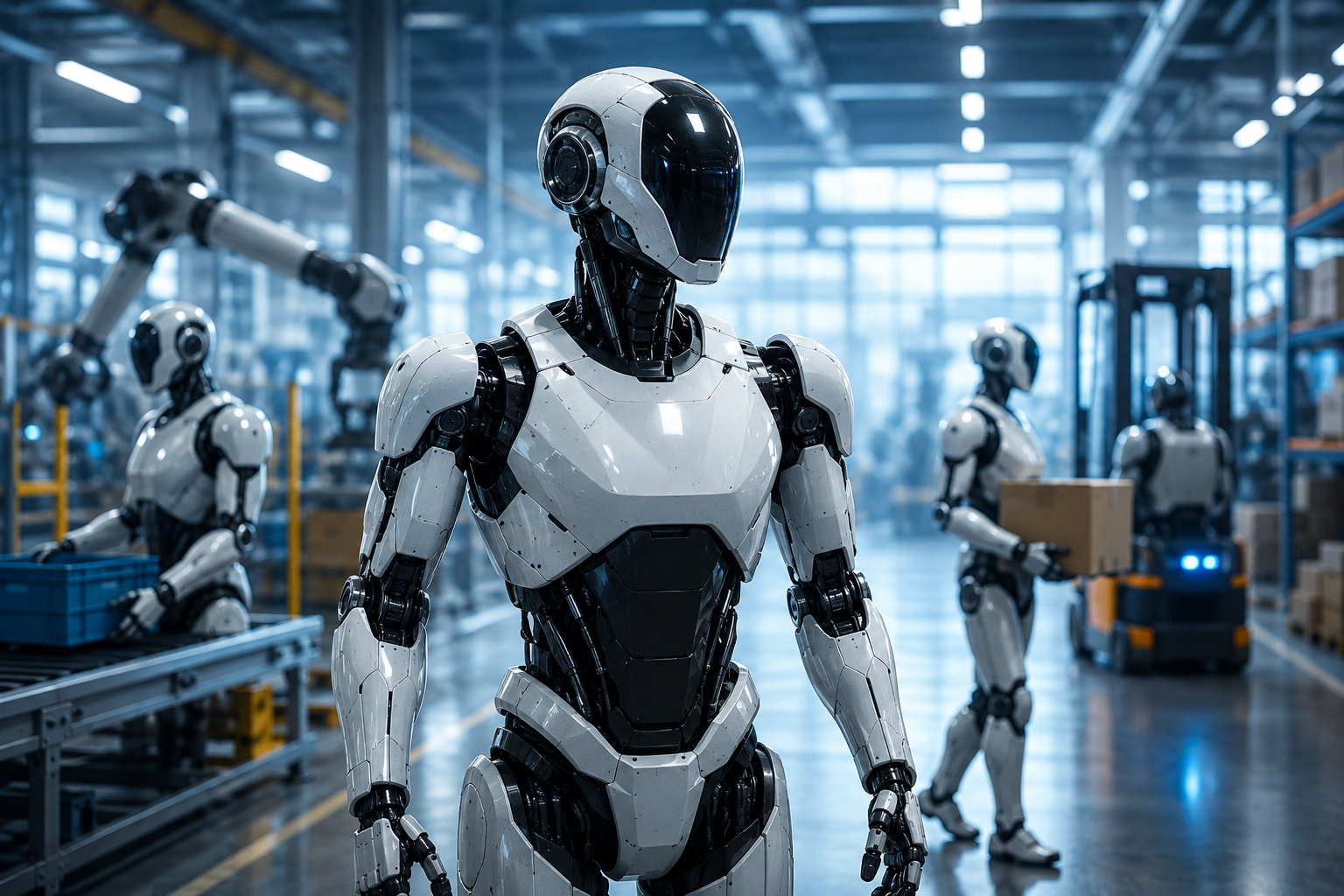
A robot has a physical body. It needs motors, sensors, joints, power systems and other parts. Engineers must decide how these pieces should fit together before a machine can work.
Dulo appears to be focused on this problem.
Foundation models for hardware could allow AI systems to learn from large amounts of information about machines and physical systems. Such a model could then help engineers create new designs or improve existing ones.
The exact details of Dulo’s technology are not public yet. Since the company remains in stealth mode, it is too early to know how its system will work or what products it will offer.
Still, the basic idea points to a larger change in AI. The next major wave may not only create better software. It could also help people design better machines.
Thrun Brings Deep Experience
Thrun gives Dulo a strong technical background.
He is widely known for his work at Google and Stanford. He was one of the main people behind Google’s self-driving car effort. That project later became Waymo, one of the world’s leading autonomous vehicle companies.
Thrun also helped build Google Brain, a research group that played a major role in the development of modern machine learning.
His work has covered autonomous vehicles, robotics, AI and education. He also founded Udacity, an online education company that helped make technical courses more accessible to a global audience.
His experience gives Dulo access to a founder who has seen several major shifts in technology first hand.
The move also shows Thrun’s continued interest in the connection between AI and physical machines.
Dulo Has a Strong Technical Team
Thrun is not building Dulo alone. The startup has reportedly attracted people with experience at Waymo, Google Brain and Stanford’s AI Lab.
That mix is important because hardware AI requires skills from several fields.
Robotics needs mechanical engineering and control systems. AI needs machine learning and large-scale computing. Hardware design also requires knowledge of materials, sensors, power systems and manufacturing.
A team with experience across these areas could help Dulo tackle problems that a normal software company may find difficult.
The presence of former Waymo and Google Brain talent also gives the startup a link to two important parts of Thrun’s career.
Waymo focused on machines that can understand and act in the physical world. Google Brain focused on machine learning. Dulo appears to bring those two ideas closer together.
What Are Foundation Models for Hardware?
The term “foundation model” became popular with the rise of large AI systems such as large language models.
A foundation model is trained on a very large amount of data. It can then support many different tasks instead of doing only one narrow job.
For example, a language model can help write an email, explain a topic, write computer code or answer questions.
A foundation model for hardware could follow a similar idea, but with physical design.
Instead of learning only from words, such a system could work with information about machines, components, structures, simulations and engineering designs.
An engineer could potentially use the model to explore different designs, test ideas or find ways to improve a machine.
The technology could also help reduce the time required for some parts of hardware development.
Why Hardware Design Is Difficult
Creating a physical machine is much harder than writing software in many ways.
A software program can be changed with a new line of code. A physical product may require a new part, a new material or an entirely different manufacturing process.
A small design error can make a machine too heavy, too expensive or unsafe.
Engineers also need to consider many factors at once. A robot needs enough strength to do its job, but it also needs to remain light enough to move. Its motors need enough power, but the battery must last long enough. Its parts must fit together and survive repeated use.
AI could help engineers deal with some of this complexity.
A model that understands physical design could test many possible options much faster than a person could do by hand.
That does not mean AI will replace engineers. Instead, it could give them better tools and help them explore more ideas.
Robotics Is Ready for More AI
The robotics sector has received a major boost from recent progress in AI.
Companies around the world are working on humanoid robots, warehouse machines, autonomous vehicles and industrial systems.
At the same time, AI models have become much better at understanding complex information.
The next challenge is to connect these advances.
A robot needs more than a smart AI model. It needs a body that can carry out the model’s instructions. That makes hardware design a key part of the robotics race.
Dulo’s focus could therefore address a problem that becomes more important as AI-powered machines become more common.
If AI can help design better robots, companies may be able to create new machines faster and at lower cost.
Why Dulo Is Still a Mystery
Dulo remains a stealth startup, which means the company has not shared many details about its technology, customers or business model.
There is no clear public information yet about when Dulo will launch its first product or how it plans to make money.
That makes it difficult to judge the company’s progress at this stage.
However, the people behind a startup can offer clues about its direction. Thrun’s history suggests that Dulo is likely to focus on ambitious problems where AI meets the physical world.
The reported focus on foundation models for hardware design gives the company a particularly interesting position.
A Potential New Chapter for Robotics
Dulo is still at an early stage, but its idea reflects a major trend in technology.
AI has already changed software development, search, customer service and creative work. Physical machines could be the next major area of change.
For that to happen, AI needs to become better at understanding the physical world. Hardware design is a major part of that challenge.
With Sebastian Thrun at the helm and talent from Waymo, Google Brain and Stanford’s AI Lab, Dulo has a team with deep experience in both AI and robotics.
The company has not yet revealed enough information to know how far its technology can go. But its focus on foundation models for hardware design makes it a startup worth watching.
If Dulo succeeds, its work could help engineers create robots and other machines in a very different way. Instead of designing every system through a long manual process, engineers could use AI as a powerful design partner.
For now, Dulo remains quiet. But with one of the pioneers of autonomous vehicles and modern AI behind it, the new robotics company has already attracted attention across the technology world.
Also Read – Ever After Foods Buys Fishway After $2M Strategic Deal