
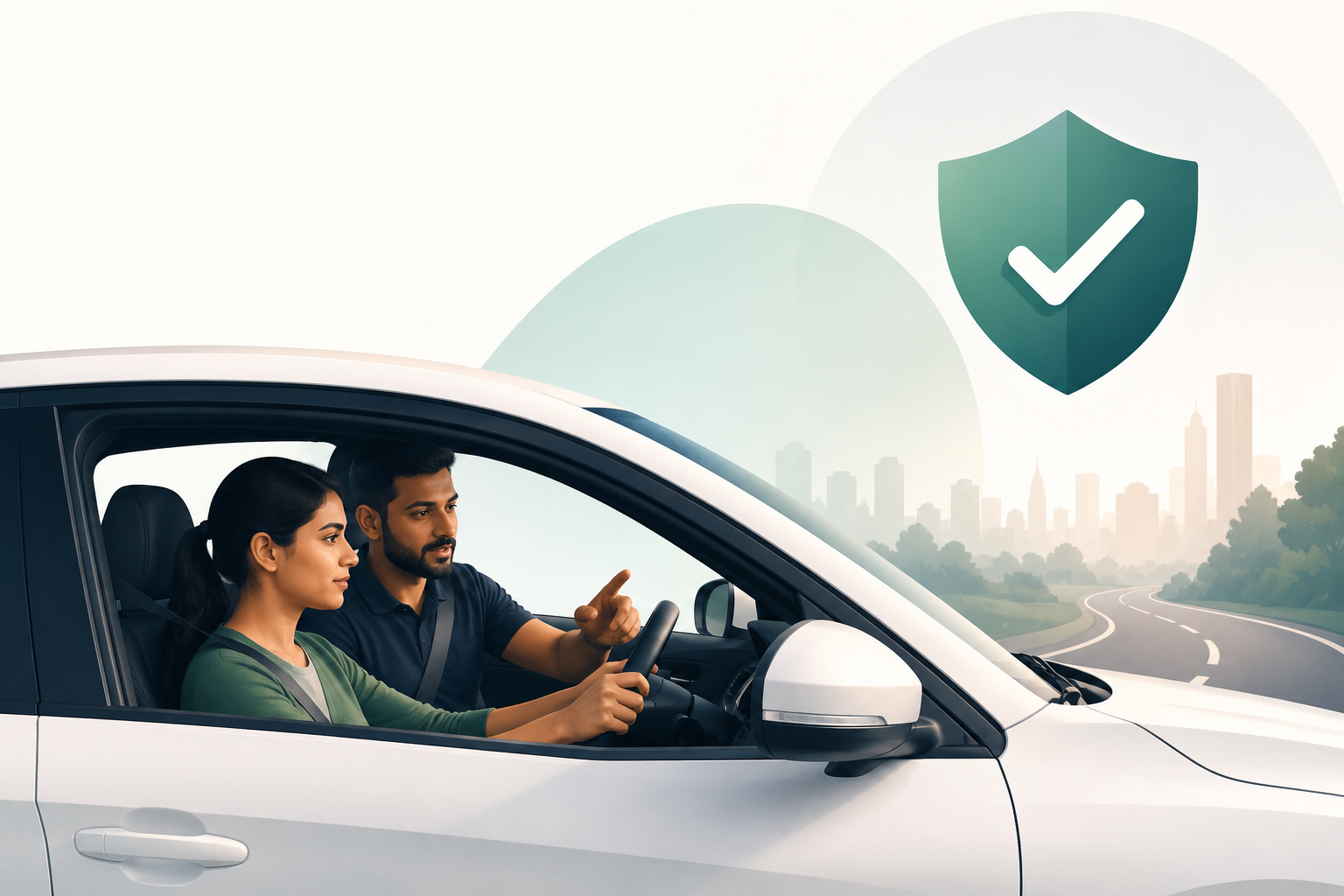
Lane, a tech-enabled driver education and mobility platform, has raised ₹8.5 crore in a new funding round led by Kae Capital. DeVC, Antler India, Panthera Peak and several prominent angel investors also took part in the round.
The Bengaluru-based company wants to solve a problem that India has faced for decades: the lack of proper, structured and high-quality driver education at scale.
The need is large. More than 1.7 lakh people die on Indian roads every year. That is close to twenty deaths every hour. Yet, for most people in India, learning to drive still takes place through family members, friends or informal local schools. The process often focuses on one goal: getting a licence.
Lane believes that a licence does not always mean a person knows how to drive well.
A Licence Does Not Always Mean Driver Skill
India has about 250 million licence holders, but a large share of them never had access to a proper system of driver education.
The official driving test also has clear limits. In many cases, the test takes place at only 10-15 km/h on a fixed track. That setting is very different from the real world, where drivers face traffic, pedestrians, two-wheelers, poor road conditions, sudden stops and many other risks.
India has about 1% of the world’s vehicles, yet it accounts for nearly 11% of global road deaths. For Lane, this gap points to a much larger issue than licensing. The country needs a reliable system that can teach people how to handle real roads with skill and confidence.
The Idea Behind Lane
Lane was founded by Samiksha Agarwal in 2025. She spent much of her career in venture capital and finance, but her long-term interest always came back to cars and driving.
Her observation was simple. India has hundreds of millions of people with licences, but many of them never received proper driver education.
Samiksha says most driver schools focus on the licence. Lane wants to focus on the person behind the wheel. Its aim is to create drivers who feel confident, understand road safety and can handle real traffic.
The company sees confidence behind the wheel as a life skill. Once a person learns the right habits, those skills can stay with them for years.
Early Scale Shows a Clear Need
Lane has already built a sizeable base in a short period. In 18 months, the company has delivered more than 30,000 hours of instruction to over 3,100 learners.
Nearly 70% of its customers already had a licence when they joined Lane. This is one of the strongest signs of the problem the company wants to solve. People may pass a test and receive a licence, yet still feel unsure about their ability on the road.
Lane’s model aims to close that gap through a more structured learning process.
The company developed its safety-first method after more than 400 hours of pilot classes, with input from automobile researchers. It also follows a strict process for instructor selection. Each partner faces assessment across 15 driving parameters, along with simulated lessons.
Qualified instructors can earn ₹80,000-90,000 a month. They work within micro-markets close to their homes, which can help Lane create a local network while also offer a better income path for skilled instructors.
Education Is Only the First Step
Lane does not see driver education as its final product. It sees the first lesson as the start of a much longer relationship with a customer.
After a learner becomes a confident driver, the next major decision can be car ownership. Lane has already started to offer car purchases, RTO services and other mobility services to its customers.
The opportunity is significant. Nearly 60% of Lane’s customers have expressed an intent to buy their first car.
This gives the company a chance to support a customer beyond the classroom. Instead of relying on repeat lessons, Lane wants to create trust that can continue through a person’s first car purchase and other mobility needs.
A Bigger Bet on Driver Intelligence
Lane’s long-term plan goes beyond lessons and mobility services. The company wants to create an AI-powered, automotive-grade system for the wider mobility journey.
At the centre of this plan is a sensor-based system. It can turn each road lesson into behavioural data and create a detailed driver profile for every learner.
This data could have value across several parts of the auto sector.
For insurers, driver behaviour could offer a better way to assess risk. Instead of relying only on broad, fixed categories, insurers could gain insight into how a person actually drives.
For car makers, the data could offer real-world information about vehicle performance across different drivers and road conditions.
For policymakers, the larger value could come from a clearer view of how India’s 250 million licence holders behave on roads. Such data could support systems that reward safe habits and give public authorities better information beyond traditional enforcement.
A Role in India’s Road Safety Effort
Road safety has become a major national priority in India. Governments have introduced measures such as mandatory highway ambulances and Good Samaritan protections.
However, policy alone cannot solve the full problem. India also needs better road education, stronger instructor standards and reliable information about driver behaviour.
Lane wants to play that ground-level role. Its goal is to connect education, technology and mobility services in one system that can help create safer and more capable drivers.
The company believes that better driver education can have value far beyond one learner. If good habits spread across millions of drivers, the effect could reach families, roads, insurers, car makers and public agencies.
How Lane Plans to Use the New Capital
The ₹8.5 crore raised in this round will support three main areas.
First, Lane plans to expand its instructor network across Bengaluru and then move into other Tier 1 cities. A wider local network can help the company serve more learners while keep its instructor model close to each customer.
Second, the company will put more capital into its sensor technology. This system is central to its larger driver intelligence plan and could become an important part of its future platform.
Third, Lane will build its car ownership services. The goal is to help customers move from driver education to their first car purchase through a more connected experience.
Building a New Mobility Category
Lane is still a young company, but its ambition is much larger than that of a traditional driver school.
Its starting point is simple: teach people to drive properly. From there, the company wants to support licensing, car ownership and other mobility needs, while also create a data layer around driver behaviour.
Kae Capital Partner Sunita Viswanathan said the appeal was not only the size of the market. She pointed to the place driver education holds in a person’s life. Learning to drive often comes before decisions about car ownership, insurance and a wider relationship with mobility.
That makes driver education a strong entry point into a much larger market.
Lane’s challenge now is to take a model that has shown early demand and make it work across many cities. If it can maintain its quality while grow its instructor base and technology platform, the company could help create a more structured approach to driver education in India.
For a country with 250 million licence holders and one of the world’s highest road death rates, that is a problem worth solving.
Also Read – Milky Mist Cuts IPO Size Before Public Issue Next Week