
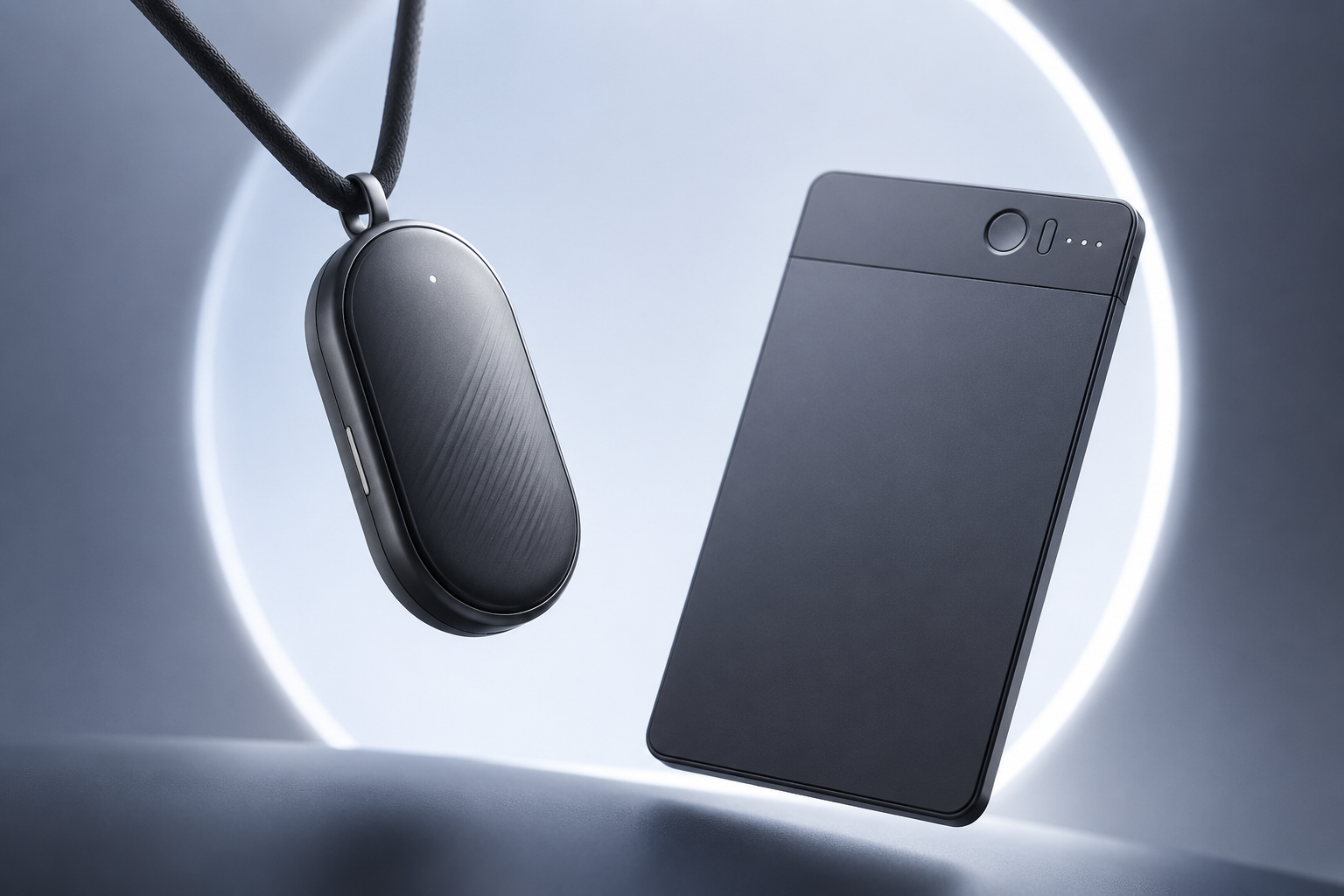
AI hardware startup Plaud has now made a bold move that has caught attention across the tech world. The company, known for its AI note-taking devices, now plans to launch a brand-new wearable product. At the same time, Plaud has set a huge business target of reaching nearly $500 million in annual sales.
This news came through a recent Bloomberg report, and many people in the technology industry now see Plaud as one of the most interesting young companies in the fast-growing AI hardware market.
While many AI startups focus only on software, Plaud has taken a different path. The company builds physical devices that help people record conversations, create notes, and save important information with the help of artificial intelligence.
This latest move shows that Plaud wants much bigger success in the coming years.
What Plaud Has Built So Far
Plaud already sells devices that focus on voice recording and smart note creation. The company has built products for people who often attend meetings, make phone calls, or need help saving important discussions.
One of its well-known products is the Plaud Note Pro. This device comes in a small size, almost like a credit card. Users can record conversations, phone calls, and meetings with it.
Another important product is the Plaud NotePin. This device works as a wearable product that a person can attach to clothing. It allows hands-free voice recording and helps capture conversations without the need to hold a device.
After the recording process ends, artificial intelligence turns speech into written text. The software also creates summaries and pulls out important action points from the conversation.
The company focuses on one simple idea. It wants to become a memory assistant that helps people save important conversations without extra effort.
Why This New Product Matters
The new wearable product has created major interest because it shows Plaud wants to move beyond simple recording devices.
The company now appears ready to enter the growing market for what experts call ambient AI. This means technology that stays close to people all day and quietly helps them without direct commands every few minutes.
The idea behind this type of device is simple. Instead of opening an app and manually asking for help, the device stays active and remembers useful information automatically.
This makes Plaud very different from traditional AI companies.
The wearable market may become one of the biggest technology trends over the next few years, and Plaud clearly wants an early position in that race.
AI Hardware Becomes the Next Big Battle
For the last two years, artificial intelligence mainly lived inside software products.
People used chatbots like ChatGPT, Claude, and Gemini through phones, laptops, and websites. Later, the market started to move toward AI agents that could complete tasks automatically.
Now the industry has started to shift once again.
Technology companies now want AI to become part of everyday life through wearable products.
This new phase focuses on devices that can listen, remember, and help people in real time.
Plaud fits perfectly into this new trend because its products already work as personal memory tools.
This means the company has a strong position before many competitors fully enter this market.
Other Companies Also Want This Market
Plaud is not alone in this race.
Several large technology companies have already started work on similar ideas.
Meta has already found success with its smart glasses products, which combine wearable technology with artificial intelligence features.
OpenAI has also attracted attention after reports connected the company with famous designer Jony Ive for possible future hardware products.
Apple has also shown stronger interest in AI-powered wearable devices, although the company has not shared full details yet.
At the same time, other companies have struggled badly.
Humane, which launched its AI Pin device with huge expectations, failed to create strong customer demand and faced major problems after launch.
This shows the AI hardware market has huge opportunity, but success is far from guaranteed.
Plaud Already Shows Strong Business Growth
One reason investors now pay close attention to Plaud is the company’s strong revenue growth.
Reports suggest Plaud grew from around $1 million in annual recurring revenue to nearly $100 million within about two years.
That type of growth is extremely rare for a young hardware startup.
The company has also reportedly built a global user base of more than 2 million customers.
Market research company Euromonitor International has also recognized Plaud as a leading brand in the AI note-taking device market by product sales volume in 2025.
These numbers help explain why the company now feels confident enough to set a much bigger target of $500 million in annual sales.
This goal shows Plaud expects very strong demand ahead.
Big Challenges Still Remain
Even with strong momentum, Plaud still faces major challenges.
One of the biggest concerns comes from privacy issues. Many people feel uncomfortable around devices that can record conversations at any moment.
Different countries also have strict legal rules related to voice recording. Some places require permission from every person before recording can begin.
Competition also remains a serious threat.
Large companies like Apple, Meta, and OpenAI have far more money and resources. If they enter this space aggressively, smaller companies like Plaud could face serious pressure.
Hardware businesses also carry higher costs compared with software companies.
Manufacturing, shipping, customer support, and product repairs can quickly reduce profits.
This means Plaud must execute carefully if it wants to hit its ambitious revenue target.
Why This News Is Important for the Tech Industry
This story is much bigger than one startup.
Plaud’s growth suggests that consumers may finally accept dedicated AI hardware as part of daily life.
Until now, many people believed AI companies would mainly earn money through software subscriptions.
Plaud challenges that idea.
If the company succeeds, more startups may rush toward products such as AI glasses, wearable assistants, personal memory devices, and always-available AI companions.
This could create an entirely new technology category over the next few years.
The Bloomberg report shows one important reality.
Artificial intelligence may no longer stay limited to screens.
The next phase of AI could live directly on the human body through devices that work quietly in the background.
Plaud now wants to lead that future, and its $500 million sales target proves the company believes this market has only just begun.
Also Read – SolarSquare Raises $53 Million to Expand Solar Business