
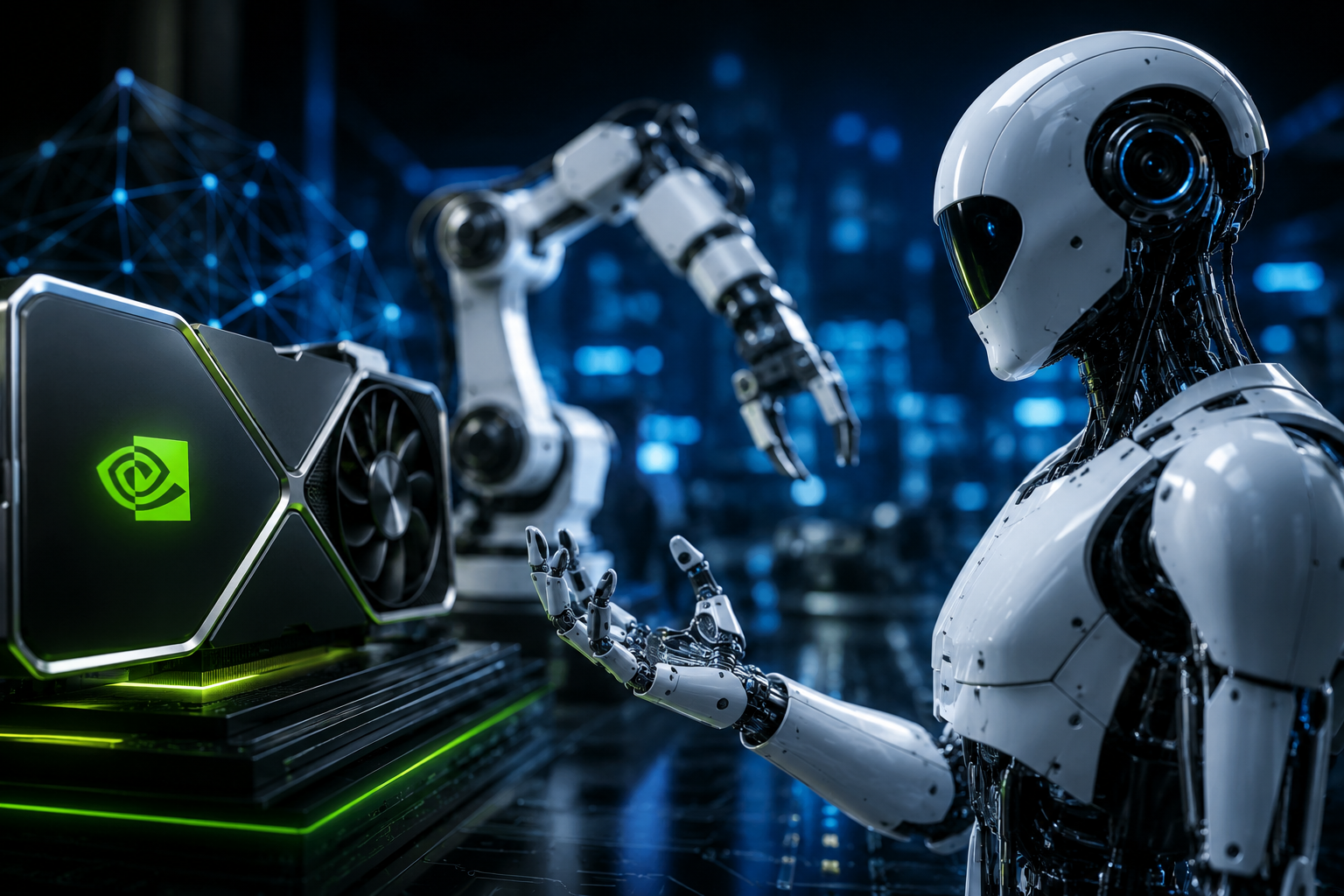
Generalist AI, a robotics startup from San Francisco, now stands among the fastest-rising companies in the artificial intelligence world. The company recently reached a value of around $2 billion after fresh investor interest. This news has caught attention across the tech sector because many experts believe robotics and AI could shape the future of work, factories, transport, and even homes.
The startup has support from Nvidia, one of the biggest names in artificial intelligence chips and computing systems. Nvidia already plays a major role in the global AI race, and its support for Generalist AI shows strong trust in the company’s future plans.
The Main Goal of the Company
Generalist AI works on a very important idea. The company wants robots to think and react more like humans. Most robots today can only complete one fixed task. A factory robot may move boxes all day, while another robot may clean floors. These machines often fail when situations change. Generalist AI wants to solve this problem by giving robots a general brain that can work across many jobs.
The company builds what experts call a robotics foundation model. This system works in a way similar to large language models like ChatGPT, but instead of only handling words and text, it also handles movement, vision, and real-world actions. The goal is simple. A robot should learn new tasks without long manual programming.
Why Investors Show Strong Interest
This idea has become one of the hottest areas in artificial intelligence. Investors now believe physical AI may become as important as software AI. In the past few years, companies raced to build AI chatbots and image tools. Now the next race has begun. Tech firms want smart robots that can work in warehouses, factories, hospitals, offices, and homes.
Generalist AI came from a strong group of founders and researchers. Many team members earlier worked at famous companies and labs such as OpenAI, Google DeepMind, and Boston Dynamics. These organizations already hold strong positions in robotics and machine learning research. Their experience gives Generalist AI an advantage in a highly competitive market.
The Launch of GEN-1
The startup recently introduced a robotics model called GEN-1. According to the company, this system helps robots understand physical tasks in a more flexible way. Instead of learning one narrow action, robots may use GEN-1 to handle different jobs across many environments.
For example, a robot with this type of AI may pick up objects, open doors, sort items, or move around crowded spaces without detailed instructions for every single action. This makes robots far more useful in daily operations.
Nvidia’s Role in the Company
Nvidia’s support has added more trust around the startup. Nvidia already supplies powerful AI chips and software systems to many companies around the world. The company also invests in several AI startups that work on robotics, cloud systems, and advanced computing. Nvidia leaders believe robotics may become the next major wave after generative AI.
The rise of Generalist AI also shows a wider change in Silicon Valley. Investors no longer focus only on chatbots and text-based AI products. Many now look at companies that connect AI with physical machines. This field often carries the name “physical AI” or “embodied AI.”
What Physical AI Really Means
Physical AI means artificial intelligence inside machines that interact with the real world. These machines can see, move, touch objects, and react to changing situations. Experts believe this technology may improve industries like manufacturing, logistics, healthcare, farming, and retail.
Generalist AI is not alone in this race. Several other startups also chase similar goals. Figure AI, Field AI, and Skild AI have all received huge investments in recent years. Investors hope these companies may build the next generation of smart machines.
Competition in the Robotics Industry
Figure AI, for example, works on humanoid robots. These robots look and move more like humans. Many businesses believe humanoid robots may one day help with factory work, warehouse tasks, and service jobs. Field AI focuses more on autonomous systems for difficult environments. Skild AI also works on general-purpose robot intelligence.
The market for robotics has grown very fast because businesses face worker shortages and rising labor costs. Companies want machines that can complete repetitive or risky jobs safely and efficiently. At the same time, AI technology has improved rapidly. Better chips, better software, and larger datasets now allow robots to process information much faster than before.
Challenges Still Remain
Still, many challenges remain. Robots must deal with the unpredictability of the real world. A chatbot only handles text on a screen, but a robot must move through changing environments. Lighting, object position, noise, and obstacles can all affect performance. Because of this, robotics development often costs more and takes longer than software development.
Safety also remains a major concern. Experts want strong testing before robots enter workplaces or homes at a large scale. Companies must make sure robots do not harm people or damage property. Governments may also create new rules for advanced robotics in the future.
A Fast-Growing Market
Even with these concerns, investor confidence remains very high. A $2 billion value for Generalist AI shows how strongly the market believes in the future of robotics. Many investors think smart robots may eventually become as common as smartphones and computers.
Some analysts compare the current robotics boom to the early internet years. During that time, many startups entered the market with big promises. Some failed, but others became global giants. Investors now hope the same pattern may happen in robotics and AI.
The Road Ahead for Generalist AI
Generalist AI still stands at an early stage compared to older technology companies. However, its strong team, advanced research, and Nvidia backing have placed it in an important position within the industry. If the company succeeds, its technology may help robots move beyond simple repetitive tasks and into more advanced roles across many sectors.
The company’s future success will depend on how well its AI systems perform in real-world conditions. Businesses will expect robots that work reliably, safely, and at a reasonable cost. Generalist AI must also compete against major technology firms with huge financial resources.
Final Thoughts
Even so, the excitement around the startup shows no signs of slowing down. Artificial intelligence has already changed the digital world. Now many experts believe the next big transformation may happen in the physical world through robotics.
Generalist AI stands at the center of this shift. Its rapid rise to a $2 billion value reflects growing belief that robots with general intelligence may soon become part of everyday life. The company may still face many technical and business challenges ahead, but investors clearly believe the opportunity is massive.
The robotics race has only just begun, and Generalist AI has already secured a place among the industry’s most closely watched startups.
Also Read – Saudi Arabia’s Startup Boom: Building a Future Beyond Oil