
For most of modern business history, starting a company required assembling a team—developers to build the product, marketers to promote it, operators to manage logistics, and strategists to guide direction. Technology supported these efforts, but it never replaced them.
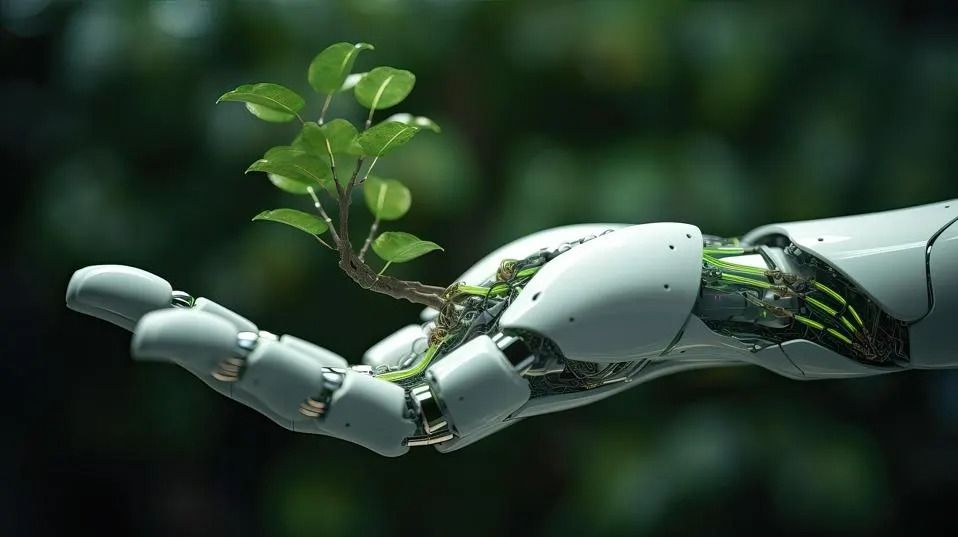
That dynamic is rapidly changing. Artificial intelligence has evolved beyond being a passive tool into something far more impactful: an active collaborator. Today, AI systems can write code, generate business plans, design products, analyze markets, and even interact with customers in real time. This shift has given rise to a new concept—the AI co-founder.
An AI co-founder is not a literal partner with equity or legal standing. Instead, it represents a powerful combination of AI systems that collectively perform many of the functions traditionally handled by human founders. From ideation to execution, AI is increasingly embedded in every stage of building a startup.
This transformation is not speculative—it is already happening at scale and is reshaping the global entrepreneurial landscape.
The Data Driving the Trend
The emergence of AI co-founders is supported by strong and accelerating data trends across adoption, funding, and economic impact.
By 2025, approximately 78% of global companies were actively using AI in some form, with over 90% exploring its potential in their operations. Generative AI, the most transformative branch of AI, has seen particularly rapid adoption, with around 71% of organizations integrating it into at least one business function.
Financially, the AI industry has expanded at an extraordinary pace. The global AI market reached roughly $391 billion in 2025 and is projected to grow to over $1.8 trillion by 2030. Generative AI alone is expected to contribute trillions of dollars annually to the global economy within the next decade.
Investment trends reinforce this momentum. In 2025, AI-related startups captured about half of all global venture capital funding, totaling over $200 billion. This indicates not just interest, but a fundamental shift in how investors perceive the future of innovation.
Additionally, the ecosystem itself has exploded. There are now tens of thousands of AI companies worldwide, with more than 11,000 startups specifically focused on AI-driven products and services.
These numbers highlight a clear reality: AI is no longer a niche technology. It is becoming the backbone of modern business creation.
Defining the AI Co-Founder
To understand the concept fully, it is important to clarify what an AI co-founder actually does.
Unlike traditional software tools that perform specific, limited tasks, AI systems today are capable of handling complex, multi-step processes. When integrated effectively, they can replicate the contributions of an entire founding team.
Key Functions of an AI Co-Founder
1. Idea Generation and Validation
AI can analyze market trends, identify gaps, and generate business ideas. It can also validate these ideas by assessing demand, competition, and feasibility.
2. Product Development
With the help of AI coding tools, even non-technical founders can build applications, websites, and digital products. AI can write, debug, and optimize code, dramatically reducing development time.
3. Design and User Experience
AI tools can create logos, user interfaces, and product designs, often within minutes. This eliminates the need for dedicated design teams in early stages.
4. Marketing and Growth
AI can generate content, manage social media campaigns, optimize ads, and personalize user experiences at scale.
5. Operations and Support
Customer service, onboarding, and routine operations can be automated using AI-driven systems, reducing the need for large support teams.
6. Strategic Decision-Making
Advanced AI models can analyze data, simulate outcomes, and provide recommendations, assisting founders in making informed decisions.
When combined, these capabilities allow AI to function as a highly versatile and scalable partner.
Why AI Co-Founders Are Emerging Now
1. Cost Compression
One of the biggest barriers to starting a company has always been cost. Hiring skilled talent, building infrastructure, and running operations required significant capital.
AI has dramatically reduced these costs. Tasks that once required entire teams can now be handled by a single founder using AI tools. Customer acquisition costs are decreasing, development timelines are shrinking, and operational overhead is being minimized.
This shift has made entrepreneurship more accessible than ever before.
2. Advances in Generative AI
Generative AI has been the key catalyst behind this transformation. Unlike earlier forms of AI that focused on analysis, generative AI can create content, code, and even entire systems.
These models are capable of:
- Writing software
- Generating business documents
- Producing marketing materials
- Simulating conversations
This creative capability allows AI to contribute directly to value creation, not just optimization.
3. The Rise of Autonomous Agents
Another major development is the emergence of agentic AI—systems that can act independently to achieve specific goals.
These AI agents can:
- Execute tasks without constant human input
- Coordinate with other systems
- Adapt based on feedback
In essence, they behave like employees—or even co-founders—handling responsibilities autonomously.
Predictions suggest that billions of such agents could be in operation within the next few years, fundamentally changing how businesses operate.
4. Investor and Market Alignment
Investors are increasingly prioritizing AI-driven startups. Many venture capital firms now expect companies to integrate AI into their core operations.
This alignment has created a reinforcing cycle:
- AI startups attract funding
- Funding accelerates innovation
- Innovation increases adoption
As a result, AI is becoming a standard component of startup strategy, not an optional enhancement.
The New Startup Model
The traditional startup model is undergoing a transformation.
Traditional Model:
- Large founding teams
- High initial capital requirements
- Long development cycles
AI-Native Model:
- Small or solo founding teams
- Low startup costs
- Rapid iteration and deployment
AI-native startups are leaner, faster, and more adaptable. They can test ideas quickly, pivot easily, and scale efficiently.
This has led to the emergence of the “solo founder” movement, where individuals build and run companies with minimal human support.
Real-World Applications
The concept of AI co-founders is already visible across multiple domains.
1. No-Code and AI Coding Platforms
Platforms that enable users to build software without traditional programming skills are gaining traction. These tools use AI to translate ideas into functional applications, lowering the barrier to entry for entrepreneurship.
2. AI in Investment and Evaluation
AI is increasingly being used to evaluate startups, analyze pitches, and assist in investment decisions. This improves efficiency and reduces bias in the funding process.
3. AI-Driven Operations
Startups are using AI to manage customer interactions, automate workflows, and optimize supply chains. This allows them to operate with minimal staff while maintaining high levels of efficiency.
Benefits of AI Co-Founders
1. Speed and Efficiency
AI accelerates nearly every aspect of building a company. What once took months can now be achieved in days or even hours.
2. Accessibility
AI democratizes entrepreneurship by enabling individuals without technical or financial resources to start businesses.
3. Scalability
AI systems can handle large volumes of work without proportional increases in cost, allowing startups to scale rapidly.
4. Data-Driven Insights
AI provides real-time analytics and predictive insights, helping founders make better decisions.
Challenges and Risks
Despite its advantages, the rise of AI co-founders comes with significant challenges.
1. Reliability and Accuracy
AI systems are not infallible. They can produce incorrect or misleading outputs, which can lead to poor decisions if not carefully monitored.
2. Limited Measurable Impact
While AI adoption is high, many companies have yet to see significant revenue gains from it. This suggests that effective implementation is still a challenge.
3. Ethical Concerns
Issues such as data privacy, bias, and intellectual property rights are becoming increasingly important as AI systems become more powerful.
4. Workforce Disruption
AI is reshaping the job market, automating certain roles while creating new ones. This transition can be disruptive and requires adaptation.
The Human-AI Partnership
The most effective approach is not to replace human founders with AI, but to combine their strengths.
Humans bring:
- Creativity
- Emotional intelligence
- Ethical judgment
- Vision
AI brings:
- Speed
- Scalability
- Data processing
- Automation
Together, they form a powerful partnership that enhances both productivity and innovation.
The Future of AI Co-Founders
Looking ahead, several trends are likely to define the next phase of this evolution.
1. Autonomous Companies
We may see companies that operate largely through AI systems, with minimal human intervention.
2. Rise of Solo Entrepreneurs
More individuals will build and scale businesses independently, supported by AI.
3. New Business Models
AI will enable entirely new types of products and services that were previously impossible.
4. Global Inclusion
Entrepreneurship will become more accessible worldwide, allowing people from diverse backgrounds to participate in innovation.
Conclusion: Redefining What It Means to Build a Company
The rise of AI co-founders represents a fundamental shift in how businesses are created and operated.
AI is no longer just a tool—it is a collaborator, a multiplier of human capability, and a driver of innovation. It is enabling faster, cheaper, and more accessible entrepreneurship, while also introducing new challenges and responsibilities.
The future of startups will not be defined by humans alone or machines alone, but by the synergy between them. Founders who learn to effectively partner with AI will have a significant advantage in this new landscape.
In this emerging era, the question is no longer whether you need a co-founder. It is whether your co-founder is human, AI, or a powerful combination of both.
ALSO READ: What VCs Actually Look For (It’s Not What You Think)