
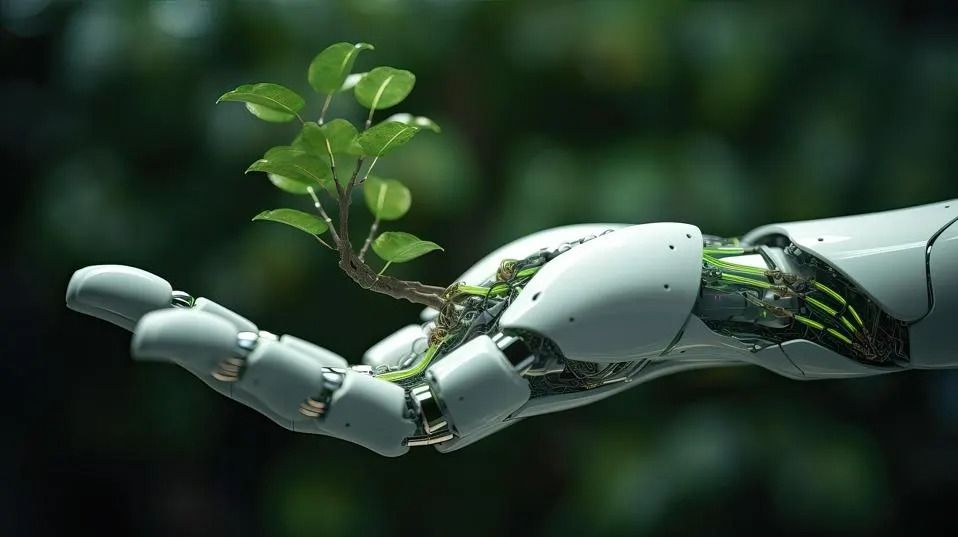
Artificial intelligence is transforming industries at an unprecedented pace. From customer service chatbots to autonomous manufacturing systems, AI automation is rapidly becoming a core part of the modern economy.
Companies adopt AI to increase efficiency, reduce costs, and scale operations faster than ever before. Tasks that once required hours of human labor can now be completed in seconds using advanced algorithms.
Yet behind the excitement surrounding AI innovation lies a set of serious concerns. As automation expands across sectors, it raises difficult questions about jobs, fairness, security, and the future relationship between humans and machines.
While AI promises enormous benefits, it also has a darker side that deserves careful examination.
The Threat to Jobs
One of the most widely discussed risks of AI automation is job displacement.
Automation has historically replaced certain types of work while creating new opportunities in other areas. However, the speed and scope of AI automation may disrupt labor markets faster than previous technological shifts.
AI systems can now perform tasks once considered uniquely human, including writing, data analysis, customer service, and even aspects of software development.
Industries likely to experience major changes include:
- Customer support
- Retail and logistics
- Finance and accounting
- Transportation
- Content creation
- Manufacturing
While new roles may emerge, workers whose jobs are automated may face significant challenges transitioning to new careers.
The concern is not simply job loss but the pace at which automation could reshape entire sectors of the workforce.
Bias and Algorithmic Discrimination
AI systems are trained on large datasets. If those datasets contain bias, the resulting algorithms can reinforce or even amplify discrimination.
This issue has already appeared in several real-world applications.
AI-powered hiring systems have sometimes favored certain demographic groups over others. Facial recognition systems have shown higher error rates for certain populations. Credit scoring algorithms can unintentionally disadvantage specific communities.
Because many AI models operate as complex “black boxes,” identifying and correcting these biases can be difficult.
Without careful oversight, automated decision-making systems risk embedding systematic bias into critical societal processes.
Loss of Human Oversight
Automation can improve efficiency, but excessive reliance on AI systems may reduce human oversight in important decisions.
When organizations depend heavily on automated systems, there is a risk that humans may stop questioning or reviewing the outcomes produced by algorithms.
This phenomenon—sometimes called automation bias—can lead people to trust machine-generated decisions even when those decisions are flawed.
In sectors such as healthcare, finance, and criminal justice, overreliance on automated systems could have serious consequences.
Human judgment remains essential for evaluating context, ethics, and complex situations that algorithms may not fully understand.
Privacy and Surveillance Concerns
AI automation often relies on vast amounts of data to function effectively.
This data may include personal information such as location data, browsing behavior, purchase history, and biometric data.
As companies and governments deploy AI systems at scale, concerns about privacy and surveillance continue to grow.
For example, AI-powered surveillance systems can analyze video footage, track individuals, and identify behavioral patterns in real time.
While these technologies may improve security in certain contexts, they also raise concerns about civil liberties and potential misuse.
Balancing innovation with privacy protection will become increasingly important as AI systems become more pervasive.
Cybersecurity Risks
AI automation introduces new vulnerabilities in cybersecurity.
AI systems themselves can be targeted by attackers who manipulate training data or exploit weaknesses in algorithms. This type of attack, known as adversarial manipulation, can cause AI systems to produce incorrect outputs.
At the same time, cybercriminals are also using AI to launch more sophisticated attacks.
AI-powered tools can generate highly convincing phishing messages, automate hacking attempts, and analyze vulnerabilities at scale.
This technological arms race means that both defenders and attackers are increasingly using AI, raising the stakes for cybersecurity worldwide.
Concentration of Power
Developing advanced AI systems requires significant computational resources, specialized talent, and massive datasets.
As a result, a small number of technology companies and governments currently control much of the world’s AI infrastructure.
This concentration of power raises important questions about competition, accountability, and global influence.
If only a few organizations control the most powerful AI systems, they may gain disproportionate influence over economic activity, information flows, and technological development.
Ensuring fair access to AI technology may become a major policy challenge in the coming decades.
Ethical and Moral Challenges
AI automation also raises complex ethical questions.
For example:
- Should autonomous systems be allowed to make life-and-death decisions?
- Who is responsible when an AI system causes harm?
- How transparent should algorithms be?
- What rights should individuals have regarding automated decisions that affect them?
These questions highlight the need for clear ethical frameworks governing the development and deployment of AI technologies.
Without thoughtful regulation and responsible design, AI systems could create unintended consequences that are difficult to reverse.
The Risk of Overdependence
As automation becomes more integrated into daily life, societies may become increasingly dependent on AI systems.
Critical infrastructure such as transportation networks, power grids, financial markets, and healthcare systems may rely heavily on automated decision-making.
While automation can improve efficiency, excessive dependence on complex systems may create vulnerabilities if those systems fail or behave unpredictably.
Maintaining human expertise and oversight will remain essential for ensuring resilience in critical sectors.
Balancing Innovation and Responsibility
Despite these risks, AI automation also offers enormous benefits.
AI systems can accelerate scientific research, improve healthcare diagnostics, optimize energy usage, and enhance productivity across industries.
The challenge is not whether AI should exist, but how it should be developed and governed.
Responsible AI development requires:
- Transparent algorithms
- Ethical guidelines for deployment
- Robust data privacy protections
- Human oversight of automated systems
- Inclusive datasets that reduce bias
Governments, companies, researchers, and civil society must work together to ensure that AI technologies serve the broader interests of society.
Conclusion
AI automation is one of the most powerful technological forces shaping the modern world. Its ability to transform industries and improve efficiency is undeniable.
However, alongside its benefits come significant risks related to employment, fairness, privacy, security, and power concentration.
Recognizing the dark side of AI automation does not mean rejecting technological progress. Instead, it highlights the importance of approaching innovation thoughtfully and responsibly.
The future of AI will depend not only on what technology can do, but also on how societies choose to guide its development.
If managed carefully, AI automation can create tremendous opportunities. If ignored, its unintended consequences could reshape society in ways we are only beginning to understand.
ALSO READ: Health Insurance Startup Alan Reaches $5.83B Valuation