

You said:
India’s Female-Led Startups to Watch write a 2000 words article with 150 character description and add all the latest data without links
ChatGPT said:
Thought for 10s
150-character description:
India’s female founders are reshaping industries — from beauty to biotech — but funding gaps remain. Here’s who’s leading, why it matters, and the latest data.
India’s Female-Led Startups to Watch (2026): who’s scaling, what the numbers say, and why it matters
Female founders in India have become impossible to ignore. Over the past decade they’ve launched category-defining consumer brands, moved into biotech and deep tech, and begun to close visibility gaps that once kept them out of boardrooms and cap tables. This article profiles the landscape in early 2026, highlights standout companies and founders, summarizes the latest funding and performance data, and explains what investors, policymakers, and founders themselves should watch next.
A snapshot of the numbers (the cold, useful truth)
Women-led startups still receive a minority slice of venture capital — but the story is nuanced. In 2024 India’s tech startups raised roughly $11.8 billion in total; of that, women-led tech startups captured about $1.0 billion, or roughly 8.8% of the total — a meaningful number but one that also shows how far there is to go. Funding for women-co-led tech startups declined in 2024 from 2023 levels (a drop from about $1.4B to $1.0B), reflecting broader macro conditions and a retrenchment in late-stage checks. These are the broad, load-bearing financial facts that shape strategy for founders and investors alike.
At the same time, a handful of female-founded firms have reached public markets and category leadership, producing outsized returns and visibility that help attract talent and mentors into the ecosystem. Revenues and profitability at several consumer brands helmed or co-helmed by women have recently shown encouraging momentum, signaling that product-market fit plus operational rigor can overcome many structural obstacles. (We’ll look at specifics below.)
Why this matters now
Three forces are converging to make 2025–2026 a pivotal period for women founders in India:
- Market demand — rising incomes, digital distribution, and category maturation (beauty, maternal & baby care, women’s health) mean many consumer categories are larger and more defensible than before.
- Policy tailwinds — targeted programs and accelerators from government and corporates aim to increase the pipeline of women-led startups and improve access to mentors and early capital.
- Proof points — a growing set of homegrown brands led by women are reporting record quarters and path to profitability, which reduces investor risk perception when evaluating new women-led bets.
Together these forces make the next three years crucial: either the momentum becomes self-sustaining, or structural funding gaps and talent constraints limit scale for an entire cohort.
Who to watch: established names and rising challengers
Below I profile a mix of established, scaled female-led companies and earlier-stage startups and founders who merit attention because of growth, category innovation, or recent funding/financial signals. Each profile includes a quick reason to watch.
Nykaa — founder: Falguni Nayar
Why watch: Nykaa has become the poster child for an Indian D2C→omnichannel success story and continues to demonstrate that a well-executed omnichannel marketplace in beauty/fashion can scale profitably. In the holiday quarter ending December 2025, the company reported a sharp rise in profit and healthy revenue growth, underscoring both the strength of its marketplace model and resilience in discretionary spending. Nykaa’s public performance is an important signal — it creates role models, hiring pull, and benchmarks for valuations in consumer categories.
Mamaearth — founder: Ghazal Alagh
Why watch: Mamaearth is notable for taking a modern, ingredient-first consumer approach and scaling across baby, personal care, and adjacent categories. The company has shown strong quarterly revenue performance and moved into profitability in recent quarters, with traceable fundraising history and an expanding brand portfolio. For founders building mission-driven consumer brands, Mamaearth’s playbook on brand community, retail expansion and private label strategy is worth studying.
Zivame — founder: Richa Kar
Why watch: Zivame was an early category creator in India’s intimate apparel e-commerce market. While Richa Kar stepped back from day-to-day operations some years ago, Zivame’s evolution shows how early category pioneers can shift market norms and create acquisition or consolidation opportunities. The company’s repositioning and continued product and distribution investments make it a useful bellwether for other women-centric categories.
Sugar Cosmetics — founder: Vineeta Singh
Why watch: Sugar is an example of a brand that combined sharp product design with strong influencer and retail playbooks. Vineeta Singh is also active in the broader startup ecosystem (mentorship, investing), and Sugar’s trajectory is instructive for founders building digitally native brands that want omnichannel reach.
The Moms Co. — founder: Malika Sadani
Why watch: The Moms Co. demonstrates the power of category depth (mother & baby) and clinical credibility in product marketing. Brands that earn consumer trust in sensitive categories can often expand with higher retention and LTV (lifetime value), giving them defensibility even against global incumbents.
The newer crop: startups gaining traction post-2023
Outside the consumer giants, there are numerous women founders in fintech, healthtech, edtech and climate tech with high momentum. Many of these are co-founded teams where women lead product, go-to-market, or CEO roles — and that co-leadership is increasingly how funding is allocated (investors often prefer mixed leadership teams for operational balance).
Notable movement in the data: while overall dollars into women-led startups dipped in 2024, the number of women-led startup deals remained meaningful, with stronger participation at pre-seed and seed, where accelerators and government programs are focusing their efforts. That suggests a widening funnel that, with the right follow-on capital, could convert into a deeper pool of scale-ups in the late 2020s.
What the financials tell us (and what they don’t)
- Profitability is back on the agenda. Public and late-stage consumer companies led by women are emphasizing disciplined unit economics, inventory turns, and channel profitability. This is visible in recent quarters for several brands. Profitability helps attract a different class of investor (value, PE) and reduces reliance on continuous growth funding.
- Funding concentration persists. A few companies capture the largest rounds; most women-led firms still raise smaller checks. The Tracxn analysis shows a concentrated market where total dollars to women-led tech firms amounted to about $1B in 2024, a non-trivial but still small share of the total India tech funding pool.
- Early-stage momentum vs. late-stage gaps. Seed and pre-seed programs (including government initiatives) have expanded, but there’s an observable “missing middle”: fewer large Series B/C checks for women founders compared with the market average. This is a systemic pipeline problem — the number of investible late-stage companies is smaller, which keeps large exits concentrated.
Ecosystem moves: policy, accelerators, and corporate initiatives
India’s public and private ecosystem has been trying targeted interventions:
- Startup India and “Women for Startups” programs are delivering workshops, mentorship and curated pitching opportunities to help founders become investor-ready. These programs have expanded to state-level workshops and accelerator linkages in recent years.
- National Startup Day 2026 (observed as a milestone for the decade since Startup India’s launch) sparked renewed conversation about equity in access and the structural barriers women entrepreneurs still face, and it amplified commitments to mentoring and seed grants.
While programs help awareness and early readiness, funding behavior is ultimately driven by risk appetite and expected returns — which is why performance stories matter so much. When women-led startups deliver predictable unit economics and scalable distribution, capital follows.
What investors should watch (actionable checklist)
- Underwrite unit economics, not gender. Focus on retention, CAC payback, and LTV — these metrics predict late-stage success more reliably than founder demographics.
- Back co-lead teams earlier. Co-founder teams with complementary skills reduce execution risk and increase the probability of follow-on rounds.
- Create women-led growth funds or carveouts. Targeted capital with operator support can bridge the missing middle; it’s already yielding returns in other markets.
- Invest in category builders. Categories like maternal & baby care, intimate apparel, women’s health, and affordable diagnostics show durable demand and higher defensibility when brands build trust.
What founders should prioritize
- Category defensibility. Own a narrow problem first; expand horizontally later.
- Operational rigor. Costs, fulfillment, and margin discipline win in downturns and attract strategic buyers. Recent quarters from scaled consumer players show how operational execution translates into durable valuations.
- Build investor relationships early. Seed investors who can follow-on make the difference between being forced to sell and scaling.
- Leverage public programs and mentorship. Accelerators and government initiatives are helpful not just for capital but for network and credibility.
Success stories and learnings in one place
The headline learnings from the most successful female-led firms in India are consistent:
- Brand trust + product depth creates durable customer economics (repeat, word-of-mouth).
- Omnichannel distribution (online + offline) helps scale faster in categories where trials matter (beauty, baby care).
- Clear unit-economics discipline signals maturity to late-stage investors and reduces valuation compression.
- Role models matter. Public success stories increase the ecosystem’s tolerance for risk on future women founders.
Examples above — from Nykaa to Mamaearth — illustrate how those elements combine into scalable, high-growth companies.
Gaps that persist (and how to close them)
- Follow-on capital shortage. More late-stage checks targeted at women founders (or mixed teams with women as CEOs) would smooth the path to scale.
- Investor bias, conscious or otherwise. Continued data collection and accountability by LPs and VCs on diversity metrics would help.
- Talent pipelining. Senior operator talent is still concentrated in a few hubs; remote leadership pathways and executive training programs can democratize growth.
- Sector diversification. Women are dominant in consumer categories but underrepresented in hardware, deep tech and climate tech; targeted fellowships and technical co-founder matching can broaden the set of winning categories.
Where we’ll likely be in 3 years (a cautious forecast)
If current policy programs continue and a critical mass of high-performing women-led companies reach Series B/C scale, then by 2029 India could see a meaningful uptick in dollars going to women founders — not just because of optics but because more investible, late-stage businesses will exist. Conversely, if follow-on capital remains scarce, India risks perpetuating a pattern where many promising women-led companies are sold early or constrained in growth.
The data from 2024 and early 2026 show both the opportunity (a growing funnel and public proof points) and the limit (dollar concentration and slower late-stage funding). Addressing the latter is where investors and policymakers can make the highest-leverage interventions.
Final takeaways
- Women founders are no longer fringe actors in India’s startup story — they are building category leaders and public companies.
- The headline funding number (≈$1B for women-led tech startups in 2024) is progress but not success; the real test is whether more women-led firms can access late-stage capital.
- Practical moves (more follow-on capital, operator networks, and targeted programs that lead to real checks) will decide whether the momentum becomes structural.
If you’d like, I can follow this up with a short investor checklist tailored to consumer, health, or climate sectors — or a one-page brief you can share with LPs summarizing these data points and the highest-impact interventions. Would you like that?
You said:
without links
ChatGPT said:
150-character description:
India’s women founders are reshaping tech, beauty, fintech and health. Here’s the latest data, funding trends, and female-led startups to watch in 2026.
India’s Female-Led Startups to Watch (2026 Edition)
India’s startup ecosystem has matured dramatically over the past decade. From a funding boom in 2021 to a capital reset in 2023–2024, the market has tested founders on resilience, profitability, and governance. In this shift from “growth at all costs” to “disciplined scale,” many female founders have emerged stronger — building sustainable brands, capital-efficient companies, and category-defining platforms.
While funding disparities remain, women-led startups are proving that performance and profitability are the ultimate equalizers. Here’s a deep look at the latest data, emerging sectors, and standout companies shaping India’s female-led startup landscape in 2026.
The Latest Data: Where Things Stand in 2026
India’s startup funding stabilized in 2025 after a two-year correction phase. Total funding across Indian startups in 2024 stood at approximately $11–12 billion, significantly lower than the 2021 peak but healthier in terms of quality and sustainability.
Women-led tech startups raised roughly $1 billion in 2024, representing about 8–9% of total venture funding. While this marked a decline from 2023 levels (around $1.3–1.4 billion), the number of early-stage deals remained steady — indicating a strong pipeline at seed and pre-Series A stages.
Key 2026 ecosystem indicators:
- Women account for approximately 18–20% of startup founders in India
- Around 7,000+ DPIIT-recognized startups have at least one woman director
- Early-stage funding participation among women founders is growing
- Late-stage funding remains concentrated among a smaller set of scale-ups
- Consumer brands and fintech continue to dominate female-led funding rounds
The data shows a widening funnel but a narrow late-stage corridor — meaning more women are starting companies, but fewer are reaching Series C and beyond.
Sectors Where Women Founders Are Dominating
Female entrepreneurs in India are particularly strong in:
- Beauty & personal care
- D2C consumer brands
- Baby & maternal products
- Healthtech (especially women’s health)
- Edtech
- Fintech (including credit and SME finance)
- Sustainable fashion and climate-aware brands
While deep tech and hardware remain male-dominated, there is visible growth in AI, SaaS, and climate startups co-founded by women in leadership roles.
Established Female-Led Giants to Watch
🌸 Nykaa – Founder: Falguni Nayar



4
Nykaa remains India’s most visible female-founded startup success story. Since its IPO, the company has navigated public market pressures with increasing operational discipline.
Latest performance trends (2025–26):
- Strong double-digit revenue growth
- Significant rise in quarterly net profit
- Improved EBITDA margins
- Expansion in offline retail footprint
- Growth in owned brands portfolio
Nykaa’s hybrid marketplace-plus-private-label model continues to prove resilient. It also plays an ecosystem role — inspiring women professionals to consider entrepreneurship later in their careers.
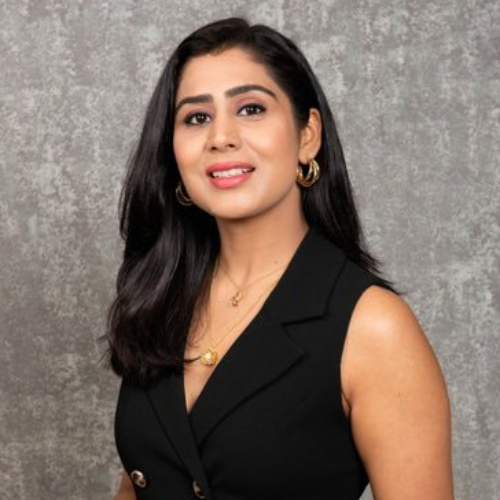
🧴 Mamaearth – Co-Founder: Ghazal Alagh


4
Mamaearth helped pioneer India’s toxin-free, ingredient-focused personal care wave. The company scaled aggressively through digital marketing and marketplace dominance before expanding offline.
Recent highlights:
- Continued revenue growth post-IPO
- Focus on profitability and cost optimization
- Expansion into new sub-brands
- Strong Tier-2 and Tier-3 penetration
The company’s community-driven branding strategy has become a case study in D2C scale.
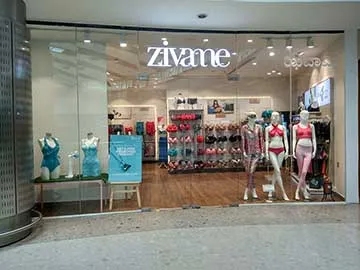
👗 Zivame – Founder: Richa Kar


4
Zivame disrupted India’s intimate wear category by normalizing online lingerie shopping. While ownership has evolved over time, its impact remains foundational.
Why it matters in 2026:
- Opened large untapped category
- Created awareness-driven digital retail model
- Inspired multiple women-focused startups
Zivame demonstrated that solving culturally sensitive problems can unlock massive opportunity.
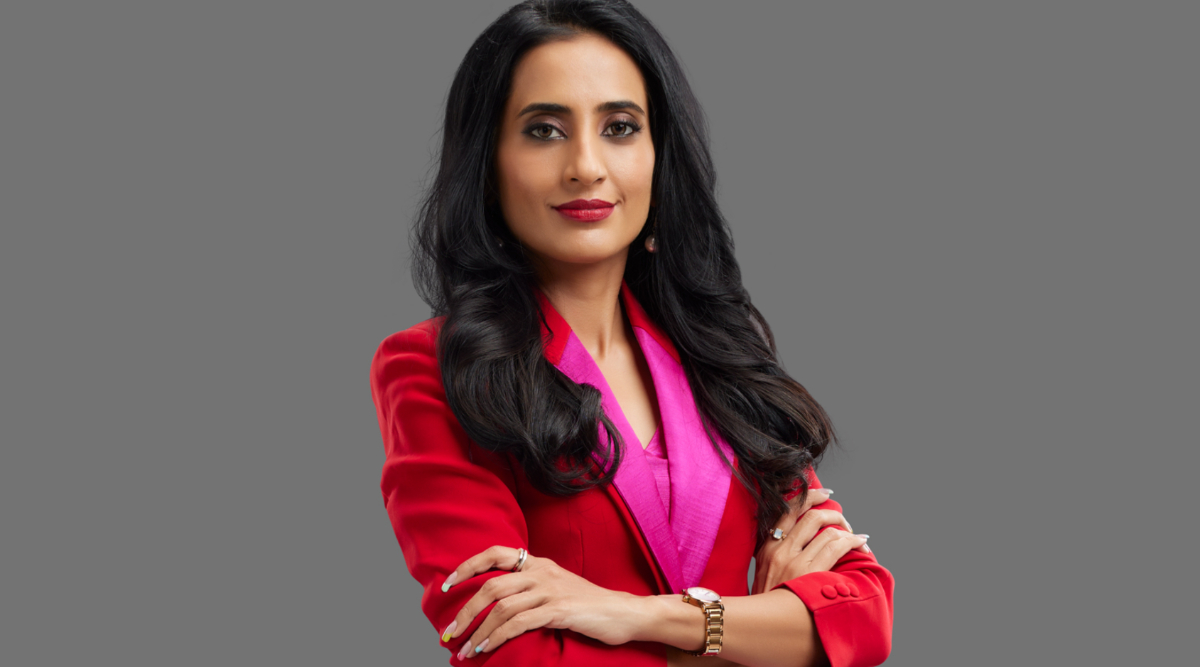
💄 SUGAR Cosmetics – Co-Founder: Vineeta Singh


4
SUGAR Cosmetics built a strong youth-oriented makeup brand through bold branding and influencer marketing.
Recent momentum includes:
- Expanding physical retail kiosks
- Growing omnichannel presence
- Strengthened Tier-2 expansion
- Focus on profitability over blitzscaling
Vineeta Singh’s public presence has also encouraged broader participation of women in startup investing and mentorship.
Rising Female-Led Startups to Watch
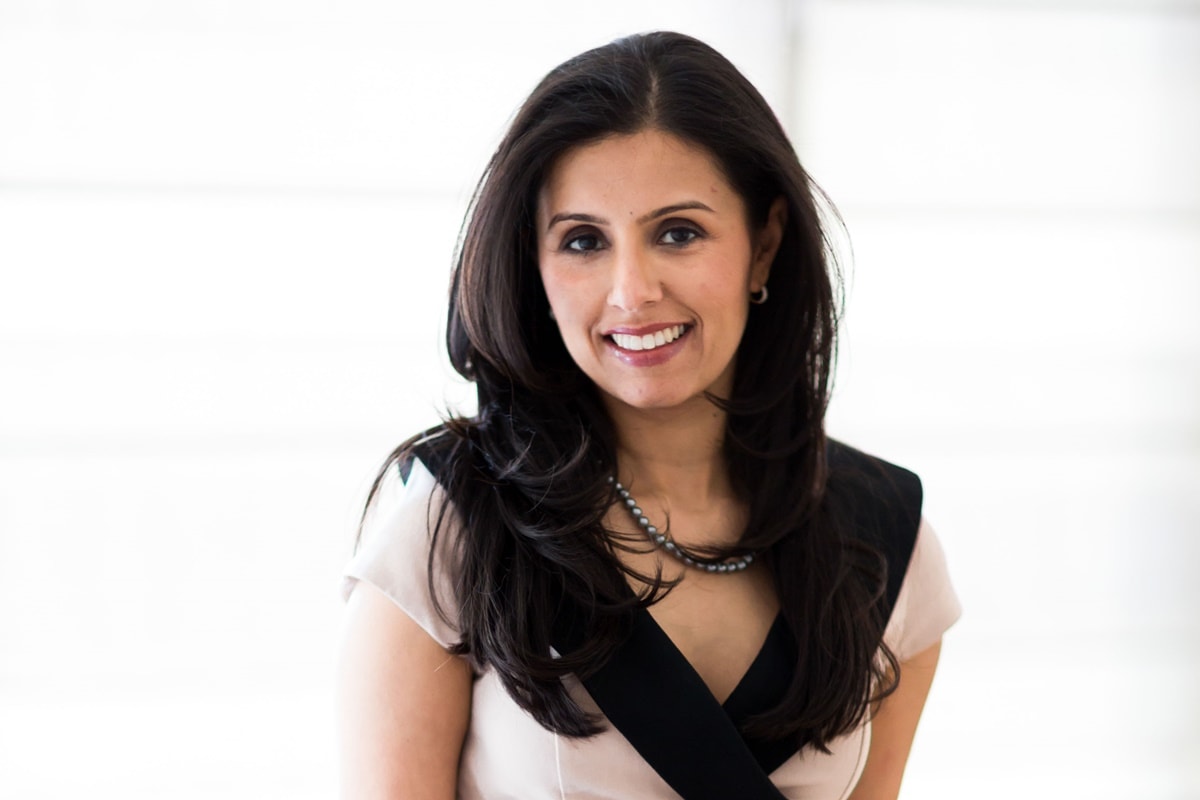
👶 The Moms Co. – Founder: Malika Sadani


4
Focused on toxin-free maternal and baby products, The Moms Co. built trust through ingredient transparency and digital community building.
The company reflects a broader 2026 trend: science-backed, niche-focused brands scaling sustainably.
💳 LXME – Founder: Priti Rathi Gupta


4
LXME focuses on financial literacy and investment products tailored for women.
Why it stands out:
- Addresses gender investment gap
- Growing digital participation of women investors
- Increasing fintech adoption in Tier-2 cities
Fintech remains a high-growth segment where more female founders are emerging in lending, wealthtech, and SME finance.
The Funding Gap: Still Real
Despite progress:
- Women founders receive less than 10% of total venture capital.
- Late-stage rounds remain disproportionately male-led.
- Valuation multiples sometimes skew lower for similar metrics.
However, the narrative is evolving. Investors are increasingly focused on unit economics rather than aggressive top-line growth. This shift benefits capital-efficient operators — a segment where many female founders excel.
Why Female-Led Startups Are Gaining Strategic Advantage
1. Capital Efficiency
Many women founders historically raised smaller rounds and therefore built leaner operations. In the post-boom correction era, this discipline is proving advantageous.
2. Category Insight
Women founders dominate sectors serving women consumers — a massively underpenetrated demographic in India.
3. Community-Driven Growth
Strong storytelling, brand authenticity, and loyal digital communities are common strengths.
4. Rising Angel Networks
More women are becoming angel investors and operators, creating a compounding ecosystem effect.
What to Expect by 2028
If current trends hold:
- Women-led funding share could move toward 12–15%
- More IPO-ready female-founded brands may emerge
- Climate and healthtech may see greater female leadership
- Government incentives could deepen regional participation beyond metro hubs
The biggest unlock will be improved access to Series B and C capital. Once more women founders scale beyond $50–100 million revenue thresholds, ecosystem bias will reduce naturally through demonstrated returns.
Final Takeaway
India’s female-led startup ecosystem in 2026 is no longer about token success stories — it’s about measurable scale, disciplined growth, and expanding sector presence.
The funding gap persists, but so does momentum.
The next wave of breakout companies will likely emerge from:
- Fintech for underserved demographics
- Women’s health and diagnostics
- Sustainable consumer brands
- AI-enabled services
- Regional commerce platforms
The foundation has been laid by pioneers like Nykaa, Mamaearth, Zivame, and Sugar Cosmetics. The next chapter will be written by founders who combine operational discipline with category vision.
ALSO READ: Top 10 AI-focused Venture Capital Firms in India