
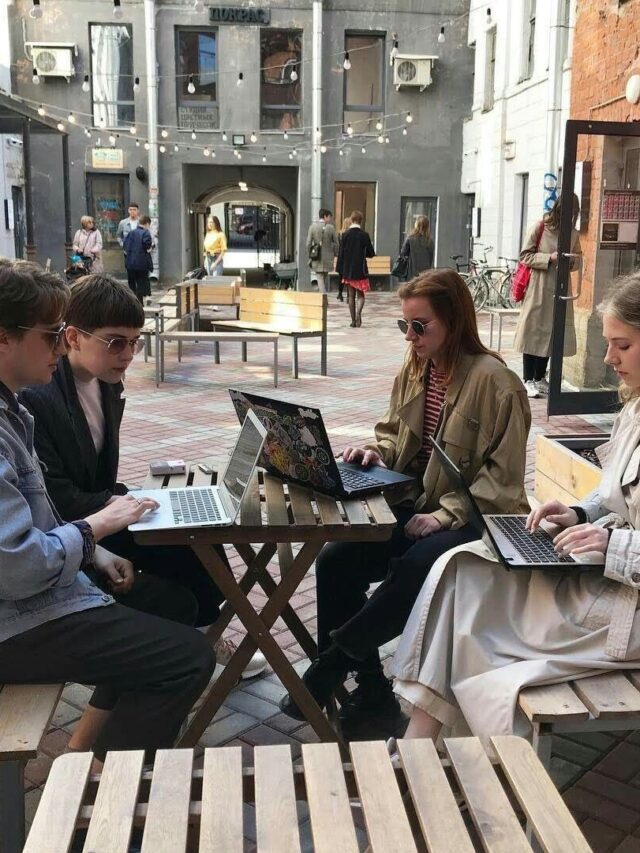
The traditional startup story once revolved around a physical office: a crowded room, whiteboards filled with ideas, long nights, and a team working shoulder to shoulder. That model is no longer the default. A growing number of founders are building remote-first companies—organizations designed from day one to operate without a central office.
Remote-first is not a temporary response to global disruption. It is a deliberate strategic choice that is reshaping how startups are formed, scaled, and sustained. From early-stage SaaS companies to globally distributed AI startups, founders are discovering that remote-first structures offer speed, resilience, and access to talent that centralized models cannot match.
This article explores why founders are choosing remote-first models, how these companies operate, the benefits and challenges involved, and what this shift means for the future of work and entrepreneurship.
What “Remote-First” Really Means
Remote-first is often misunderstood as simply “working from home.” In reality, it is a foundational operating philosophy.
A remote-first company:
- Designs workflows assuming people are not co-located
- Prioritizes written communication and documentation
- Makes decisions asynchronously by default
- Treats offices as optional, not central
- Builds culture intentionally rather than incidentally
This differs from “remote-friendly” companies, which still center operations around a physical office and treat remote work as an exception.
Why Founders Are Choosing Remote-First Models
1. Access to Global Talent
One of the strongest drivers behind remote-first companies is access to a global talent pool.
Founders are no longer limited to hiring within commuting distance of an office. Instead, they can recruit:
- Engineers from emerging tech hubs
- Designers from creative centers worldwide
- Sales and support teams across time zones
- Specialized experts unavailable locally
This dramatically improves hiring quality while reducing time-to-hire.
2. Faster and More Efficient Scaling
Remote-first startups scale differently.
Because they are not constrained by office space, relocation costs, or local labor markets, they can:
- Add team members quickly
- Expand into new regions without physical presence
- Operate across multiple time zones seamlessly
This flexibility is especially valuable in competitive markets where speed determines survival.
3. Lower Operating Costs
Office space is one of the largest fixed costs for startups. Remote-first companies reduce or eliminate:
- Office rent
- Utilities and maintenance
- Relocation expenses
- Commuter benefits
These savings allow founders to reinvest capital into product development, hiring, or customer acquisition, improving capital efficiency—an increasingly important metric for investors.
4. Resilience in Uncertain Environments
Remote-first companies are inherently more resilient.
They are less affected by:
- Local disruptions
- Natural disasters
- Political instability
- Infrastructure outages
Distributed teams reduce single points of failure, making companies more adaptable to change.
5. Alignment With Modern Workforce Expectations
The modern workforce values:
- Flexibility
- Autonomy
- Work-life balance
- Location independence
Founders who build remote-first companies are better positioned to attract and retain top talent, particularly among younger professionals and experienced operators who prioritize lifestyle alongside career growth.
How Remote-First Founders Build Companies Differently
Asynchronous Communication by Default
Remote-first founders minimize reliance on real-time meetings.
Instead, they emphasize:
- Written updates
- Shared documents
- Project management tools
- Recorded video explanations
This allows teams to work across time zones without slowing progress or excluding team members.
Documentation as Infrastructure
In remote-first companies, documentation replaces hallway conversations.
Founders invest early in:
- Clear onboarding materials
- Decision logs
- Process documentation
- Internal knowledge bases
Well-documented systems reduce confusion, speed up onboarding, and prevent knowledge silos.
Output Over Hours
Remote-first founders focus on results, not presence.
Performance is measured by:
- Outcomes delivered
- Milestones achieved
- Customer impact
This shift increases accountability and trust while reducing micromanagement.
Intentional Culture Building
Culture does not emerge accidentally in remote companies.
Founders actively shape culture through:
- Clear values and principles
- Transparent communication
- Regular feedback loops
- Virtual rituals and team events
Strong remote cultures are built, not assumed.
Common Types of Remote-First Startups
Remote-first models are especially prevalent in:
- SaaS and cloud software
- AI and data startups
- Developer tools and infrastructure
- Content and media companies
- Consulting and professional services
- Web3 and open-source projects
These sectors rely more on knowledge work than physical presence, making them ideal for distributed teams.
Challenges Founders Must Navigate
While remote-first offers many advantages, it is not without challenges.
1. Communication Complexity
Without face-to-face interaction:
- Misunderstandings can increase
- Context can be lost
- Feedback may feel impersonal
Successful founders counter this with clear writing, structured communication norms, and empathy.
2. Hiring and Onboarding
Remote hiring requires:
- Better interview processes
- Clear expectations
- Strong onboarding systems
Without these, new hires may feel disconnected or overwhelmed.
3. Maintaining Alignment
Distributed teams can drift if priorities are unclear.
Founders must:
- Reiterate goals frequently
- Align teams around shared metrics
- Communicate strategy transparently
Alignment is an ongoing effort, not a one-time task.
4. Preventing Isolation and Burnout
Remote work can blur boundaries between work and life.
Founders increasingly focus on:
- Encouraging healthy work habits
- Normalizing breaks and time off
- Monitoring workload balance
Sustainable productivity matters more than constant availability.
Investor Perspective on Remote-First Companies
Investor attitudes toward remote-first startups have evolved significantly.
Today, many investors see remote-first as:
- A sign of operational maturity
- A driver of capital efficiency
- A competitive advantage in hiring
However, investors still look for:
- Strong leadership and communication
- Clear execution capability
- Evidence of team cohesion
Remote-first is no longer a red flag—it is often a positive signal when executed well.
Tools Powering Remote-First Companies
Founders rely on a robust digital stack to replace physical infrastructure.
Common tool categories include:
- Communication platforms
- Project management systems
- Cloud collaboration tools
- Knowledge management software
- Time zone coordination tools
The goal is not tool overload, but seamless workflows.
How Remote-First Changes Leadership
Leadership in remote-first companies looks different.
Effective remote-first founders:
- Communicate more clearly and frequently
- Lead through trust, not control
- Provide context instead of instructions
- Empower teams to make decisions
This leadership style often produces stronger managers and more autonomous teams.
Diversity and Inclusion Advantages
Remote-first models can improve diversity by:
- Removing geographic barriers
- Opening opportunities to underrepresented regions
- Supporting different lifestyles and abilities
When combined with inclusive hiring practices, remote-first companies often build more diverse teams than location-bound organizations.
The Long-Term Impact on Startup Ecosystems
Remote-first founders are reshaping startup ecosystems themselves.
Impacts include:
- Growth of innovation outside traditional hubs
- Reduced pressure on expensive cities
- Emergence of global founder networks
- More equitable access to startup opportunities
Entrepreneurship is becoming less location-dependent and more merit-driven.
When Remote-First Is Not the Right Choice
Remote-first is not universally ideal.
Challenges arise in:
- Hardware-heavy startups
- Deep lab-based research
- Industries requiring physical proximity
In these cases, hybrid models may be more effective.
The Future of Remote-First Companies
Looking ahead, remote-first is likely to become the default for many startups.
Future trends include:
- AI-assisted remote collaboration
- More asynchronous work models
- Global compensation normalization
- Fewer headquarters, more hubs
- Founder communities spanning continents
As technology improves and cultural norms evolve, remote-first companies will continue to outperform rigid, location-bound models in speed, adaptability, and talent access.
Conclusion
Founders building remote-first companies are not simply reacting to change—they are shaping the future of work. By prioritizing flexibility, trust, and global access, they are creating organizations that scale faster, operate leaner, and adapt more easily to uncertainty.
Remote-first is not about working from anywhere for convenience. It is about designing companies that function anywhere by intention.
As entrepreneurship becomes increasingly global, remote-first founders will define the next generation of startups—borderless, resilient, and built for a connected world.
ALSO READ: How Policy Changes Affect Startup Ecosystems